‘Impose stricter fiscal controls’
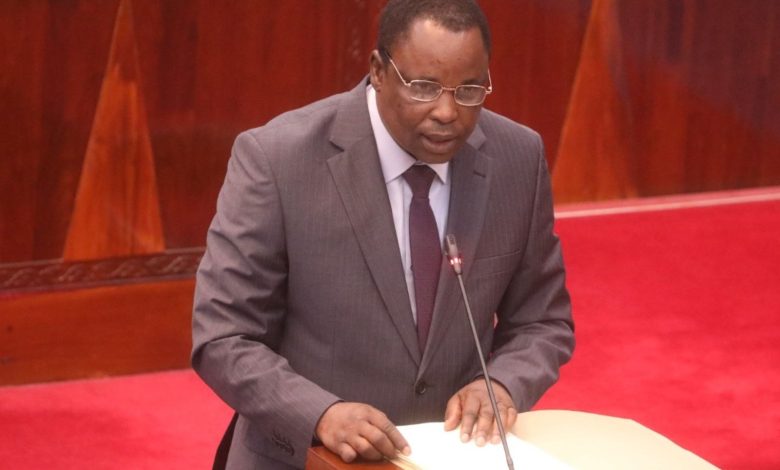
- Budget committee, MPs demand crackdown on wasteful public spending
DODOMA: THE Parliamentary Committee on Budget has called on the government to impose stricter controls on public spending, warning that persistent weaknesses in expenditure management could undermine the country’s ambitious development agenda under Vision 2050.
Presenting the committee’s assessment of the 2026/27 national budget in the National Assembly yesterday, Committee Chairperson Mashimba Ndaki said the government must go beyond routine cost cutting measures and adopt stronger mechanisms to ensure efficient use of public funds.
“The first budget under Vision 2050 must be different from previous budgets because it lays the foundation for achieving the country’s long-term development goals,” he said.
The government has proposed a 62.33tri/- budget for the 2026/27 financial year, a 10.3 per cent increase from the 56.49tri/- approved for 2025/26. Of this, 41.51tri/- will go to recurrent expenditure and 20.82tri/- to development projects.
However, the committee questioned whether the current spending structure can deliver the transformative results required under the Development Vision 2050, the Long-Term Development Plan (2026/27–2050/51) and the Fourth Five-Year Development Plan (2026/27– 2030/31).
It said many of the expenditure-control measures highlighted by the government are not new and have repeatedly failed to achieve their intended impact.
Mr Ndaki pointed to weak enforcement of public finance laws, continued spending on non-essential activities, and poor project preparation as key obstacles to achieving value for money in public investments.
“The measures proposed by the government to contain expenditure are largely the same as those presented in previous years, and many have not been effectively implemented,” he said.
The committee urged the government to review recurrent expenditure and identify areas where spending can be reduced without affecting service delivery, with savings redirected to development projects.
It also cited experiences from countries such as South Africa, Zambia and Côte d’Ivoire, noting that expenditure rationalisation remains one of the most effective ways to strengthen fiscal discipline and create fiscal space for development priorities.
On public debt, the committee raised concern over rising external borrowing, with foreign loans projected to increase from 8.68tri/- in 2025/26 to 8.99tri/- in 2026/27, at a time of rising global interest rates linked to the Secured Overnight Financing Rate (SOFR).
Lawmakers advised the government to prioritise concessional borrowing to reduce future debt-servicing costs.
On revenue mobilisation, the committee noted that Tanzania’s tax-to-GDP ratio is expected to rise from 13.1 per cent in 2024/25 to 13.7 per cent in 2026/27, before reaching 13.8 per cent in 2028/29. Despite the improvement, the ratio remains below the internationally recommended minimum of 15 per cent.
To boost collections, the committee recommended stronger enforcement of Electronic Fiscal Device (EFD) compliance and faster completion of the Integrated Domestic Revenue Administration System (IDRAS) to improve efficiency in tax administration.
While welcoming efforts to widen the tax base and support domestic industries, the committee raised concerns over several proposed tax measures.
One contentious proposal is the plan to allow taxation of some mining companies to be governed by framework agreements negotiated between government and investors, rather than existing tax laws.
The committee warned that such arrangements could revive concession-style deals that previously led to significant revenue losses.
Lawmakers also opposed proposed increases in excise duty on motorcycles and older imported vehicles, saying the measures could hurt low-income households and thousands of young people dependent on motorcycle transport businesses.
Under the proposals, excise duty on motorcycles would rise by five per cent, while taxes on used vehicles would increase based on vehicle age.
The committee further urged the government to reconsider a proposed one per cent advance income tax on buyers of food and cash crops, livestock and fishery products.
Mr Ndaki noted that a similar measure introduced in 2021 was later withdrawn after farmers complained that buyers had passed the cost back to producers through lower farm-gate prices.
“Any measure that reduces farmers’ incomes at a time when production costs are rising could hurt productivity and food security,” he cautioned.
The committee also called for regular assessments of industries benefiting from industrial development levies to ensure manufacturers do not exploit protection measures by raising prices without improving productivity.
On social services, the committee welcomed the rollout of the Universal Health Insurance programme but urged caution due to a significant financing gap.
The programme aims to cover about 3.9 million poor households in mainland Tanzania.
However, only about 931,000 households have been identified so far, with full registration expected over the next three years.
The committee said the programme requires about 691.3bn/- annually, while current funding sources generate only 201.9bn/-, leaving a gap of nearly 490bn/-.
It recommended a phased rollout starting with already identified households, alongside strengthened health information systems, investment in telemedicine, and new financing sources.
As Parliament continues debating the 2026/27 budget, the committee stressed that stronger expenditure control, prudent borrowing and improved revenue mobilisation will be essential for achieving Vision 2050 goals.
Contributing to the budget debate, Members of Parliament commended the government’s 2026/27 budget proposal, saying it will strengthen the economy and enhance the country’s capacity for selfreliance.
Joseph Kamonga (Ludewa-CCM) described the plan to finance 74.2 per cent of the budget through domestic resources as a major achievement, noting that selfreliance is one of the key pillars of the National Development Vision 2050.
Mr Kamonga urged the Tanzania Revenue Authority (TRA) to intensify efforts to eliminate counterfeit products, including fake fertilisers, through measures such as the use of verification stickers, in order to achieve its tax revenue target of 46.79tri/-.
He also emphasised the importance of implementing the business formalisation agenda to expand the tax base and welcomed the one-year tax exemption granted to new businesses.
Mr Masanja Kadogosa (Bariadi Rural-CCM) also praised the focus on self reliance, noting that it has enabled many countries to achieve economic success.
He welcomed the tax relief for new enterprises, saying small businesses are the backbone of economies worldwide, and urged the government to establish policies that support their growth and sustainability.
Mr Ahmed Shabbiby (Gairo-CCM) commended the government’s decision to maintain tax exemptions on various products to protect local industries, but called for the removal of exemptions granted to motorcycle assembly firms, arguing that they do not add significant value to the economy.
Professor Sospeter Muhongo (Musoma Rural-CCM), on the other hand, urged the government to continue strengthening the country’s gold reserves and praised the Bank of Tanzania (BoT) for increasing its gold holdings to 27.5 tonnes.