How to better transform Africa Agriculture
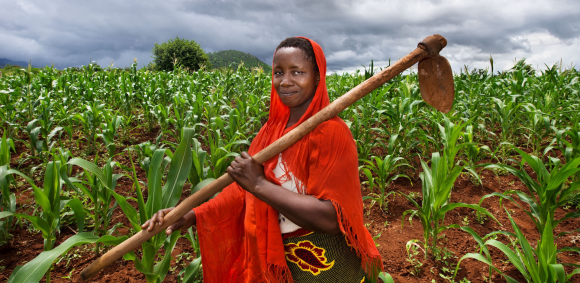
AFRICA: AFRICA cannot afford to stop at ideas, it must actively pursue pathways that turn the promise of an agricultural revolution into reality.
Tanzania, with its strategic advantages, is especially well positioned to take the lead.
Our motivation is grounded in real needs: A fast-growing population, ambitious development plans and the demand for reliable supplies of food and raw materials to serve emerging industries.
At this point, improving productivity is not optional, it is existential. Tanzania’s current average yield of about 3 tonnes per hectare falls far behind that of South Africa and major global producers.
Some may credit genetically modified seeds for their success, but what stands out most is the central role of technology. Countries that lead in agricultural productivity are typically those that have invested heavily and broadly in technological innovation across multiple sectors.
We often recite that the Industrial Revolution in Europe from the mid-1700s to mid1800s transformed production by replacing handcrafting with machinery. What we tend to overlook is that this same period also saw an agricultural revolution.
Farmers moved away from rudimentary tools and embraced machines and new methods, boosting yields sufficiently to feed growing populations and supply new industries.
What makes this conversation urgent today is that, while we attempt to address agricultural inefficiencies through modest improvements, we have neglected the vital role of agriculturefocused industries.
Many existing industries have yet to recalibrate their business models to see agriculture as a sector of opportunity rather than a domain of uncertainty or waste.
A clear measure of progress will be our ability to recognise the manufacturing sector as an enabler and strategic partner in agriculture, not as a peripheral player surviving on limited agrarian scraps.
Furthermore, our social mindset must evolve: Peasantry should not be equated with incompetence. Land size is not the issue; the problem is the assumption that smallholder farmers lack the potential to be productive or professional.
This conversation is even more relevant because much of the technology we currently use is imported. Imported solutions are not only expensive; they often fail to address local realities because their creators operate in entirely different environments.
For this reason, local tech start-ups must be nurtured early and encouraged to see agriculture as a viable, profitable field for innovation.
At the same time, we must safeguard the environment that sustains us. Our ecosystems provide the foundation for food production and essential raw materials. Ignoring environmental limits now would be reckless.
Protecting our planet is not only about preserving today’s resources, it ensures that future generations are not forced to pay for our negligence. Finally, agriculture must take health seriously. It should not be driven by profit alone.
ALSO READ: IFAD, AFDP experts see good progress in agriculture and fisheries projects in Tanga Region
The sector has the power to help address the nutrition and health challenges affecting many communities today.
A generation saturated with unreliable information needs meaningful, trustworthy guidance on how nutritious food can contribute to wellbeing. In conclusion, an authentic agricultural revolution in Tanzania and across Africa demands more than higher yields.
It requires technology adapted to its realities, industries that work in partnership with farmers, environmental stewardship and a commitment to human health. If we align these elements, agriculture will not just feed our people, it will power our future.