

How CIPS might revolutionise Tanzania’s future trade, investment
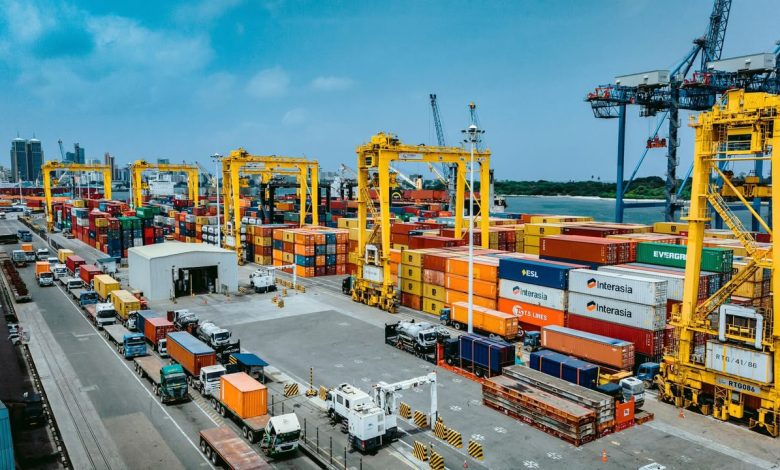
TANZANIA: AS China’s geopolitical influence expands, more entities are gaining access to its Cross-Border Interbank Payment System (CIPS), with Stanbic Bank in Ghana recently becoming a participant.
This move can play a crucial role in a broader strategy to reduce transaction costs, diversify currencies in international trade, strengthen financial connections and enhance Tanzania’s capacity to attract Chinese trade and investment. The timing of this development, particularly in light of lessons from Ghana and our local circumstances, is especially noteworthy.
China remains Tanzania’s leading trading partner, with bilateral trade reaching 11.28 billion US dollars in 2025. From May 2026, China provided zerotariff treatment for products from 53 African countries, including Tanzania. Additionally, Standard Bank, the first African bank authorised for direct CIPS transactions, has expanded its CIPSenabled RMB settlement services from South Africa to Angola, Ghana, Kenya, Lesotho and Tanzania.
To those involved in trade with counterparties in China but aren’t aware, CIPS is more than just a payment system; it serves as China’s infrastructure for clearing and settling cross-border RMB transactions.
Its significance is rooted in the extensive network backing it. As of June 2026, CIPS comprised 210 direct and 1,619 indirect participants, including 103 in Africa, across 130 countries and regions. It links more than 5,200 banking institutions in 191 countries and regions. In 2025, the system processed approximately RMB180 trillion in yearly transactions and achieved an outstanding 99.999 per cent uptime.
In Tanzania’s case, the key question isn’t whether to replace the US dollar with the yuan, as that oversimplifies the issue. Instead, it’s whether Tanzania can leverage RMB settlement alongside the dollar and other currencies to enhance the efficiency, resilience and competitiveness of trade and investment with China. The answer may well be yes.
Reducing Tanzania-China trade costs mainly lowers transaction expenses. For instance, a Tanzanian importer purchasing machinery like mill boiling for gold processing (HS code 8474.20.20 or 8474.20.90) from China currently navigates several steps involving Tanzanian shillings, US dollars, correspondent banks, and RMB. Each currency exchange and intermediary adds costs, delays settlement and complicates operations.
CIPS offers infrastructure for direct RMB transaction settlement. Insights from banks using the system indicate that it enables African clients to clear and settle cross-border payments in RMB directly, reducing reliance on intermediary currencies and streamlining payment processes. Since its introduction, the service has broadened market access for African nations that have adopted the trading settlement opportunity.
For a nation like Tanzania, this could be particularly important, as China accounts for 32.6 per cent of Tanzania’s goods imports, according to the Bank of Tanzania’s 2024/25 data. The implication is significant: Even a modest reduction in transaction costs on a very large Chinarelated import bill could yield meaningful savings for Tanzanian businesses.
Strategically, this adoption could lessen reliance on the US dollar without fully abandoning it, leading to extended currency diversification. Tanzania doesn’t need to de-dollarise to take advantage of CIPS. Instead, it can introduce the RMB as an additional settlement currency in areas where there is a natural commercial link with China.
Imagine a Tanzanian business importing Chinese equipment valued at RMB10 million. If it can settle the deal directly in RMB, it may avoid extra exposure from converting USD to RMB. This is especially beneficial when the US dollar strengthens considerably against the Tanzanian shilling. A company needing dollars to buy RMB faces risks from both the TZS/USD and USD/RMB exchange rates. Using direct RMB settlement can help streamline and reduce these exposures.
However, it is important not to overstate this benefit. Currency risk does not vanish just because the transaction is in RMB. The Tanzanian importer still bears TZS/RMB exchange rate risk unless they generate RMB income or use suitable hedging tools. Hence, the right approach is currency diversification rather than currency substitution.
From a broader trade perspective, the most strategically significant advantage may lie in export opportunities, opening a new avenue for Tanzanian exporters, especially with the zerotariff offer taking effect from May 1, 2026.
China’s zero-tariff policy for 53 African countries, if strategically taken, has huge potential to create a major opportunity for Tanzanian exporters. Tanzania’s products with potential in the Chinese market include cashew nuts, sesame, honey, coffee, avocados, fish products, gold, gemstones and graphite, to mention a few.
Suppose a Tanzanian cashew exporter receives payment directly in RMB from a Chinese buyer. That creates a natural RMB revenue stream.
The exporter can use RMB to pay Chinese suppliers, buy machinery, service RMB-denominated loans, pay Chinese contractors, reinvest in Chinese equipment and hold RMB for future trade. This establishes a natural currency ecosystem, avoiding the need to convert constantly between RMB, USD and TZS. Such a system could be especially beneficial as Tanzania shifts from raw commodity exports to processed and branded products.
From an investment perspective, this will enhance the profitability of Chinese investments in Tanzania. Chinese firms already hold a notable presence in Tanzania. As of March 2026, Tanzania’s Ministry of Industry and Trade reported 876 Chinese investment projects valued at 8.86 billion US dollars, which have generated about 146,250 direct jobs.
The challenge has shifted from merely attracting Chinese investors to facilitating their financial transactions. Tanzania should streamline the process for investors to transfer funds into projects, pay suppliers, receive earnings and repatriate profits. Developing a more cohesive RMB payment system could help achieve this, reducing payment obstacles and increasing Tanzania’s appeal to Chinese investments across sectors like manufacturing, logistics, energy, mining, agriculture and tourism.
Likewise, it will boost Tanzania’s financing of strategic infrastructure. The potential is even greater when CIPS is integrated with development finance. Tanzania needs substantial long-term capital to implement infrastructure projects under FYDP IV and Dira 2050. Chinese institutions and companies are already involved in major projects, including the Standard Gauge Railway (SGR), the Julius Nyerere Hydropower Station transmission infrastructure and many more manufacturing projects.
Imagine a Tanzanian development-finance institution arranging RMB financing for a Chinese-equipment-intensive project. Instead of an RMB loan to a USD intermediary, then to TZS project financing, and finally to the RMB supplier, the financial structure could be adapted to directly support RMB financing to a Tanzanian bank, which then funds the Tanzanian project and pays the Chinese supplier through RMB settlements.
This approach could reduce currency mismatches and transaction costs. For institutions like CRDB, NBC, NMB, or any bank engaged in international settlements with Chinese counterparts, this is especially relevant. CRDB, for example, could consider offering RMB-denominated or RMB-linked financing options for projects involving Chinese contractors, equipment or investors, who represent a significant part of the project ecosystem.
Regarding financial inclusion, benefits should extend beyond large corporations. Notably, there’s increasing interest among African SMEs for RMB settlement. In April 2026, Reuters reported that Ecobank was negotiating a yuan-based settlement product with the Bank of China, driven partly by African SMEs involved in trade with China.
This is important for Tanzania because thousands of SMEs import machinery, electronics, textiles, construction materials, solar equipment and other goods from China. If banks can offer RMB accounts, RMB letters of credit, RMB trade finance, RMB foreign-exchange products, RMB payment platforms and RMB hedging instruments, then smaller Tanzanian businesses could participate more efficiently in China-related trade.
Enhancing the domestic financial system might benefit from CIPS and motivate Tanzanian banks to build advanced international banking skills. This would require stronger correspondent relationships, expertise in foreign exchange, trade finance, RMB liquidity, compliance, digital payments, and treasury and risk management. Strategically, these improvements could deepen Tanzania’s financial sector.
The longer-term opportunity is to develop Dar es Salaam as an East African RMB trade and settlement centre, particularly given Tanzania’s geographic position and the importance of its ports and regional corridors.
Tanzania could take a cue from South Africa, which exemplifies the most advanced African approach so far. Standard Bank, the first African bank approved for direct CIPS transactions, processed over RMB8 billion, around 1.2 billion US dollars via CIPS by July 2026. The bank has since extended this service to multiple African countries.
The key lesson is not that Tanzania should copy South Africa’s banking system. Instead, CIPS gains economic significance when integrated into a comprehensive trade-finance ecosystem. Payment infrastructure by itself does not generate exports, investment or industrialisation; it becomes impactful when connected with trade, investment, financing, logistics, production and payment settlement.
Other developments across Africa indicate that the use of RMB is expanding beyond just payment settlement. Reuters reported in July 2026 that Angola’s Banco de Fomento Angola intends to join CIPS due to increasing demand for direct yuan transactions. Additionally, Angola’s central bank has added the yuan to its list of currencies eligible for hard-currency reserve requirements, and the government is exploring yuan-denominated debt financing.
ALSO READ: How TZ is positioning itself as Mozambique’s preferred regional investment and trade partner
Zambia has also been using the RMB in parts of its economic relationship with China, including mining-related payments, while Kenya has explored conversion of some Chinese railway financing into yuan. These examples demonstrate that RMB settlement can evolve from a payment instrument into a broader financial architecture.
Tanzania’s strategic approach may continue to be debated, but it could develop a National RMB Internationalisation and Trade Settlement Strategy. This plan would involve the Bank of Tanzania (BoT), the Ministry of Finance, commercial banks, TIB Development Bank, exporters, importers and Chinese financial institutions.
The strategy could have key pillars, including banking connectivity by encouraging qualified Tanzanian banks to establish direct or indirect CIPS connectivity through recognised Chinese and international banking partners, and RMB trade finance by developing RMB letters of credit, trade loans, guarantees and working capital facilities.
The true strategic value is aligning payment-system reform with Tanzania’s industrialisation and development plans. CIPS shouldn’t be seen just as a Chinese payment system but rather as possible infrastructure for a wider China-Tanzania economic corridor.
Examine the sequence where Chinese capital invests in Tanzanian infrastructure, which depends on Chinese machinery to bolster local production. This setup allows Tanzanian exports to earn RMB revenue, aiding in paying Chinese suppliers and funding reinvestment.
If Tanzania manages to generate more value at each step, CIPS integrates into an ecosystem promoting industrialisation, especially as Tanzania and China have committed to boosting mutual investment and trade, with Tanzania targeting a doubling of its exports to China by 2030.




Great web site. Plenty of useful information here. I’m sending it to several friends ans also sharing in delicious. And certainly, thanks for your effort!