Hospitals in TZ lack interpreters, raising health concerns for the deaf

ARUSHA: MOST public offices, health centres and service institutions in Tanzania lack specialised sign language interpreters, leaving people with hearing and speech impairments cut off from essential services.
This concern was raised during a special workshop aimed at strengthening the capacity of vulnerable deaf youth and women on their fundamental human rights through the Tanzania Sign Language advocacy initiative.
Participants at the event in Arusha revealed that most hospitals do not have sign language interpreters to facilitate communication between medical personnel and patients with hearing or speech impairments.
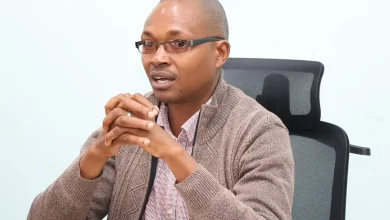
“This is a major challenge because health services are a fundamental right for all people, but it appears persons with disabilities are being left out due to poor communication,” said Dickson Mveyange, Executive Director of the Tanzania Association of the Deaf.
Addressing the issue, Ramadhan Aboubakar, a member of the association in Arusha, said efforts are underway to train social workers and medical staff in sign language, though progress has been slow.
“So far we have managed to train only a few officials at the Mussa Ward Executive Office in Kisongo and at Kaloleni Hospital in the city centre,” Aboubakar said.
The Social Welfare Officer at the Arusha City Council, Nivoneia Kikaho, who officiated at the opening of the workshop, said the government is working to ensure sign language experts are deployed in public offices.
“People with speech and hearing impairments have been found to be extremely capable in many fields and those employed in different organisations often perform very well,” Ms Kikaho said.
Supporting her remarks was Naomi Kivuyo, a successful businesswoman in Arusha who has speech impairment.
Speaking through an interpreter, Naomi said she has managed to secure loans to expand her trading activities despite facing communication challenges.
Organised by the association in collaboration with the Disability Rights Fund, the workshop brought together more than 30 people with hearing and speech impairments.
CHAVITA is a national organisation of persons with disabilities officially registered in Tanzania and operates through a network of branches in 20 regions of mainland Tanzania.
ALSO READ: Unique Fashion Show set for global Deaf Week
Through its regional offices, the organisation has a nationwide outreach to 5,874 members, including 2,503 women. The association is committed to advancing the rights of deaf individuals, particularly deaf women.
“Our work directly addresses barriers in education, employment and healthcare, with a strong focus on promoting access through Tanzania Sign Language (TSL),” said Mveyange.
He noted that these efforts align with Article 2 (Definitions) and Article 21 (Freedom of expression and opinion and access to information) of the United Nations Convention on the Rights of Persons with Disabilities (UNCRPD), which recognise sign language as an important means of communication and cultural identity for deaf people worldwide.
CHAVITA also develops and implements programmes that provide TSL training while advocating for its recognition and use in public services and education, enabling deaf people to access information and participate fully in society.
The association’s approach to inclusion is grounded in the recognition of Tanzania Sign Language as a vital communication tool.
“Use of sign language and access to sign language interpretation are crucial for deaf people’s access to education and their participation in socioeconomic and public life,” he said.
“Deafness is a disability of communication, just as paralysis is a disability of movement. Sign language is not only the most effective medium of instruction for deaf learners, but it also empowers them to develop personally and culturally. It is an important tool in fighting poverty, oppression, marginalisation and inequality.”