

Horticulture industry eyes new growth potentials
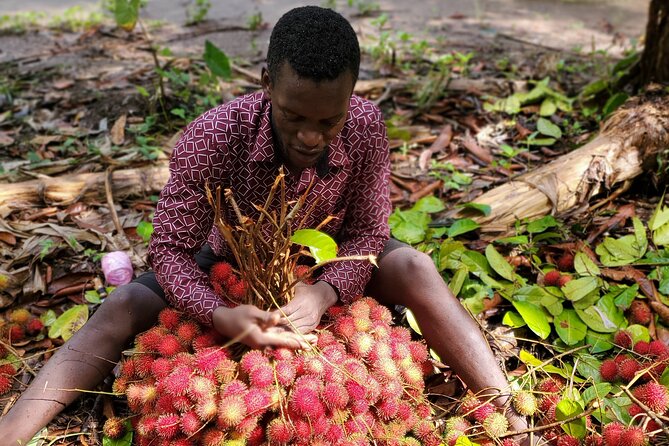
DAR ES SALAAM: HORTICULTURE industry is eyeing a new growth opportunity as rambutan, or shokishoki, emerges as a potential high-value crop for farmers and investors seeking new domestic and export markets.
With rambutan identified for commercial production in seven regions, the fruit could open a wider business ecosystem spanning farming, processing, packaging, cold storage, logistics and exports.
Still relatively unfamiliar to many mainland consumers, rambutan is already traded between Zanzibar and mainland markets.
Its existing trade, favourable growing conditions and potential access to premium international markets are now prompting interest in whether the crop can move from a largely informal business into an organised horticultural value chain.
An assessment by agricultural expert Mr Geoffrey Kirenga identifies Zanzibar, Coast, Tanga, Morogoro, Lindi, Mtwara and Kyela District in Mbeya as areas with potential for commercial production.
Mr Kirenga, who is also Chief Executive Officer at the Agricultural Growth Corridors of Tanzania (AGCOT), formerly SAGCOT, says the country has favourable conditions for rambutan, particularly areas with warm temperatures, adequate rainfall and well-drained soils.
His assessment examines the crop’s production potential, nutritional characteristics, ecological requirements and international value chain, pointing to opportunities for farmers and private investors if production, quality, post-harvest handling and market access can be developed.
From fruit to business opportunity The commercial case for rambutan extends beyond growing the fruit.
Mr Kirenga identifies opportunities across the value chain, including nurseries, aggregation, processing, packaging, cold storage and logistics.
For farmers, the choice of planting material could determine how quickly orchards begin generating returns.
He recommends vegetative planting materials, particularly grafted or budded seedlings, which can start producing fruit within three to four years and provide greater consistency in fruit quality. But production alone will not create a viable export industry.
Fresh rambutan is highly dependent on post-harvest handling. Maintaining quality during transportation requires appropriate packaging and cold-chain infrastructure, particularly when targeting distant international markets.
Certification will also matter. International standards such as GlobalG.A.P could become important for producers seeking access to premium overseas buyers. This means the opportunity is potentially wider than an additional crop for farmers.
It could generate demand for input suppliers, nurseries, transporters, aggregators, processors, packaging companies and exporters.
A market still in its early stages The biggest immediate challenge may be the market itself. Rambutan is better known in coastal communities than on the mainland, where consumer awareness remains limited.
That unfamiliarity could restrict domestic demand unless producers, traders and other stakeholders invest in creating awareness and developing reliable markets.
Jaffery Mgomi, a fruit seller on Indira Gandhi/Asia Street in Dar es Salaam, said the fruit attracts interest from Asian consumers and is valued for its nutritional content, but its relatively high price limits access for many ordinary consumers.
ALSO READ: Major boost for horticulture industry
“People from the Coast know this fruit much better. Many people on the mainland still need to learn about it and develop a taste for it,” he said.
Mr Mgomi said he sources rambutan from Zanzibar and Morogoro, with prices varying according to package size.
A bundle can sell for between 10,000/- and 110,000/-, illustrating the premium that can be attached to the fruit depending on size and market conditions.
“Mainland consumers do not know these fruits well. People can pass by every day and think they are flowers,” he said. The comment highlights a fundamental commercial challenge.
For rambutan to become a meaningful horticultural business, Tanzania needs not only more production but also consumers who understand the product and buyers capable of creating consistent demand.
Export markets offer bigger potential While domestic awareness remains limited, international markets could provide the stronger commercial opportunity.
Mr Kirenga identifies the United Arab Emirates, Qatar, Oman and Saudi Arabia among promising destinations, driven by demand for tropical fruits in tourism and retail markets.
His assessment estimates potential free-on-board export prices of between 3.50 and six US dollars per kilogramme, equivalent to roughly 9,000/- to 16,000/-.
European markets could offer higher returns, although access would require stricter compliance with food-safety and quality standards.
The Netherlands, United Kingdom and Germany are identified as niche markets, with estimated retail prices of between eight and 15 dollars per kilogramme, equivalent to approximately 21,000/- to 40,000/-.
Regional markets within the East African Community and Southern African Development Community could also provide opportunities, with estimated prices of between 2.50 and 4.50 dollars per kilogramme, or roughly 6,500/- to 12,000/-. The potential market is not limited to fresh fruit.
Rambutan can also be processed into juice, jam and canned products, creating possibilities for extending shelf life, reducing post-harvest losses and capturing additional value within Tanzania.
For investors, this creates a broader proposition: rather than simply producing and exporting fresh fruit, businesses could develop integrated value chains around processing and distribution.
Zanzibar holds an early advantage Zanzibar could play a particularly important role in developing the market because it already supplies rambutan to mainland traders.
Saleh Mohamed Juma, Principal Secretary at Zanzibar’s Ministry of Agriculture, Irrigation, Natural Resources and Livestock, said the government plans to engage the Tanzania Horticultural Association (TAHA) on ways to develop export markets for the fruit.
“We plan soon to meet our colleagues at TAHA, which is involved in horticultural exports, to explore how we can develop markets and export rambutan,” Juma said.
He said much of the fruit currently transported to Arusha is taken as gifts rather than sold through organised commercial channels.
“There is still no significant export market for rambutan. Much of it is transported as gifts rather than through organised commercial channels,” he said.
The government is now working to develop markets, encourage farmers to increase production and identify reliable buyers. Mr Juma said demand already comes from Arusha and Dar es Salaam, as well as overseas markets including the UAE and Oman.
The planned engagement with TAHA could provide a bridge between Zanzibar producers and established horticultural export networks, helping transform informal trade into a more structured commercial supply chain.
The investment test For Tanzania, the rambutan opportunity comes at a time when diversification is increasingly important to horticulture.
But turning shokishoki into an export crop will require more than favourable climate and international demand. Farmers need access to quality planting materials, technical knowledge and reliable buyers.
Exporters need consistent volumes and quality. Investors need confidence that supply chains, infrastructure and markets can support commercial-scale operations.
Post-harvest handling will be particularly important because the value of rambutan can quickly deteriorate if fruit is poorly handled between farms and consumers.
Certification, packaging, cold storage and efficient logistics will therefore determine whether Tanzania can compete for premium markets.
Processing could offer another route, particularly where fresh fruit cannot immediately reach export markets. Developing juice, jam and canned products could help create additional revenue streams while reducing losses.
The opportunity is therefore as much about building an industry as planting a crop. Rambutan may still be unfamiliar to many Tanzanians, but the combination of suitable growing conditions, existing trade between Zanzibar and the mainland, premium international prices and opportunities for value addition gives shokishoki a potentially attractive position in Tanzania’s horticulture industry.
The next step is to determine whether that potential can be converted into the volumes, standards, infrastructure and market relationships required for a sustainable business.
If that happens, a fruit that many mainland consumers still mistake for a flower could become a new source of farm income, investment, jobs and export earnings.




The focus on rambutan as a high-value crop is intriguing, especially with its potential for export markets. How will the seven regions identified for commercial production manage the supply chain to ensure quality and consistency? It reminds me of how detailed planning in other industries, like creating perler bead patterns, can lead to successful outcomes. What are the main challenges farmers might face in scaling up production?
The focus on rambutan as a high-value crop is intriguing, especially with its potential for export markets. How will the seven regions identified for commercial production manage the supply chain to ensure quality and consistency? It reminds me of how detailed planning in other industries, like creating perler bead patterns, can lead to successful outcomes. What are the main challenges farmers might face in scaling up production?
The idea of rambutan becoming a high-value crop for export is exciting. Managing quality across the seven regions will be key, and I’m curious what support systems are being put in place for farmers. It’s interesting how structured approaches can mirror other hobbies, like planning an arrow game level design. What kind of training or resources will smallholders need to meet international standards?
The shift toward rambutan as a high-value crop for export markets is exciting, especially with plans spanning seven regions. It will be interesting to see how supply chains are managed for consistency and quality in this new ecosystem. Something simple like using a face square generator can help visualize project outcomes, much like scaling up production needs clear structure.
The shift toward rambutan production is promising for Tanzania’s horticulture sector. Managing logistics across seven regions will be key to maintaining export standards. It requires strategic planning, much like optimizing a complex space game strategy. I’m curious about the training programs for farmers transitioning to this new crop.
The article highlights how rambutan could drive growth across Tanzania’s horticulture sector, covering farming through to export logistics. It’s exciting to see such detailed regional planning, though supply chain consistency will be key. I’ve found that breaking complex projects into manageable parts—like designing a pixel game—helps clarify priorities when scaling up production.