HakiElimu puts inclusive education at the heart of public interest journalism
DAR ES SALAAM: Education has long been recognized as one of the most powerful drivers of social and economic development. Across the world, it provides children and young people with the knowledge, skills, and values needed to participate meaningfully in society.
Beyond classrooms, education shapes nations by reducing poverty, promoting equality, fostering innovation, and strengthening democratic institutions.
Yet despite global commitments to ensure quality education for all, millions of learners continue to face barriers that prevent them from accessing or benefiting fully from education. The United Nations Sustainable Development Goal 4 (SDG 4) calls for inclusive and equitable quality education and lifelong learning opportunities for everyone.
While significant progress has been made in expanding access to education, inclusion remains one of the greatest challenges. Children with disabilities, learners from marginalized communities, girls, refugees, and those living in remote areas often encounter obstacles that limit their educational opportunities.
These challenges have prompted governments, development partners, educators, and journalists to rethink how education systems can become more responsive to the needs of every learner. In Tanzania, efforts to improve access to education have grown considerably over the years.
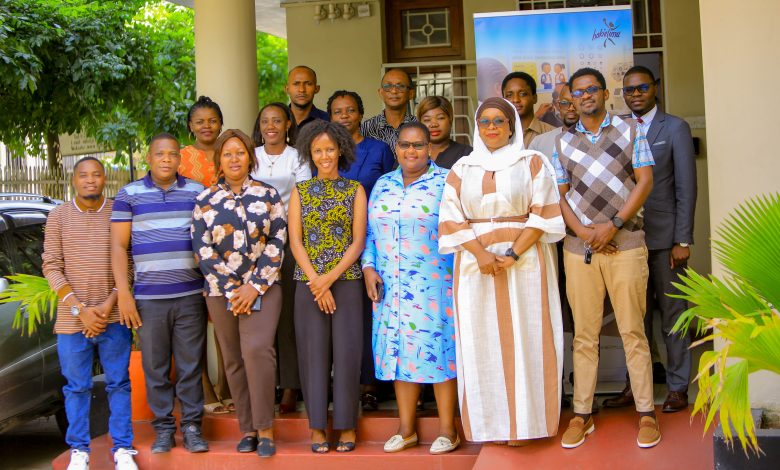
However, educational inclusion is increasingly becoming an important conversation, particularly as the country works toward ensuring that no child is left behind. It is within this context that HakiElimu organized a three-day Education Journalism Fellowship Engagement Workshop under the theme.
“Reimagining Inclusive Education in Tanzania Through Public Interest Journalism,”
The workshop brought together journalists to strengthen their understanding of inclusive education while equipping them with practical reporting skills capable of influencing public dialogue and policy. The workshop explored education not merely as a social service but as a fundamental human right that deserves thoughtful, evidence-based journalism.
Participants were encouraged to look beyond statistics and examine the lived experiences of learners whose voices often remain unheard. Before discussing inclusive education, facilitators briefly examined the three commonly discussed approaches to education systems.
Special education refers to learning environments specifically designed for learners with disabilities or those requiring specialized support. While it offers targeted assistance, it often separates learners from their peers. Integrated education allows learners with disabilities to study in mainstream schools.
ALSO READ: Transforming classrooms, changing Lives: The need for inclusive Education in Tanzania
However, in many cases, students are expected to adapt to the existing education system rather than the system adapting to their individual needs. Inclusive education, on the other hand, represents a broader and more transformative approach.
It seeks to ensure that schools, teaching methods, infrastructure, learning materials, and policies are designed to accommodate the diverse needs of all learners regardless of disability, gender, socioeconomic background, language, or any other difference. Instead of asking learners to fit into the education system, inclusive education requires the system itself to change.
During the workshop, the Trainer Khalifa Said challenged journalists to rethink the way they report education stories.
“Education reporting should move beyond classroom attendance and examination results. Journalists must investigate who is being excluded, why they are excluded, and what can be done to ensure every learner has an equal opportunity to succeed.”
His remarks underscored the responsibility of public interest journalism in exposing systemic inequalities while highlighting practical solutions.
He added that, “One of the key sessions focused on seeing education through an inclusion lens. Participants learned that education stories should not simply celebrate enrollment figures or infrastructure projects. Instead, they should examine whether every learner truly has equal access to quality education,”
“An inclusion lens requires journalists to ask different questions. Who is missing from this story? Which voices are absent? What barriers remain invisible? Those questions often reveal the real education story,” he questioned.
“The workshop emphasized that inclusive journalism requires reporters to intentionally seek perspectives from marginalized learners, parents, teachers, and communities whose experiences are frequently overlooked,” he mentioned Another important session explored collaborative mapping and educational exclusion. Participants worked together to identify different forms of exclusion affecting learners across communities.
These included disability-related barriers, poverty, geographical isolation, gender discrimination, inadequate school infrastructure, language barriers, cultural practices, and limited access to learning resources.
Rather than treating exclusion as an isolated issue, participants learned that multiple factors often intersect to prevent children from fully participating in education. “Educational exclusion is rarely caused by one factor alone. Journalists should map the entire ecosystem surrounding the learner because exclusion often happens through interconnected barriers,” he emphasized.
He noted that, “For journalists, this means producing stories that go beyond event coverage to reveal systemic challenges, highlight innovative solutions, and ensure that marginalized voices are represented fairly and accurately,” This approach encouraged participants to move beyond individual case studies and investigate systemic issues that influence educational outcomes.
The workshop also introduced participants to the concept of unlearning assumptions. Journalists were encouraged to critically examine their own biases and preconceived notions before reporting education stories. Many education narratives are built around assumptions that may unintentionally reinforce stereotypes.
For example, disability is often portrayed solely as a personal challenge rather than examining environmental barriers. Similarly, poor academic performance may be attributed to students without considering structural issues such as overcrowded classrooms, lack of learning materials, or inaccessible facilities.
“Good journalism begins when we question our own assumptions. If we report from stereotypes instead of evidence, we risk strengthening the very inequalities we seek to expose,” he noted.
Participants were encouraged to replace assumptions with evidence gathered through careful observation, interviews, and data analysis. Another major component of the workshop focused on Multimedia Storytelling for Public Interest. As digital journalism continues to evolve, reporters were encouraged to use multiple storytelling formats to increase audience engagement and improve public understanding.
Participants explored how photographs, short documentaries, podcasts, infographics, data visualization, and interactive digital content can strengthen education reporting by making complex issues easier to understand.
“People do not only consume stories through text anymore. Strong public interest journalism combines visuals, audio, data, and human experiences to tell stories that inspire action,” he indicated.
ALSO READ: Dhow races to headline Kizimkazi Festival
The workshop demonstrated that multimedia storytelling can amplify marginalized voices while making education issues more accessible to wider audiences.
“Equally important was the session on developing investigative hypotheses. Participants learned that impactful investigative journalism begins with thoughtful questions rather than predetermined conclusions,” Khafila said.
He highlighted that, instead of assuming problems or assigning blame, journalists were encouraged to develop hypotheses that can be tested using evidence, official documents, interviews, observations, and data. The strongest investigations begin with curiosity.
A hypothesis is not an answer it is a question that guides responsible reporting until evidence reveals the truth. Throughout the three-day engagement, participants repeatedly returned to one central message: journalism has the power to influence education reform when it prioritizes public interest over sensationalism.
Rather than reporting isolated incidents, journalists were encouraged to examine broader patterns, investigate accountability, and produce stories that contribute to informed public debate.
The workshop further highlighted that inclusive education cannot be achieved by the education sector alone. Governments, schools, parents, civil society organizations, development partners, communities, and the media all have important roles to play in creating environments where every learner can thrive.
As Tanzania continues working toward a more inclusive education system, public interest journalism will remain an essential tool for promoting transparency, accountability, and meaningful dialogue.
By reporting through an inclusion lens, questioning assumptions, embracing multimedia storytelling, and pursuing evidence-based investigations, journalists can contribute significantly to shaping education policies and practices that leave no learner behind.
The HakiElimu Education Journalism Fellowship Engagement Workshop served as a timely reminder that education stories are ultimately about people. Every statistic represents a learner with aspirations, challenges, and the right to quality education.
When journalists tell these stories responsibly and inclusively, they do more than inform the public they help build a society where every child has an equal opportunity to learn, participate, and succeed.