Transforming classrooms, changing Lives: The need for inclusive Education in Tanzania
DAR ES SALAAM: Every child deserves the opportunity to learn, grow, and realize their full potential regardless of their physical ability, social background, gender, or economic status. Access to quality learning is more than attending school; it is about ensuring that every learner is welcomed, supported, and provided with an environment where they can thrive.
As societies continue to evolve, creating education systems that embrace diversity has become a global priority, with governments, educators, and development partners increasingly recognizing that inclusive learning is essential to achieving sustainable development and social justice.
Around the world, governments continue to invest in education because it remains one of the most effective tools for reducing poverty, promoting social cohesion, encouraging innovation, and fostering economic growth. Yet despite decades of progress, educational inequality persists, particularly among learners with disabilities and those from marginalized communities.
According to UNESCO, approximately 244 million children and young people worldwide remain out of school, while millions more attend school but do not receive quality education that meets their diverse learning needs.
Children with disabilities continue to experience some of the highest levels of educational exclusion due to inaccessible school infrastructure, inadequate teaching materials, negative social attitudes, and insufficient teacher preparation.
These realities have encouraged countries to rethink traditional education systems and embrace more inclusive approaches that recognize diversity as a strength rather than a limitation. Across Africa, the challenge remains significant.
While many countries have expanded access to primary education over the past two decades, learners with disabilities continue to face considerable barriers to enrolment, participation, and completion. In many communities, inaccessible learning environments, limited specialized learning resources, stigma, poverty, and shortages of trained teachers continue to hinder educational inclusion.
As a result, governments, civil society organizations, and development partners have increasingly shifted their focus from simply providing education to ensuring that every learner can participate meaningfully regardless of disability, gender, language, location, or socio- economic background.
In Tanzania, the government has demonstrated commitment to improving educational access through various policies and reforms that promote equity and inclusion.
These efforts are aligned with international frameworks such as the United Nations Convention on the Rights of Persons with Disabilities (UNCRPD), the Salamanca Statement and Framework for Action on Special Needs Education (1994), and Sustainable Development Goal Four (SDG 4), which calls for inclusive and equitable quality education and lifelong learning opportunities for all.
National education policies and inclusive education guidelines have further strengthened Tanzania’s commitment to ensuring that every child has an equal opportunity to learn.
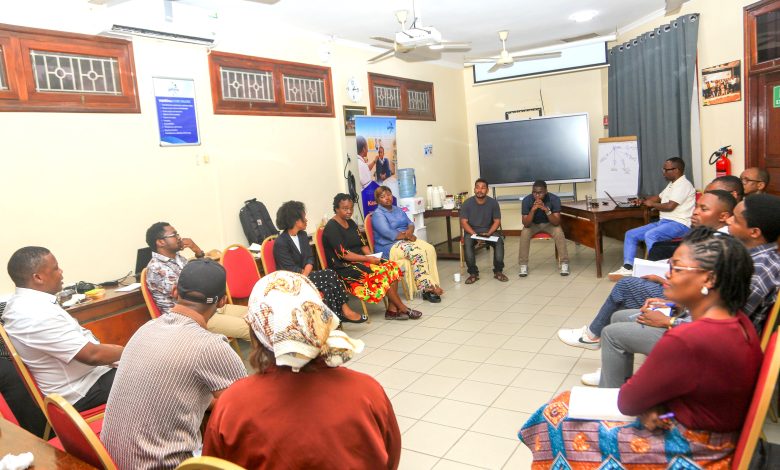
During the three-day Education Journalism Fellowship Engagement Workshop, organized by HakiElimu under the theme “Reimagining Inclusive Education in Tanzania Through Public Interest Journalism,”; participants explored the evolution of education systems and the transition from special education to integrated education and ultimately to inclusive education. Facilitating the one of the session, Dr.
Wilberforce Meena, Education Technical Advisor at HakiElimu, explained that understanding these three educational approaches is essential for journalists seeking to report accurately on issues affecting learners with diverse educational needs.
Dr. Meena described special education as the earliest approach developed to support learners with disabilities by providing specialized schools, teachers, equipment, and learning environments designed specifically for their individual needs.
While this model has enabled many children to access education that might otherwise have been unavailable, it often separates learners from their peers and limits opportunities for social interaction and inclusion.
“Special education was developed with good intentions to provide specialized support for learners with disabilities. However, by placing learners in separate environments, society unintentionally reinforced exclusion instead of promoting participation,” he noted.
ALSO READ: Modern agriculture key to food security, says Kabudi
He explained that although special schools continue to play an important role in supporting learners with complex educational needs, global thinking has gradually shifted toward approaches that encourage greater participation within mainstream education.
The workshop further examined integrated education, a model that allows learners with disabilities to attend ordinary schools alongside other learners. Unlike special education, integration seeks to increase access to mainstream classrooms.
However, Dr. Meena noted that integration often places the responsibility on the learner to adapt to an education system that remains largely unchanged.
“Integration allows learners with disabilities to enter mainstream schools, but too often the schools themselves remain unchanged. The learner is expected to fit into the system instead of the system adapting to the learner,” he said.
He emphasized that while integration represented an important step forward, many schools continued to lack accessible infrastructure, inclusive teaching methods, assistive learning materials, and adequately trained teachers capable of supporting diverse learning needs.
According to Dr. Meena, the most progressive approach is inclusive education, which shifts attention away from changing learners and instead focuses on transforming education systems to accommodate every learner.
Inclusive education recognizes that diversity exists naturally in every classroom and that schools should be designed to respond to those differences rather than expecting learners to conform to rigid structures.
“Inclusive education recognizes diversity as a normal part of learning. It is the education system not the child that must change to ensure every learner participates, belongs, and succeeds,” he indicated.
He explained that, “Inclusive education extends beyond disability to include learners facing barriers related to poverty, gender, language, geographical location, displacement, ethnicity, or other forms of marginalization,” He indicated that, “It therefore requires changes in curriculum design, classroom instruction, school leadership, infrastructure, assessment methods, and education policy to ensure equitable participation for all,”
Throughout the discussion, Dr. Meena emphasized that inclusive education benefits not only learners with disabilities but every learner within the education system. Inclusive classrooms encourage collaboration, mutual respect, empathy, and appreciation of diversity while improving learning outcomes for all students.
“An inclusive classroom benefits everyone. Children learn from one another, develop empathy, appreciate diversity, and build societies that value equality rather than discrimination,” he directed.
ALSO READ: JNIA set for premium lounge upgrade
He further noted that, “Teachers also benefit from inclusive education because it encourages the use of flexible teaching approaches capable of accommodating different learning styles. Rather than relying on a single method of instruction, educators become more creative in designing lessons that engage every learner regardless of ability,” Dr.
Meena explained that when children learn together from an early age, negative stereotypes gradually disappear, communities become more accepting of diversity, and discrimination decreases over time.
“Inclusive education does more than improve academic performance. It prepares societies where diversity is accepted, human rights are respected, and every citizen has an opportunity to contribute to national development,” he factored out.
Dr. Meena challenged participants to examine education policies, classroom realities, teacher preparedness, school infrastructure, and community attitudes when reporting education stories.
“Journalists have a responsibility to ask difficult questions. Are schools accessible? Are teachers adequately prepared? Are learning materials inclusive? These are the questions that reveal whether education systems are truly serving every child.”
Participants learned that inclusive education is also economically beneficial because excluding children from education often results in higher long-term social and economic costs. Learners who receive quality education are more likely to secure employment, participate in civic life, and contribute productively to their communities.
For journalists participating in the fellowship, the discussion served as a reminder that education reporting should go beyond documenting school enrolment or examination performance.
Instead, journalists were encouraged to investigate whether education systems genuinely provide equal opportunities for every learner.
As Tanzania continues implementing inclusive education policies, participants agreed that the media has an important role in promoting accountability and raising public awareness about educational inclusion. Through accurate, evidence-based, and solutions-oriented reporting, journalists can help ensure that inclusive education moves beyond policy commitments to become a reality in classrooms across the country.
The workshop concluded that achieving inclusive education requires collective action involving government institutions, schools, teachers, parents, communities, civil society organizations, development partners, and the media.
By understanding the differences between special education, integrated education, and inclusive education, journalists are better positioned to inform the public, challenge misconceptions, and contribute to meaningful discussions that support quality education for every learner.
Ultimately, the transition from segregation to integration and finally to inclusion reflects a broader global commitment to equality and human rights. It recognizes that every learner deserves not only access to school but also the opportunity to participate, learn, and thrive in an environment where diversity is respected and celebrated.
For Tanzania, embracing inclusive education represents not only an educational reform but also an investment in a more equitable and inclusive future for all.