Govt, WB allocate 21.8bn/- to improve secondary education
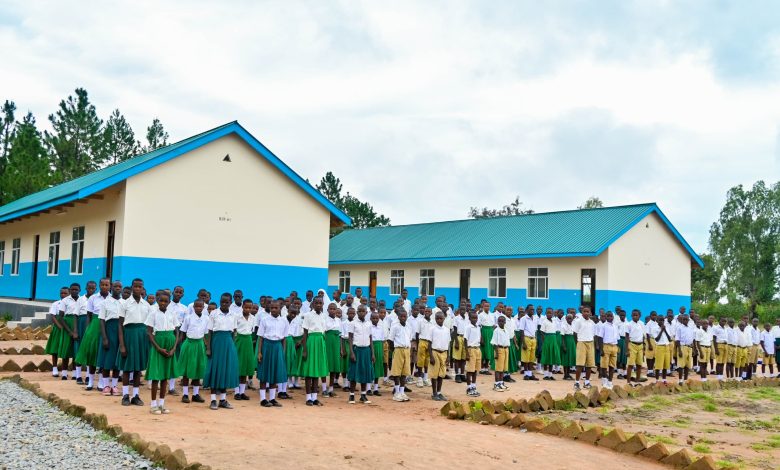
TANZANIA: THE government, in collaboration with the World Bank (WB), has allocated 21.8bn/- to the Institute of Adult Education (IAE) to support activities under the Secondary Education Quality Improvement Programme (SEQUIP).
The funding, which covers a four-year period from the 2021/2022 to 2024/2025 financial years, aim to improve the quality and accessibility of secondary education through alternative pathways.
This was said by IAE Rector, Professor Michael Ng’umbi, during the inauguration of a workshop on the “Force Account” model, which is being used to facilitate the construction and renovation of IAE buildings across Tanzania.
Prof Ng’umbi said that the five-year SEQUIP initiative has already contributed to the renovation of classrooms, toilets and hostels at various campuses and regional centres.
“For the remaining period of 2024/2025, our focus will be on constructing new multipurpose buildings, including classrooms and hostels. We are currently building hostels with a capacity of 80 students each in seven regions: Lindi, Kagera, Arusha, Katavi, Mbeya, Mara and Iringa,” said Prof Ng’umbi.
Deputy Director of Academics, Research and Consultancy, Professor Philipo Sanga, said that a total of 14bn/- had already been spent during the first four years of the project.
ALSO READ: Mama Samia Legal Aid initiative resolves over 1,500 disputes
He noted several achievements, including the successful reintegration of 10,239 girls into secondary education, who had dropped out over the past three years.
“One of the notable accomplishments of SEQUIP is the reintegration of 10,239 girls who had dropped out of school, allowing them to return to secondary education,” said Prof Sanga.
Prof Sanga also pointed out a previously overlooked challenge the high dropout rate among boys, particularly in the southern regions of Mtwara, Lindi and Ruvuma, as well as in the Lake Zone regions, including Shinyanga and Simiyu.
In response to this issue, the Ministry of Education, Science and Technology approved the inclusion of boys in the SEQUIP programme.
Prof Sanga said that the goal for this year is to register 1,000 boys. As of January 26, a total of 888 boys had already been registered nationwide.
“We have an annual national target of enrolling 3,000 girls and 1,000 boys. As of January 26, this year, we have successfully registered 2,888 students across the country 2,000 girls and 888 boys. The registration process is ongoing,” he said.
He also noted that the leading regions in enrolment include Mtwara, Shinyanga, Dodoma and Ruvuma.
“Even in regions where lower participation was expected, such as Dar es Salaam, we’ve seen a significant response. The registration process will continue until March 30, this year,” Prof Sanga added.