Govt sets gender targets for 2050
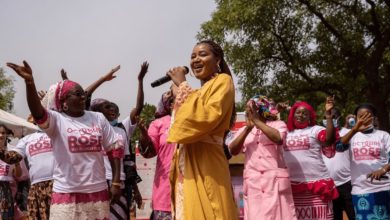
DAR ES SALAAM: IN the wake of this year’s International Women’s Day, the government has detailed the specific requirements for women’s participation in the country’s long-term development.
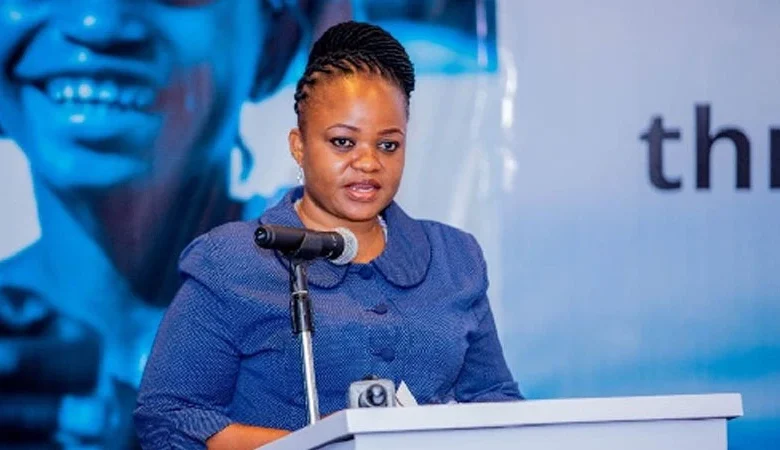
Deputy Minister for Community Development, Gender, Women and Special Groups, Engineer Maryprisca Mahundi, said that national progress under Vision 2050 depends on the practical protection of women’s rights and equal access to opportunities.
Speaking recently in Dar es Salaam, Eng Mahundi saied that the 2026 theme, “Rights and Equality for Women and Girls: An Inclusive Foundation to Achieve Vision 2050,” is a directive to invest in the health and education of the female population.
She said that because women make up more than 50 per cent of Tanzania’s population, according to the 2022 Census, they carry a primary responsibility for family stability and the upbringing of the next generation.
“Women are not a weak group but an army of knowledge, courage and hope,” Eng Mahundi said, citing Psalm 68:11.
She emphasized that for the country to reach its 2050 goals, women must be healthy, educated in modern skills, and involved in decisionmaking at all levels.
She also credited the current administration under President Samia Suluhu Hassan for ongoing work to improve health infrastructure and lower maternal mortality rates.
While the Dar es Salaam meeting focused on long-term goals, a separate session in Dodoma addressed the immediate safety of women and children.
The Minister for Community Development, Gender, Women and Special Groups, Dr Dorothy Gwajima, officially launched the Technical Working Groups for the second phase of the National Plan of Action to End Violence Against Women and Children (NPAVAWC II).
ALSO READ: Iron Ladies light up Tanzania’s International Women’s Day
The launch, held at the government city of Mtumba, marks a shift toward stricter oversight. Dr Gwajima acknowledged that while the plan has the support of 16 different ministries, its actual implementation has been slow due to weak coordination. To fix this, Dr Gwajima directed the establishment of a new monitoring system.
Heads of technical working groups will now be required to attend quarterly review meetings with ministry leadership to report on their progress.
The Minister identified several specific factors contributing to violence, including limited household income, the influence of social media, and a failure to follow established punishment guidelines in schools.
She further said that the fight against gender-based violence cannot succeed unless every stakeholder, from the household level to the ministry, performs their assigned duties.
The government’s roadmap for the coming decades hinges on the fact that women constitute more than 50 per cent of the national population, making their health and education a primary requirement for family and economic stability.
Achieving the goals of Vision 2050 will necessitate a generation of women who are not only highly skilled but also actively positioned at the heart of national decision-making processes.
To support this, the administration under President Samia Suluhu Hassan is focusing on expanding health infrastructure to specifically reduce maternal and child mortality across all regions.
Furthermore, the newly launched technical working groups for the National Plan of Action will now undergo quarterly reviews to ensure that efforts to end violence against women and children move beyond planning and into measurable local implementation.