GNU opens new chapter for Zanzibar’s economic development
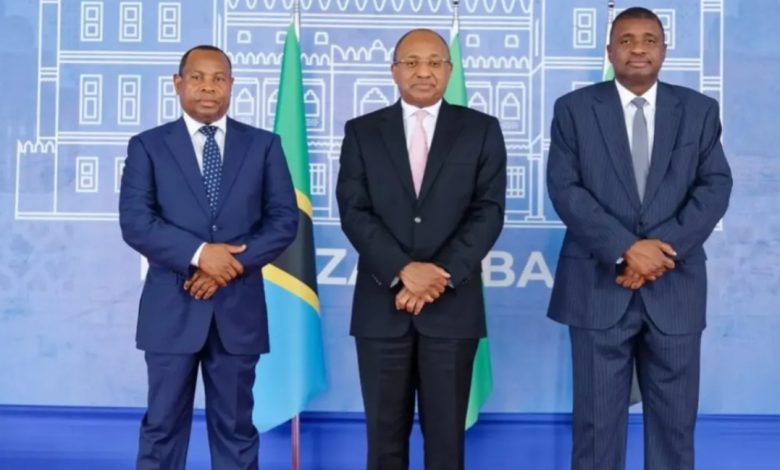
ZANZIBAR: THE restoration of Zanzibar’s Government of National Unity (GNU) has opened a new political chapter that leaders and other stakeholders say should now be translated into economic opportunities, stronger investment, employment and improved living standards for citizens.
The formal return of the GNU followed the swearingin of Othman Masoud Othman as First Vice President on September 22, 2026, under the political reconciliation agreement signed by the ruling Chama Cha Mapinduzi (CCM) and ACT-Wazalendo on July 9.
President Hussein Ali Mwinyi described the development as the beginning of a new phase in which political leaders should work together to address national challenges and accelerate development.
“The political reconciliation we have achieved is not the end of the journey, but the beginning of working together to build our country and accelerate development for our people,” Dr Mwinyi said.
For Zanzibar, the economic significance of the GNU lies in whether the political cooperation can create a stable environment for investment, business and implementation of development programmes.
President Mwinyi said the government would focus on economic growth, employment and opportunities for young people, the empowerment of women, tourism, the Blue Economy, investment and infrastructure, alongside improvements in health, education, water and energy. He urged leaders to respond to citizens’ expectations by putting development ahead of political disputes.
“Citizens have great expectations of us,” he said, calling on leaders to “protect peace and direct their efforts towards solving the challenges facing them and bringing development.”
Othman, who is also ACTWazalendo’s national chairman, echoed the message, stressing that the GNU should not be viewed as an arrangement for sharing political positions.
“The Government of National Unity is not a mechanism for political groups to share positions,” he said, describing it instead as an instrument for advancing reconciliation and national unity.
In his swearing-in speech, Othman said the completion of the GNU was only the beginning of a much broader national undertaking.
“The completion of the formation of the Government of National Unity does not conclude Zanzibar’s journey. It begins an important journey that requires genuine commitment, truth, understanding and the participation of each one of us,” he said.
He argued that Zanzibar must prepare itself for rapid changes in global politics, finance, technology and production if it is to benefit from emerging economic opportunities.
Othman also called on political parties to choose leaders who understand the country and put national interests first, while urging public servants to strengthen their performance because effective government institutions are essential to economic transformation.
As Othman pledged at his swearing-in, “I will serve you to the best of my ability” and work to move Zanzibar forward.
During his first public meetings in Pemba after taking office, Othman continued to stress unity as a foundation for development.
“There is no country in the world that can achieve development without building unity,” he said, pointing to Singapore as an example of a country that placed national interests and unity at the centre of its development efforts.
He also urged citizens to “forget what happened in the past” and work together to move Zanzibar forward.
ACT-Wazalendo Vice Chairman for Zanzibar Ismail Jussa Ladhu said the reconciliation process had required courage and wisdom and should now be protected.
He said Othman’s efforts had focused not on political positions but on preventing recurring divisions after elections, arguing that such cooperation could help create “true development for all Zanzibaris.”
ALSO READ: Tanzania, UK agree to bolster ties in economic development, trade, diplomacy
Jussa also warned against selfish interests within political organisations, saying leaders should place Zanzibar’s interests above personal ambitions.
ACT-Wazalendo Deputy Secretary General in Zanzibar, Omar Ali Sheha, said the journey had not reached its destination.
He said the goal was to build “one Zanzibar, with citizens who trust one another,” while ensuring that economic and social progress benefited ordinary people. Voices outside ACT-Wazalendo also welcomed the development.
Minister of State in the Vice President’s Office for Union and Environment, Engineer Hamad Yussuf Masauni, said Tanzania and Zanzibar needed unity and cooperation to achieve sustainable development.
“The unity, solidarity and peace are foundations that must be protected by leaders and citizens for sustainable development,” Masauni said.
National Council of Elders, Secretary Janet Menda De Fusi , described the return of the GNU as an opportunity to move beyond political differences and concentrate on citizens’ welfare.
She said the swearing-in of an ACT-Wazalendo First Vice President represented “a new beginning and hope for Zanzibaris,” creating conditions for greater respect, peace and stability.
CCM Zanzibar Secretary for Ideology, Propaganda and Training, Khamis Mbeto Khamis, said his party was ready to cooperate with the GNU and put national interests first.
“The most important thing is to make our country stable, united and loving,” Mbeto said, urging the government and citizens to support development activities. He added that the Joint Committee for Implementation should continue working on agreed issues and submit its recommendations within the agreed three-month period.
For young people, the GNU has raised expectations that political cooperation can translate into practical economic opportunities.
Chairman of the Zanzibar Youth Council, Mohammed Amani Juma, said young people welcomed the new political environment because cooperation could bring together efforts to address youth challenges.
“Now is not the time to say which party I belong to; now is the time to build our country and work hard to bring development,” he said.
The challenge now is to turn political reconciliation into measurable economic results.
The GNU has created a framework for cooperation; its lasting significance will depend on whether leaders can use that framework to strengthen investment, tourism, the Blue Economy, infrastructure, employment and public services.