Global Coffee giants quietly reshape Tanzania’s rural economy
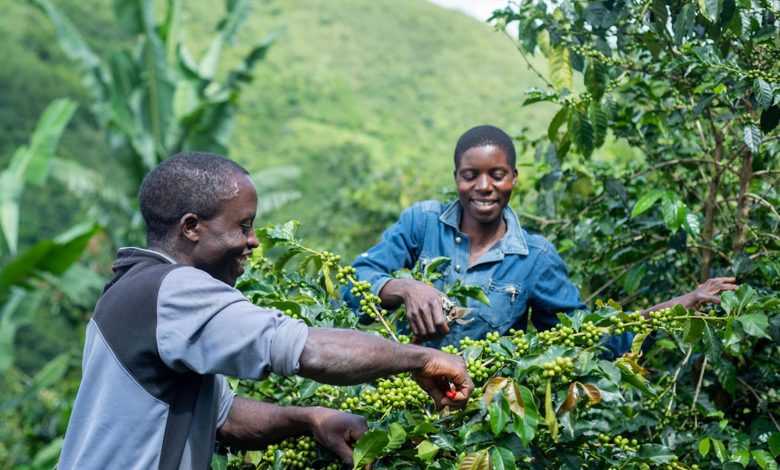
DAR ES SALAAM: As International Coffee Partners (ICP) marks its 25th anniversary, Tanzania stands out as a compelling example of how long-term collaboration can transform smallholder farming systems and reshape the future of coffee production.
Founded in 2001 during a global coffee crisis, ICP united leading European coffee companies , including Lavazza, Tchibo, Neumann Kaffee Gruppe, Löfbergs, Delta Cafés, Franck, and Joh. Johannson Kaffe—around a shared commitment: building a more sustainable, resilient coffee sector through pre-competitive collaboration. Rather than competing at origin, these companies chose to invest jointly in farmer livelihoods, recognizing that the long-term stability of the coffee industry depends on the well-being of those who produce it.
Over the past 25 years, ICP has invested €25 million in programs supporting smallholder farmers and mobilized additional funding from development partners and donors. Its initiatives now span 13 coffee-producing countries, delivering measurable improvements in productivity, sustainability, and community resilience. Among these countries, Tanzania offers one of the clearest illustrations of lasting impact.
“For us in Tanzania, ICP’s 25-year journey is not just a milestone, it reflects real change in the lives of smallholder coffee farming families,” said Morgan Mkonyi, Co-Country Manager at Hanns R. Neumann Stiftung (HRNS) Tanzania, ICP’s implementing partner.
Across Tanzania’s coffee-growing regions, farmers have adopted improved agricultural practices that increase yields while protecting natural resources. Training programs have equipped them with knowledge on soil health, pruning, pest management, and efficient water use.
These changes have led not only to higher productivity but also to more consistent and improved coffee quality, enabling farmers to access better market opportunities.
Through sustained training, partnerships, and community engagement, Tanzanian farmers have improved productivity, strengthened resilience to climate change, and diversified incomes. These efforts have enhanced coffee quality while improving food security and livelihoods across farming communities.
Equally significant is the progress made in climate resilience. Coffee farming is highly sensitive to changing weather patterns, and Tanzanian farmers are already experiencing the effects of rising temperatures and unpredictable rainfall.
ICP’s programs address these challenges by promoting climate-smart practices such as shade tree integration, soil conservation, and crop diversification. These approaches reduce vulnerability and help farmers maintain stable production despite environmental pressures.
Income diversification has become another critical pillar of resilience. By encouraging farmers to cultivate additional crops alongside coffee, ICP reduces dependence on a single commodity. This strategy provides alternative income streams, strengthens food security, and buffers households against market fluctuations.
As a result, farming families are better positioned to manage risks and invest in their futures.
Mkonyi emphasized that the anniversary is both a celebration and a forward-looking commitment. Supporting the next generation of coffee farmers remains essential to sustaining progress.
Without deliberate efforts to engage young people, the long-term viability of the sector could be at risk.
ICP’s approach is deliberately holistic. It goes beyond increasing coffee yields to address the broader ecosystem in which smallholder farmers operate. Programs focus on family business development, helping farmers view their activities as enterprises rather than subsistence operations.
This shift encourages better financial planning, investment decisions, and long-term thinking.
The organization also prioritizes strengthening farmer organizations. Since its founding, ICP has worked with more than 2,700 cooperatives and producer groups worldwide. In Tanzania, stronger cooperatives have improved farmers’ access to markets, financing, and essential services.
Organized farmers are better able to negotiate prices, meet quality standards, and connect with buyers, increasing their competitiveness in global markets.
Globally, more than 125,700 farming families have participated in ICP programs, including thousands in Tanzania. These farmers benefit not only from technical training but also from improved networks and support systems that enhance their ability to adapt and grow.
Inclusion remains a central principle of ICP’s work. Women and youth, historically underrepresented in decision-making processes, are increasingly taking on leadership roles within farming communities.
In 2025, women accounted for 45% of training participants, while 22% were young people aged 18 to 35. These figures signal meaningful progress toward a more inclusive and dynamic coffee sector.
Empowering women has had far-reaching effects. When women gain access to training, resources, and leadership opportunities, household incomes and well-being improve. Similarly, engaging youth is critical for the sector’s future.
By making coffee farming more attractive and profitable, ICP helps ensure that younger generations remain involved rather than seeking opportunities elsewhere.
The origins of ICP date back to 1999, when Michael R. Neumann envisioned a unified development initiative among coffee companies. At the time, the global coffee sector faced significant challenges, including low prices and widespread farmer vulnerability.
Neumann’s idea was to move beyond competition and foster collaboration that could address shared problems at their roots.
This vision became reality in 2001 with the creation of ICP. Over the years, the initiative has demonstrated that pre-competitive collaboration can deliver tangible benefits. By pooling resources, knowledge, and expertise, participating companies have achieved outcomes that would have been difficult individually.
“It is impressive to see how this entrepreneurial and ethical approach has delivered meaningful change over 25 years,” Neumann noted, reflecting on the organization’s progress.
Today, ICP continues to operate on this foundation of partnership. According to Rui Miguel Nabeiro, Chair of ICP’s Steering Committee, ensuring resilience in coffee farming and securing a prosperous future for farming families require collective action. No single organization or company can address the complex challenges facing the sector alone.
Despite its achievements, ICP recognizes that significant challenges remain. Climate change continues to threaten coffee production worldwide, altering growing conditions and increasing risks for farmers.
At the same time, rising production costs and declining global aid create additional pressures that could undermine progress.
In response, ICP is strengthening its long-term, collaborative approach.
The organization focuses on sharing knowledge, scaling proven solutions, and fostering partnerships that amplify impact. By building on its experience, ICP aims to extend its reach and deepen its effectiveness in supporting farming communities.
Lessons from other countries reinforce this strategy. In Indonesia, for example, sustained and inclusive engagement has helped transform previously overlooked coffee regions into competitive contributors to the global market. These experiences highlight the importance of consistency, local adaptation, and strong partnerships in achieving lasting change.
Tanzania’s experience reflects these principles. The country’s coffee sector has evolved through a combination of global support and local commitment. Farmers, cooperatives, development organizations, and private companies have worked together to address challenges and seize opportunities.
This alignment has been essential to the progress achieved so far.
As ICP celebrates its 25th anniversary, Tanzania serves as a powerful example of what is possible when long-term investment meets local engagement. Improved yields, stronger organizations, diversified incomes, and more resilient communities all point to a sector that is better prepared for the future.
Looking ahead, the focus remains on sustainability and inclusion.
Building a fair coffee industry means ensuring that smallholder farmers are not only participants but active leaders in shaping its direction. Their knowledge, experience, and resilience are critical to addressing the challenges ahead.
The journey is far from complete. However, the progress made over the past 25 years demonstrates that meaningful change is achievable through sustained effort and collaboration. For Tanzania’s coffee farmers, the results are already visible in their fields, their incomes, and their communities.
Ultimately, ICP’s work underscores a broader lesson: lasting transformation in agriculture requires patience, partnership, and a commitment to shared goals.
Tanzania’s story shows that when these elements come together, they can create a more resilient and equitable future for farmers and the coffee sector as a whole.