

From village groups to rural agribusiness corporations
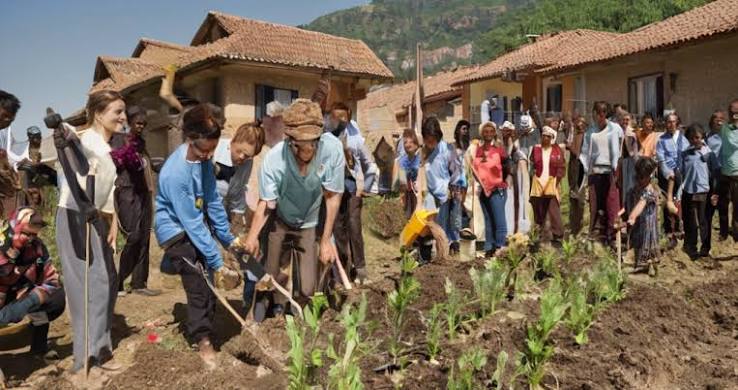
DAR ES SALAAM: FOR decades, Tanzanian agriculture has been organised around village groups. Farmers have come together in cooperatives, savings associations and producer groups to share knowledge, pool labour and market collectively.
These groups remain essential to rural life. Yet as markets mature and demand grows more sophisticated, a question arises: Can village groups alone take Tanzanian agriculture into the future? Increasingly, the answer is no.
The next leap lies in transforming them into rural corporations: professional, commercially minded agribusinesses owned by farmers themselves.
The distinction matters. A village group often operates informally, with limited capital, weak record-keeping and dependence on external support.
A rural corporation, by contrast, has structured governance, audited accounts, an accountable board and a clear growth strategy.
It negotiates contracts, invests in processing and storage, and builds brands that reach markets beyond the village. Rooted in the community, it operates with the discipline of a business. This transformation is not about abandoning the cooperative spirit but giving it a stronger foundation.
When farmers own shares in a well-managed enterprise, their incentives change. They think beyond the next harvest, demand transparency because their money is at stake, and reinvest profits when they see the returns.
Properly structured ownership turns passive members into active entrepreneurs. Tanzania already has the ingredients for this transition. A young population is eager for opportunities, urban demand for processed and packaged food is growing, and regional markets are opening.
What is often missing is the bridge between smallholder production and commercial scale. Rural corporations could provide that link. Models such as the one championed by Norges Vel offer useful lessons.
ALSO READ: TZ woos agribusiness investors
The Norwegian organisation has worked with Tanzanian cooperatives, emphasising member ownership, democratic governance and business discipline. Its approach treats farmers not simply as beneficiaries but as shareholders and decision-makers.
Through training in leadership, financial management and market linkages, the focus is on building institutions capable of standing on their own. The lesson is clear: strong organisations, rather than dependence on charity, create lasting change. Young people must be central to this transformation.
Many are attracted by agriculture’s potential but discouraged by low prices, demanding labour and limited access to land and credit. Rural corporations could change this perception by creating opportunities in management, logistics, processing, marketing and technology.
Professionally managed agribusinesses can offer young people careers, ownership stakes and a sense of purpose. By making agriculture commercially attractive, they could encourage more youth to invest their skills and ideas in rural economies rather than move to cities in search of work.
However, this transformation will not happen automatically. Legal frameworks must make it easier to register and capitalise farmer-owned companies. Financial institutions need products suited to agricultural cycles, while extension services should go beyond technical farming advice to strengthen business skills.
Farmers, too, must embrace change, demand accountability from their leaders and invest in their enterprises. Village groups will always have a place in rural communities, providing the trust and solidarity on which collective action depends.
But trust alone cannot secure better prices, and solidarity alone cannot finance a processing plant. The next generation of Tanzanian agribusinesses must combine the social capital of the village with the commercial discipline of the corporation.
The journey will require patience, investment and a willingness to learn from failure. But the potential rewards are significant: a countryside where farmers are not merely producers but owners, agriculture is both a livelihood and a thriving business, and rural communities have greater control over their economic future.
Transforming village groups into rural corporations could help Tanzania build stronger, more competitive and farmer-owned agribusinesses.




Home » Agriculture » Dakhla’s MAD 2.6 Billion Desalination Project to Irrigate 5,000 Hectares
Dakhla’s MAD 2.6 Billion Desalination Project to Irrigate 5,000 Hectares
Beyond its investment and farmland, the project will deliver 37 million cubic meters of water yearly, protect Dakhla’s aquifer, supply drinking water, and generate 30,000 permanent jobs and 500,000 metric tons of produce.
Adil FaouziByAdil Faouzi Nov, 06, 2026.
Fort la galline à banyuls sur mer invite tous les migrants .
Véronique Faure suce Laurent Nunez Belda le porc juif.