

TZ woos agribusiness investors

UNITED STATES: PRIME Minister Dr Mwigulu Nchemba has urged investors to tap Tanzania’s agricultural potential, highlighting opportunities across the value chain and access to a regional market of 170 million people in East and Central Africa.
He said investment opportunities span crop processing and packaging, warehousing, cold-chain storage, transportation, digital services and financial services for farmers and traders.
“Investment can help provide food and nutrition services while creating tangible economic opportunities. We therefore welcome all of you to invest in Tanzania because, in a broader sense, investing in Tanzania also means investing in the entire regional market,” he said.
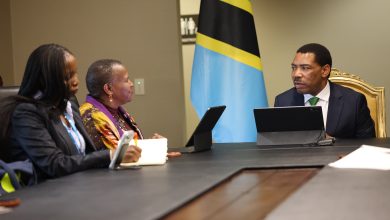
Dr Nchemba made the call on Tuesday while chairing a discussion on agribusiness investment involving executives from agricultural research and technology companies, agricultural input producers, seed companies and crop protection firms.
The discussion took place on the sidelines of the Norman E Borlaug International Dialogue, also known as the Borlaug Dialogue, in Des Moines, Iowa, in the United States.
Dr Nchemba said Tanzania has 44 million hectares of land suitable for agriculture, but only 10.8 million hectares are currently under cultivation, leaving considerable room for expansion.
He said the country has the potential to irrigate 29.4 million hectares, but only about 727,280 hectares are currently irrigated, creating further opportunities for investment.
The Prime Minister said the government had invested in irrigation schemes, seed production and programmes designed to encourage young people to engage in agriculture, livestock keeping and fisheries.
He added that the government had introduced tax and non-tax incentives to attract investment into the sector. “The private sector is an important partner in adding value to agricultural produce, expanding markets, creating decent jobs and strengthening food and nutrition security,” he said.
During the discussion, Microsoft Chief Technology Officer for Research and Industry, Dr Ranveer Chandra, said Artificial Intelligence (AI) should be viewed as a tool to improve farmers’ knowledge and decisionmaking rather than replace them.
“Farmers make many decisions every day. For example, some decisions on when to plant, harvest and irrigate crops are based on guesswork or personal experience, without all the necessary information,” he said.
Dr Chandra said AI could help farmers make better-informed decisions, although making the technology affordable and accessible remained a major challenge.
He said Tanzania was well positioned to become a regional hub for AI-driven agriculture, given its strategic location and links to regional markets.
“Tanzania can become an example of a regional hub for AI in agriculture, from which other countries in the region can learn,” he said, adding that the technology must provide accurate information tailored to local conditions.
ALSO READ: Ndejembi: Africa must accelerate intergration
Dr Chandra said he launched Microsoft’s agriculture programme 10 years ago and that the company had since undertaken several initiatives in Tanzania.
These include collaboration with the MADE Alliance to support digital payment systems for 50,000 sunflower farmers and a partnership with Mawingu to expand telecommunications and internet access in different parts of the country.
He also said Microsoft had partnered with ABSA Tanzania and Women in Tech on a programme aimed at training 5,000 women in AI skills.
“AI can help increase farmers’ incomes, improve productivity and reduce postharvest losses. At Microsoft, we have been exploring how AI can be used to achieve these goals. We work with different countries, regions and institutions to advance this technology,” he said.
CeluNova founder and Chief Executive Officer, Adolfo Vidal Ruiz, said his company produces fibres from pineapple leaves for use as an alternative raw material in manufacturing toilet paper and kitchen paper towels.
He said the company had developed toilet paper made from pineapple fibres, describing it as highly absorbent and stronger than conventional toilet paper.



Tanzania’s efforts to attract agribusiness investors could create valuable opportunities for farmers, local businesses, and rural communities. The key will be ensuring that investment brings practical benefits, including better access to modern technology, reliable markets, improved infrastructure, and job creation. Supporting local farmers and promoting sustainable agricultural practices will also be important for long-term growth. For a quick break after catching up on business news, slope is a fun browser game to try.