From research grants to economic value: Africa’s funding agencies face a new test
DAR ES SALAAM: RESEARCH funding is entering a new phase in Africa. The question is no longer simply how much money is available for science, but whether institutions can turn that money into technologies, businesses, better public services and productivity gains.
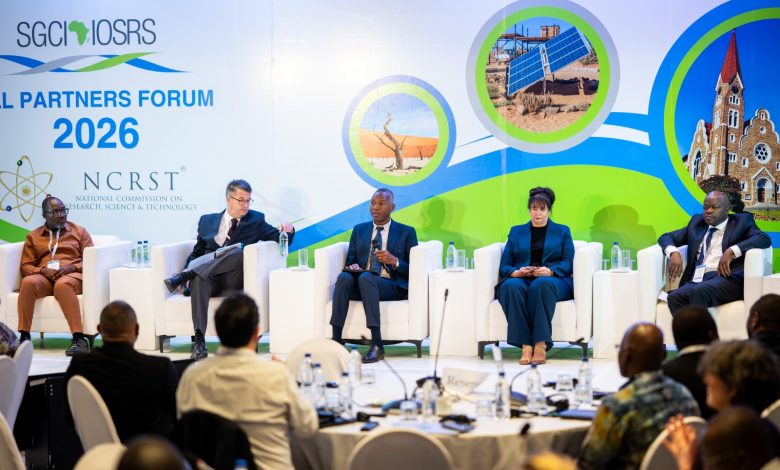
That shift was central to discussions at the Science Granting Councils Initiative (SGCI) All Partners Forum in Windhoek, where research funding agencies were urged to improve how they select priorities, manage grants and work across borders.
For Tanzania Commission for Science and Technology (COSTECH) Director General, Dr Amos Nungu, the next test is institutional capacity.
“A council needs the capacity to work with its peers, align procedures where useful, and manage joint investments. When one council develops an effective approach and shares it, the whole Alliance gains,” he said.
The argument has a direct business implication. Public research funding is capital, and like other forms of investment, its value depends on how effectively it is allocated, managed and converted into results.
Councils determine which research receives funding, how proposals are assessed, how projects are monitored and how findings reach businesses, policymakers and other users. Weaknesses at any point can delay the movement of knowledge from laboratories and universities into commercial products, technologies and services.
Dr Nungu, who leads capacity strengthening under SGCI’s third phase, said councils were facing growing demands to fund quality research, make fair decisions, manage increasingly complex programmes and build partnerships.
He said reliable systems for setting priorities, evaluating proposals, monitoring projects and communicating results were necessary if public investment was to deliver lasting value.
That emphasis comes as the continent seeks to address challenges that do not stop at national borders. Climate resilience, health, food systems and technological change were among the areas Dr Nungu identified as requiring greater cooperation among countries and disciplines.
The SGCI forum, running from September 28 to October 2, brings together science granting councils, funders, technical partners and policy actors as the alliance moves into the implementation phase of SGCI-3. The programme places particular emphasis on co-investment, institutional capacity, policy influence, inclusion and international partnerships.
The commercialisation gap
Namibia Prime Minister Dr Tjitunga Ngurare put the issue in broader economic terms when he questioned why African governments often turn to foreign consultants when expertise exists within the continent.
“When we need consultants, we do not come to you, the African consultants. We go to other consultants,” he told delegates. “How do we use then our own capacity?”
His question points to a wider challenge: Building African institutions that can generate knowledge and also capture its economic value.
For companies, locally generated research can reduce the cost of solving problems that are specific to African markets. It can support new products, improve production processes and provide evidence for investment decisions. But that requires stronger links between researchers, companies, governments and financing institutions.
Further, the Prime Minister also called for longer-term programmes addressing food security, health, energy, water, climate change and digital transformation. His emphasis was on using African expertise more effectively and creating conditions for research findings to be applied.
The same issue emerged in discussions among councils from Ghana, South Africa, Kenya and Namibia.
Ghana’s Dr Cephas Mensah explained the structure of the SGCI Alliance and the roles of councils, funders and technical partners as the initiative moves from cooperation towards joint implementation.
South Africa’s Dr Angus Paterson discussed opportunities for deeper cooperation among councils, while Kenya’s Prof Dickson Andala focused on collaborative research calls and improving the route from research findings to those able to use them.
The underlying proposition is straightforward where cooperation can allow countries to share costs, expertise, infrastructure and experience instead of building parallel systems for similar challenges.
A new funding model
The emerging approach also places greater emphasis on co-investment.
Prof Andala said rather than treating research councils as isolated national institutions, the SGCI Alliance is seeking mechanisms through which councils can identify common priorities and support research across borders. The alliance has moved into SGCI-3, with the current forum focused on translating previous cooperation into coordinated implementation.
For businesses, this matters because larger and more coordinated research programmes can create opportunities that individual national markets may not support.
A research project on agricultural technology, for example, could generate applications across several countries. Health research could benefit from shared data and expertise. Work on climate resilience, digital technologies or manufacturing could similarly have markets beyond the country where it begins.
But cross-border investment requires institutions capable of agreeing on priorities, evaluating proposals, managing funds and measuring results.
This is where Dr Nungu sees capacity strengthening as more than an administrative exercise.
“Inclusion requires institutional ability, not only institutional intention,” he said, calling on councils to examine who receives information about funding opportunities, who can apply, how applications are assessed and whose knowledge is recognised.
The objective, he said, should be measurable institutional performance: Stronger programmes, wider researcher participation, cross-border collaboration and evidence that research is influencing decisions.
“The strength of an Alliance is measured by what its members become able to do, consistently and together,” he said.
The debate has particular relevance for Tanzania as the country begins implementing Development Vision 2050.
The Vision identifies research and development as important to innovation, productivity and competitiveness. It calls for sustainable Research and Development (R&D) financing mechanism allocating at least one per cent of GDP and envisages stronger links between research institutions, industry and global partners. It also seeks to position Tanzania as a regional innovation hub.
The country’s long-term planning framework similarly identifies science, technology and innovation as tools for increasing productivity, reducing costs and improving services, while noting continuing challenges in R&D spending, infrastructure, technology transfer and collaboration.
For COSTECH, this creates a dual challenge that securing resources for research while ensuring the institutions managing those resources can demonstrate economic and social returns.
At Sokoine University of Agriculture (SUA), Prof Gerald Misinzo leads a research chair studying viral epidemics affecting people and animals, while the Nelson Mandela African Institution of Science and Technology hosts a chair in nanoscience and nanotechnology. COSTECH serves as the implementing partner in Tanzania.
Nasir Faruqi of Canada’s International Development Research Centre cited such research chairs as one outcome of partnerships developed through SGCI. He also pointed to cooperation during the Covid-19 period and opportunities in vaccine research and manufacturing.
The significance goes beyond individual projects. Strong research capacity can attract international capital, technology partnerships and skilled talent when institutions demonstrate credible systems and commercially relevant results.
The local expertise question
Here is a fully English, tighter Bloomberg-style version: Tanzania also faces the challenge of making better use of local expertise.
SUA Lecturer and Researcher, Dr Philbert Nyinondi, said foreign expertise is sometimes given greater credibility, leaving local researchers struggling for recognition and opportunities.
He cited weak links between researchers and industry, limited funding and equipment, and procurement practices that can favour foreign firms.
Dr Erastor Ntufyewe of COSTECH said the country is increasingly using local experts, although procurement systems can still favour foreign specialists.
The challenge goes beyond funding. It requires stronger links between research and industry, better procurement systems, intellectual property frameworks, equipment and clearer pathways for commercialising research.
As Vision 2050 targets an innovation-led economy, research success should be measured not only by grants and publications, but by technologies, businesses, stronger industries and solutions reaching the market.
The business case is clear: Turning research and knowledge into economic capability.