

From Grief to Growth: Widows build enterprises, raise families
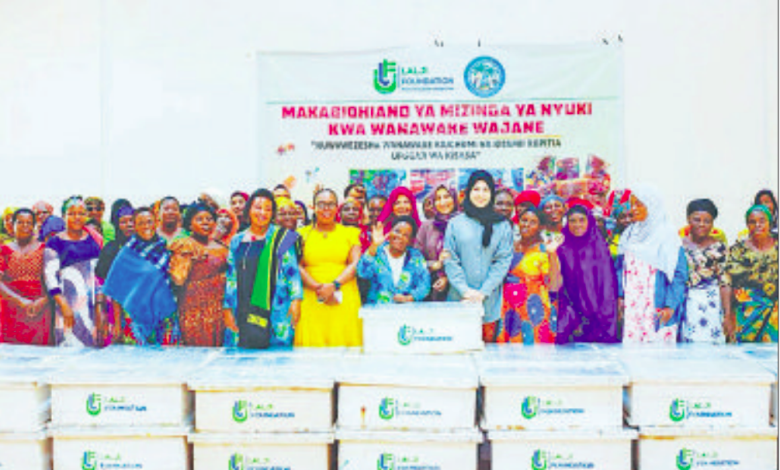
KIGOMA: HEY must have lost hope as widows, but in a significant step toward strengthening community-level economic resilience and complementing ongoing government efforts to support vulnerable groups, the LALJI FOUNDATION has donated 50 beehives to the Tanzania Widows Women’s Association (CCWWT) in Kigoma Region.
The initiative is part of a broader strategy aimed at equipping widowed women particularly those in rural and underserved areas with sustainable income-generating opportunities through modern beekeeping.
This intervention reflects a growing recognition that empowering widows is not only a social responsibility but also a strategic investment in grassroots development.
Across Tanzania, widows, especially in rural settings, often face a unique combination of economic hardship, social exclusion, and limited access to productive resources.
By introducing structured beekeeping projects, stakeholders such as the LALJI FOUNDATION are reinforcing national development priorities that emphasize inclusive economic participation, poverty reduction, and women’s empowerment.
Speaking during the official handover ceremony, the Secretary of the LALJI FOUNDATION, Ms. Fatema Imtiaz Lalji, described the initiative as the first phase of a larger, carefully designed program that aims to distribute a total of 200 beehives to widows across different regions of the country.
She emphasized that the project is not a one-time intervention, but rather a scalable and sustainable model intended to gradually expand its reach and deepen its impact.
According to Ms. Lalji, the decision to begin in Kigoma Region was both strategic and need-based.
Rural communities in the region face persistent economic challenges, and widows, in particular, often bear the burden of limited livelihood opportunities.
By targeting this group, the foundation seeks to create pathways for financial independence while also addressing broader social vulnerabilities.
“We recognise the immense contribution women make to society, including in agriculture, family care, and community development,” she said.
“At the same time, we are fully aware of the challenges they face—especially widows, who are often left to navigate economic survival on their own. Through this project, we aim to provide them with practical tools and skills that will enable them to become self-reliant and financially secure.”
The initiative aligns closely with national efforts to promote small-scale industries and rural entrepreneurship as key drivers of economic growth.
Beekeeping, in particular, has been identified as a viable and environmentally friendly enterprise that requires relatively low capital investment while offering high returns when managed effectively.
It also contributes to biodiversity conservation through pollination, making it a dual-purpose activity that supports both livelihoods and environmental sustainability.
To ensure the success of the project, the LALJI FOUNDATION incorporated a strong capacity-building component prior to the distribution of the beehives.
On February 15, 2026, beneficiaries underwent professional training in Bagamoyo District, where they were equipped with essential knowledge and practical skills in modern beekeeping practices.
The training covered key areas such as hive management, safe and efficient honey harvesting techniques, and proper storage and handling of bee products, including honey and beeswax.
This preparatory step was critical in addressing one of the most common challenges facing small-scale producers: lack of technical expertise.
By investing in knowledge transfer, the foundation is helping to ensure that beneficiaries can maximize productivity while maintaining quality standards that meet market demands.
“The training will significantly improve both productivity and the quality of the products,” Ms. Lalji noted.
“This, in turn, will enable the widows to compete more effectively in local and potentially regional markets.”
Beyond production, the initiative also takes into account the often-overlooked issue of market access. Many small-scale beekeepers struggle not because of low production, but due to unreliable or exploitative market systems.
To address this, the LALJI FOUNDATION has incorporated a market linkage component into the project, aimed at connecting beneficiaries with stable and fair markets for their products.
This includes facilitating access to buyers for honey and beeswax, as well as exploring value addition opportunities that could further increase income potential.
By addressing both production and market challenges, the initiative adopts a holistic approach that enhances the long-term viability of beekeeping as a livelihood.
For the members of the Tanzania Widows Women’s Association (CCWWT) in Kigoma, the support has been received with enthusiasm and optimism.
Many expressed their appreciation for the intervention, noting that it represents a turning point in their efforts to improve their living conditions and support their families.
They highlighted that beekeeping offers a flexible and accessible income-generating activity that can be integrated into their daily lives without requiring large-scale land ownership or heavy labor.
With proper training and continued support, they believe the project has the potential to transform not only individual households but entire communities.
The beneficiaries also acknowledged the importance of ongoing guidance and pledged to manage the beehives responsibly.
They committed to applying the skills they acquired during training to ensure that the project achieves its intended objectives.
“This opportunity has given us hope and a sense of direction,” one member noted.
“With the knowledge and tools we have received, we are confident that we can build a better future for ourselves and our children.”
The broader implications of the initiative extend beyond income generation.
By empowering widows economically, the project contributes to improved household welfare, increased access to education for children, and enhanced community stability.
At the same time, the promotion of beekeeping supports environmental conservation efforts through sustainable land use and the protection of pollinators, which are essential for agricultural productivity.
As Tanzania continues to implement policies and programs aimed at uplifting marginalized groups, partnerships with organizations such as the LALJI FOUNDATION play a crucial complementary role.
By aligning with national priorities and focusing on practical, scalable solutions, such initiatives help bridge gaps in service delivery and accelerate progress toward inclusive development.
Ultimately, the beekeeping project in Kigoma stands as a compelling example of how targeted interventions, when thoughtfully designed and effectively implemented, can create lasting impact.
For the widows involved, the beehives represent more than just tools of trade—they symbolize opportunity, dignity, and the promise of a more secure and independent future.



İstanbul genelinde konaklama, VIP partner, otel karşılama ve lüks gece hayatı seçenekleri hakkında son derece kapsamlı ve faydalı bir paylaşım olmuş. Özellikle İstanbul escort bayan, VIP eskort ve otel transfer hizmeti arayanlar için bölge bölge hazırlanan güncel portföy ilanlarını aşağıdan detaylıca inceleyebilirsiniz:
– Mecidiyeköy Escort İlanları: Mecidiyeköy Escort VIP Partner
– Beylikdüzü Escort İlanları: Beylikdüzü Escort Bayan
– Ümraniye Eskort İlanları: Ümraniye Eskort Bayanlar
– Fatih Escort İlanları: Fatih Escort Tarihi Yarımada
– Beşiktaş Escort İlanları: Beşiktaş Escort VIP Partner
– Ataşehir Escort İlanları: Ataşehir Escort Bayanlar
– Bakırköy Eskort İlanları: Bakırköy Eskort VIP Transfer
– Sarıyer Escort İlanları: Sarıyer Escort VIP Partner
– Üsküdar Escort İlanları: Üsküdar Escort Bayan
– Kadıköy Eskort İlanları: Kadıköy Eskort VIP Partner
– Maltepe Escort İlanları: Maltepe Escort Bayanlar
– Bostancı Escort İlanları: Bostancı Escort VIP Partner
– Şişli Escort İlanları: Şişli Escort Bayan
– Kadıköy Moda Eskort: Kadıköy Moda Eskort
– Üsküdar Sahil Escort: Üsküdar Sahil Escort
– Mecidiyeköy Eskort: Mecidiyeköy Eskort Bayan
– İstanbul Escort Genel: İstanbul Escort VIP Partner
– Maltepe Eskort Rehberi: Maltepe Eskort İlanları
– Fatih Eskort Rehberi: Fatih Eskort Bayanlar
– Ümraniye Escort Rehberi: Ümraniye Escort VIP Partner
– Beşiktaş Eskort Rehberi: Beşiktaş Eskort İlanları
– Ataşehir Eskort Rehberi: Ataşehir Eskort Bayan
– Beylikdüzü Escort Rehberi: Beylikdüzü Escort VIP Partner
7/24 otel karşılama, bağımsız modeller ve VIP seyahat rehberi arayanlar güncel kataloğu yukarıdaki bağlantılardan doğrudan inceleyebilirler. Paylaşım için teşekkürler! [gdjrvswteoopyrygqz]
Her değişim sürecinde nedense hep teknik detaylara boğuluyoruz. Bizim ysgrup projelerinde edindiğimiz en büyük tecrübe, insan faktörünü ilk sıraya koymadığınızda o planların kağıt üstünde kalması oldu. [gkwivmdlsepnvpunyc]