

From finite minerals to lasting community prosperity
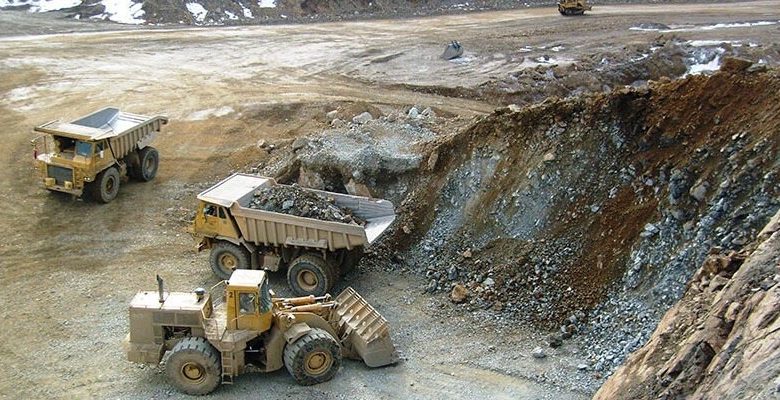
DAR ES SALAAM: AS the country expands mineral exploration and pushes for greater value addition, policymakers, researchers and industry leaders say the country’s mineral wealth could become a catalyst for renewable energy development, industrialisation and long-term economic growth.
The opportunity lies not only in extracting minerals but in converting finite natural resources into industries, technologies and infrastructure capable of generating value long after deposits are exhausted.
That message emerged during the 11th University of Dar es Salaam Research and Innovation Week (RIW), where stakeholders discussed how Tanzania can maximise the benefits of its mineral endowment while supporting renewable energy, digital transformation and environmental sustainability.
Opening the event, Minister for Minerals Anthony Mavunde outlined reforms aimed at increasing exploration, attracting investment and expanding domestic mineral processing.
“The country, which covers approximately 945,000 square kilometres, has achieved about 97 percent geological mapping coverage. However, detailed exploration drilling remains limited to around 16 per cent of the country’s territory,” he noted.
To unlock greater mineral potential, the government plans to increase advanced exploration coverage to at least 50 percent through public-private partnerships, focusing on regions including Kigoma, Tabora, Katavi and the southern zones.
“We must ensure that Tanzania benefits more from its natural resources by processing a greater share of minerals within the country,” Mavunde said.
Mining continues to play an increasingly important role in the economy. The sector contributed about 10 percent of Gross Domestic Product in 2023/24 and generated roughly 15 per cent of domestic government revenue.
Mining revenue collections reached 1.07tri/- during the 2024/25 fiscal year, exceeding the government’s target of 1.0tri/-.
The government’s strategy increasingly centres on value addition. Amendments to Section 59 of the Mining Act require mine operators to reserve at least 20 percent of minerals for local processing, part of efforts to move Tanzania beyond exporting raw materials.
For Agnes Mwakaje, a professor of Agricultural and Natural Resource Economics at the University of Dar es Salaam, the future of mining extends beyond revenue collection.
“Tanzania has enormous potential. The challenge is how we transform our mineral resources into technologies, infrastructure and industries that create longterm economic benefits,” she said.
According to Prof Mwakaje, the country is well positioned to benefit from rising global demand for critical minerals used in batteries, solar panels, electric vehicles and digital technologies.
She cautioned, however, that mineral extraction must be accompanied by responsible environmental management.
“When environmental, energy, social and economic objectives are pursued simultaneously, we create development that is resilient, equitable and sustainable,” Prof Mwakaje said.
The discussions also examined the relationship between mining and renewable energy.
ALSO READ: Tanzania calls for stronger ties in minerals value-addition
Tanzania’s hydropower, solar and wind resources offer opportunities to support mining operations while expanding energy access and reducing production costs.
Researchers presented innovations ranging from solar technologies and small-scale wind turbines to digital tools designed to improve energy efficiency.
Several projects demonstrated how locally available minerals could be incorporated into renewable energy systems and construction materials, creating additional opportunities for domestic value creation.
Institution of Engineers Tanzania President Eng Asa Mwaipopo said innovation will play a critical role in determining how much value Tanzania ultimately derives from its resources.
“Research institutions are generating innovative solutions, but greater investment and collaboration are needed to scale them up and create wider economic impact,” he said.
He also pointed to local content as one of the mining sector’s largest opportunities. Studies indicate that between 60 and 70 percent of mining expenditure goes toward operational goods and services, compared with about 30 percent captured through taxes, royalties and dividends.
“When a mining company chooses to procure locally, it stops being merely an extractor of wealth and becomes an engine for human development,” Eng Mwaipopo said.
Natural resource management specialist Colman Shayo said Tanzania should view mineral wealth as a tool for creating long-term national assets rather than generating short-term fiscal revenues.
“Mineral resources are finite, but the investments they finance can create benefits that last for generations,” he said.
According to Shayo, investments in renewable energy, education, infrastructure, technology and industrial development offer the strongest pathway for converting temporary resource wealth into permanent economic gains.
He also renewed calls for the establishment of a sovereign wealth fund financed through mineral revenues to help preserve wealth for future generations and cushion the economy during commodity price downturns.
The broader message emerging from the forum was that mineral extraction alone will not determine Tanzania’s long-term prosperity.
The outcome will depend on how effectively the country converts resource wealth into productive assets, innovation and human capital.
As exploration expands and value-addition policies take effect, policymakers increasingly view minerals not as an end in themselves but as a means of financing a more diversified and resilient economy.
The decisions made today, participants agreed, will determine whether Tanzania’s mineral resources remain a temporary source of income or become the foundation for lasting prosperity.



หากระบบฐานข้อมูลมีปัญหาหรือถูกบุกรุก ในทำนองเดียวกัน แม้ระบบฝาก-ถอนที่รวดเร็วจะเป็นสิ่งที่น่าต้องการ แต่ความเร็วเพียงอย่างเดียวก็ไม่เพียงพอหากปราศจากการตรวจสอบธุรกรรมที่ถูกต้อง ดังนั้น การประเมินระบบจึงต้องพิจารณาทั้งประสิทธิภาพ https://wm787playgo.xyz/