From degraded lands to green prosperity: How Tanzania’s landscape restoration is powering climate resilience, jobs and a new rural economy
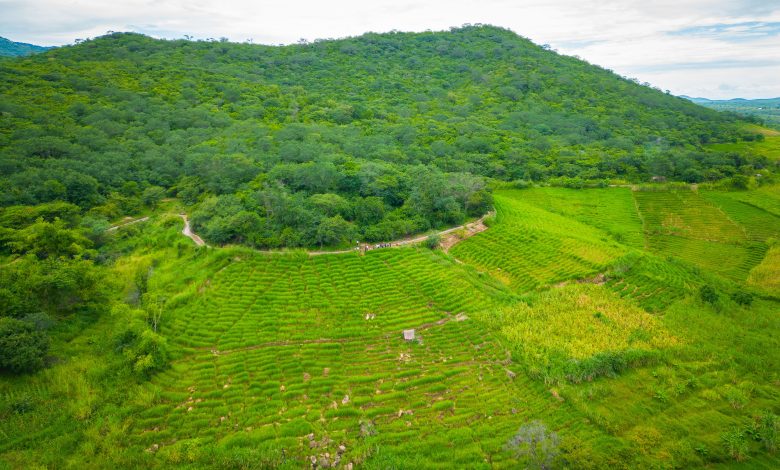
MBEYA: IN VILLAGES scattered across the Great Ruaha and Lake Rukwa basins, the signs of change are becoming increasingly visible. Once-degraded forests are gradually recovering. Rivers and watersheds that had deteriorated under pressure from human activities are regaining their ecological function.
Farmlands that were once exhausted, farmers are now adopting climate-smart agricultural practices that are restoring productivity while reducing negative environmental impacts. And in communities long burdened by poverty and resource scarcity, new livelihood opportunities are emerging many of them led by women and young people.
On farmland that was once exhausted, farmers are now adopting climate-smart agricultural practices that are restoring productivity while reducing environmental harm. And in communities long burdened by poverty and resource scarcity, new livelihood opportunities are emerging many of them led by women and young people.
At the centre of this transformation is Tanzania’s Sustainable Landscape Restoration (SLR) Project, a flagship national initiative demonstrating that environmental restoration is not only about repairing ecosystems, but also about rebuilding economies, strengthening resilience, and creating pathways to prosperity.
What is emerging is not a single intervention, but a broader shift in thinking: that degraded land is not a permanent liability, but a recoverable asset; that conservation is not separate from development, but central to it; and that rural communities, when empowered with the right tools, can become stewards and beneficiaries of restoration at the same time.
A landscape under pressure, and a response decades in the making
Tanzania’s natural environment has long been central to its economy and identity. Forests, wetlands, rangelands, and watersheds support agriculture, livestock, energy production, biodiversity, and water systems that millions depend on. But over the past decades, these ecosystems have come under increasing strain.
Rapid population growth, expanding agricultural frontiers, overgrazing, deforestation, wildfires, climate variability, insecure land tenure systems, and rising demand for land have combined to accelerate environmental degradation across many regions of the country.
The consequences have been significant and far-reaching.
Reduced soil fertility has lowered agricultural productivity in many areas. Degraded watersheds have contributed to water scarcity and irregular river flows. Loss of vegetation cover has increased vulnerability to floods, droughts, and climate shocks. Biodiversity has been steadily undermined, affecting ecosystem stability and long-term ecological balance.
It is estimated that more than 40 million Tanzanians are affected in one way or another by the impacts of environmental degradation and climate-related challenges. The economic implications are equally serious, with ecosystem loss and degradation estimated to cost the country nearly five percent of its annual Gross Domestic Product.
Against this backdrop, the Government of Tanzania, working with development partners, has increasingly shifted focus toward large-scale landscape restoration as a strategic national priority.
The Sustainable Landscape Restoration Project is one of the most ambitious expressions of this approach.
A flagship initiative for restoration and resilience
Officially titled the “Supporting Implementation of Integrated Ecosystems Management Approach for Landscape Restoration and Biodiversity Conservation in Tanzania,” the SLR Project is implemented by the Vice President’s Office in collaboration with the United Nations Environment Programme (UNEP), with technical support from the International Union for Conservation of Nature (IUCN).
It also forms part of The Restoration Initiative (TRI), a global programme operating in ten countries including Tanzania, Kenya, Cameroon, China, Pakistan and the Democratic Republic of Congo, and supported by the Global Environment Facility (GEF).
But in Tanzania, the project has taken on a particularly practical and visible form. It is not simply a conservation programme; it is increasingly becoming a development instrument, one that connects environmental restoration directly to livelihoods, local economies, and national development goals, including Tanzania Development Vision 2050.
The Vision seeks to build a prosperous, inclusive, competitive, and environmentally sustainable nation. In this context, landscape restoration is not a peripheral activity. It is becoming central to how that future is imagined and pursued.
Restoring nature, securing livelihoods
The SLR project operates across seven district councils in the Great Ruaha and Lake Rukwa basins, including Iringa, Wanging’ombe, Mbarali, Mbeya, Sumbawanga, Mpimbwe, and Tanganyika. These areas encompass 18 wards and 54 villages, supporting more than two million people whose livelihoods depend directly on land, water, and natural resources.
Dr Damas Mapunda, Project Coordinator, Vice President’s Office, says the success of the programme lies in linking ecological recovery with tangible livelihoods.
According to Dr Mapunda the SLR project has demonstrated that restoration works when it is rooted in community ownership, anchored in sustainable livelihoods, and backed by robust institutional coordination across government levels.
Early results affirm that integrating income-generating activities with landscape restoration is not only viable but transformative. The lesson we carry forward is equally clear: restoration cannot be sustained by conservation alone.
“Long-term success demands that communities see tangible economic returns from restored landscapes. As we scale this initiative, we are committed to embedding these lessons into national restoration policy, strengthening cross-sectoral coordination, and ensuring that Tanzania’s path to Land Degradation Neutrality leaves no community behind,”Dr Mapunda says.
The project’s objectives are broad but interconnected. It seeks to strengthen institutional frameworks for restoration, implement sustainable land management practices on the ground, and build knowledge systems that allow successful approaches to be scaled nationally.
Importantly, it also reflects a fundamental shift in how restoration is understood.
It is no longer viewed simply as tree planting or conservation fencing. Instead, it is about restoring entire ecological systems,forests, wetlands, grasslands, and watersheds, while simultaneously improving agricultural productivity, diversifying livelihoods, and strengthening community resilience.
By 2025, the project had placed more than 162,923 hectares of land under restoration and sustainable management, exceeding its original target of 110,000 hectares by nearly half.
These restored landscapes now include agricultural lands, forests, wetlands, and grazing areas that form the backbone of rural economies and ecosystem services.
In addition, more than 78,200 hectares of community forests have been secured for long-term management, with potential entry into carbon markets, offering communities a new source of income linked directly to conservation outcomes.
Climate action rooted in landscapes
As climate change intensifies, Tanzania faces growing challenges linked to rainfall variability, prolonged droughts, and extreme weather events. These pressures are particularly visible in rural areas, where agriculture and livestock production depend heavily on natural rainfall patterns and ecosystem stability.
A Paddy Farmer, Mbarali District, Mbeya Region, Gasper Chapye, noted: “Before the project, I harvested 15-25 sacks per acre and struggled to feed my family. Today, using the System of Rice Intensification, I harvested 30-45 sacks from the same land, without over-use of water and encroaching on a single wetland.”
“This project has not just improved my yields; it has transformed my life and is changing how over 1,200 farmers in my community think about the land and water. This is what landscape restoration looks like from the ground.”
The SLR project has demonstrated that landscape restoration can be a powerful climate adaptation and mitigation strategy.
Through improved forest management, wetland restoration, and climate-smart agricultural practices, the project has contributed to the mitigation of more than 6.81 million tonnes of carbon dioxide equivalent emissions, exceeding its original target by a significant margin.
But beyond carbon figures, the more visible impact is being felt on the ground.
Forests are helping regulate water cycles and reduce soil erosion. Wetlands are acting as natural buffers during floods and dry periods. Improved farming techniques are enhancing soil fertility and water retention. Together, these interventions are strengthening the ability of communities to withstand climate shocks while maintaining productivity.
In many villages, restoration is no longer discussed as an environmental concept alone, it is increasingly understood as a form of climate insurance.
Communities at the centre of change
One of the defining features of the SLR project is the central role of local communities in its design and implementation.
On her side, Ms Amina Mtuya, Farmer & Women’s Group member, Ilalasimba Village, Iringa Region, said before the project; “I was cutting trees and grazing cattle in the forest reserve. My cows gave barely a litre of milk. Today, with improved breeds and fodder farming, each cow gives 10 litres. We no longer need the forest to survive.
From planning and decision-making to monitoring and benefit-sharing, communities are not passive recipients of interventions. They are active participants and, increasingly, leaders of restoration efforts.
This participatory approach has been essential in building ownership and ensuring sustainability.
More than 105,062 households representing over 420,247 people have directly benefited from the project. These benefits include training, technical support, access to alternative livelihoods, and participation in environmentally sustainable income-generating activities.
Women, youth, and persons with disabilities make up more than 45 percent of beneficiaries, reflecting a deliberate effort to ensure inclusivity in restoration-led development.
In many areas, communities are beginning to view restoration not as an obligation imposed from outside, but as a practical investment in their own future.
Building a restoration economy
A key innovation of the SLR project has been its focus on linking environmental restoration with economic opportunity.
Recognizing that poverty is a major driver of environmental degradation, the project has supported communities to diversify their incomes through environmentally sustainable enterprises.
“What distinguishes this project is the integration of income-generating activities as a strategy for reducing pressure on natural resources. When rural households have dignified alternatives, encroachment on forests and wetlands decreases significantly.” Mr Raymond Mweli, District Executive Director, Mbarali District Council told the DailyNews.
He said when rural households have dignified, climate-smart alternatives for earning a living, the incentive to encroach on forests, wetlands, and river systems diminishes significantly.
“This project is not only restoring degraded landscapes, it is building a rural green economy that is productive, resilient, and sustainable. Mbarali District is proud to be part of this transformative initiative, and we are committed to scaling its impact across our communities,”said Mr Mweli.
He noted that across project areas, 56 community groups involving more than 1,100 members have been supported to establish livelihood activities that reduce pressure on natural ecosystems.
These include beekeeping, poultry farming, fish farming, dairy production, goat rearing, and pig farming, as well as value addition for agricultural products such as honey, milk, maize, rice, and sunflower.
These activities are creating a direct economic link between healthy ecosystems and household income.
When communities benefit financially from sustainable land use, conservation becomes not just an environmental goal, but an economic necessity.
The restoration factory: Innovation for green entrepreneurship
Perhaps one of the most dynamic components of the project is the Restoration Factory programme, a partnership involving the Vice President’s Office, UNEP, IUCN, Bridge for Billions, and Anza Entrepreneurs.
It supports young entrepreneurs developing green businesses that restore ecosystems while creating jobs.
Among them is Nishati Eco, founded by entrepreneur Annet Mutembei
“The Restoration Factory gave me practical tools, mentorship, and networks to refine my business model and scale sustainable energy solutions,” she said, adding it has enabled me to advance clean cooking initiatives, create green jobs, and reduce deforestation.
Other enterprises include Dream Bees Africa and Patra Agroprocessing, which are demonstrating how conservation-linked enterprises can generate real market value.
The programme is designed to support young entrepreneurs in developing scalable green businesses that contribute directly to environmental restoration while generating employment and income.
Launched in 2024, it has brought together innovators working in clean energy, sustainable agriculture, waste recycling, and eco-friendly production systems.
Participants receive structured training in business development, financial planning, impact measurement, and market access, along with mentorship and technical support.
These businesses are already demonstrating measurable impact.
During the 2025 World Environment Day celebrations in Dodoma, the entrepreneurs showcased their innovations to national audiences and attracted significant commercial interest. Dream Bees Africa secured orders worth more than 10.5m/-, while other enterprises reported strong sales and new market opportunities.
Beyond revenue figures, what stands out is the shift in perception; environmental restoration is increasingly being seen as a space for innovation, enterprise, and youth employment.
Strengthening systems for sustainability
While on-the-ground restoration is essential, long-term success depends on strong policies and institutions.
Working with national stakeholders, IUCN has supported the development of key policy instruments, including the National Forest Landscape Restoration Strategy and Action Plan. Additional guidelines on public-private partnerships (PPP) and stakeholder coordination have strengthened the institutional framework for restoration.
The IUCN Tanzania Country Representative, Mr Charles Oluchina, said IUCN is proud to support the Government of Tanzania in advancing sustainable landscape restoration. By combining science, policy, and community action, we are proving that restoring degraded ecosystems directly contributes to the transformative development aspirations enshrined in Tanzania Development Vision 2050.
“TRI has demonstrated that large-scale restoration is both achievable and essential for people and nature,” Mr Oluchina said, adding IUCN is fully committed to ensuring this initiative delivers measurable, inclusive, and lasting positive impact for people and nature.
He said three multi-stakeholder platforms now bring together government, communities, researchers, development partners, and the private sector, improving coordination and resource mobilization.
Seven policy instruments, including the National Forest Landscape Restoration Strategy, have been developed, alongside guidelines for partnerships and coordination.
At the local level, more than 700 community leaders and administrators have been trained in sustainable natural resource management, strengthening governance systems that support enforcement, conflict resolution, and long-term stewardship.
Aligning with Tanzania’s vision 2050
The significance of the SLR project extends beyond environmental outcomes. It is increasingly viewed as a practical contribution to Tanzania Development Vision 2050.
The project supports the vision’s three pillars: economic transformation, human development, and environmental sustainability.
By restoring productive land, it strengthens agricultural systems and rural economies. By creating jobs and improving livelihoods, it contributes to human development and poverty reduction. And by restoring ecosystems and reducing emissions, it supports climate resilience and environmental sustainability.
Rather than treating development and conservation as competing priorities, the project demonstrates that they can reinforce each other when properly designed.
Dr Richard Muyungi, Permanent Secretary, Vice President’s Office, said, “The Government of Tanzania recognises sustainable landscape restoration as vehicle for improving livelihoods, enhancing climate resilience and conserving biodiversity. Through the SLR Project, Tanzania is operationalising its sovereign commitments to Land Degradation Neutrality, AFR100/Bonn Challenge, and the Kunming-Montreal Global Biodiversity Framework”. He added that, “The Vice President’s Office reaffirms the Government’s unwavering commitment to this flagship initiative as a strategic instrument for restoring Tanzania’s landscapes, safeguarding livelihoods, and securing a resilient and prosperous future for all Tanzanians in line with the Vision 2050”
Looking ahead: sustaining the gains
As the project moves, attention is shifting toward sustainability and long-term impact.
Efforts are underway to integrate restoration priorities into local government planning and budgeting systems, expand access to carbon markets, strengthen community institutions, and scale up green enterprises.
The central lesson emerging from implementation is clear; restoration works best when it is aligned with community needs, economic incentives, and strong institutional frameworks.
In this sense, the project is not just restoring landscapes,it is helping to build a new development model rooted in resilience, inclusion, and sustainability.
A blueprint for a greener future
As Tanzania advances toward its Vision 2050 ambitions, the Sustainable Landscape Restoration Project offers a compelling demonstration of what is possible when environmental recovery is treated as a national development priority.
It shows that degraded landscapes can be transformed into productive ecosystems. That rural communities can become active drivers of environmental change. And that restoration can serve as a foundation for economic growth, climate resilience, and social transformation.
The results so far over 162,000 hectares restored, hundreds of thousands of beneficiaries reached, millions of tonnes of emissions mitigated, and a growing ecosystem of green enterprises suggest that this is not just a project, but the early stages of a broader transformation.
Ultimately, what is being restored is not only land and ecosystems. It is opportunity, dignity, and hope.
And in that sense, the story of landscape restoration in Tanzania is also a story about the country’s future, one being carefully rebuilt, one landscape at a time.