From Dar to Moscow: How Samia’s historic visit realigns Tanzania’s economic future
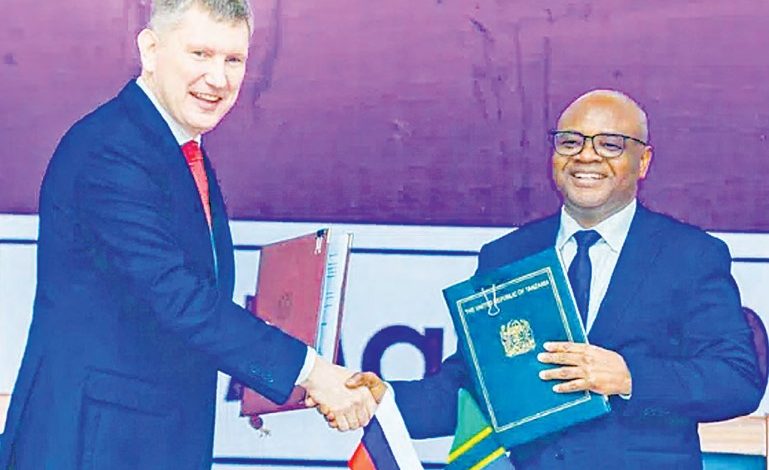
DAR ES SALAAM: TANZANIANS’ attention will be focused firmly on Russia this week as President Samia Suluhu Hassan begins a historic three-day state visit to the Eastern economic powerhouse today.
Rather than a routine diplomatic engagement, this mission marks a deliberate step to deepen ties with the booming economies of the global East and South, tapping into fresh avenues of capital, trade, and technology.
Encompassing a high-level bilateral meeting with President Vladimir Putin and participation in the prestigious St Petersburg International Economic Forum (SPIEF), the visit highlights a broader continental shift where Africa is actively broadening its traditional economic alliances to secure new, highly strategic growth frontiers.
ALSO READ: Why Moscow mission matters
For international trade analysts, this engagement represents a perfect alignment of mutual economic interests. Russia is the world’s ninth-largest economy by nominal GDP and the fourth-largest economy by Gross Domestic Product at Purchasing Power Parity (GDP PPP), establishing it as one of the world’s fastest-growing major economies outside of India and China in recent years.
As Tanzania aggressively seeks robust partnerships to anchor its capital-intensive industrialisation and value-addition goals, this industrialised mixed market economy represents an ideal strategic ally.
Historically significant as the first visit by a Tanzanian Head of State to Russia since Mwalimu Julius Nyerere’s landmark trip in 1969, this mission is primed to completely upgrade the economic rules of engagement between the two countries across trade, energy, mining, infrastructure, and technology. Seizing the Economic Momentum The timing of this visit is crucial.
As Tanzania actively shapes its long-term development blueprint, Vision 2050, the nation’s focus is locked onto attracting strategic investments capable of accelerating industrialisation, anchoring local value addition, developing the energy sector, and modernising critical national infrastructure.
Concurrently, Russia is systematically expanding its economic ties across Africa, scouting for dynamic new partnerships and untapped market opportunities.
This high-profile engagement reinforces a historically rooted relationship while firmly focusing on aggressive future expansion. While Dar es Salaam and Moscow have enjoyed warm, friendly relations since the Soviet era—traditionally focusing on higher education, technical training, and mutual political goodwill—bilateral economic cooperation is yet to reach its true potential.
President Samia’s presence in Moscow aims to convert this enduring historical solidarity into a highly productive, modern economic partnership. Bilateral trade currently stands at about 307.5 million US dollars (approximately 807bn/-) annually, a figure that remains modest given the size of the two economies and the opportunities available.
President Samia’s visit seeks to transform a long-standing diplomatic relationship into a stronger economic partnership capable of delivering tangible development gains.
Several agreements are expected in higher education, science and technology, ICT, transport and investment promotion. However, the real test of success will not be the number of memoranda signed, but whether they translate into sustained investment, technology transfer and productive economic activity.
Energy Sector Synergies Energy cooperation is widely expected to offer the greatest economic potential. Russia remains a global leader in oil and gas development, energy infrastructure, nuclear technology and industrial engineering, while Tanzania is seeking to unlock its more than 57 trillion cubic feet of natural gas reserves and expand access to reliable electricity.
Closer cooperation could support investments in gas processing, petrochemicals, fertiliser production, power generation and other strategic energy projects critical to Tanzania’s industrialisation agenda. Reliable and affordable energy remains the backbone of industrial growth, making Russia’s expertise in large-scale energy development particularly relevant to Tanzania’s long-term ambitions.
Mining and Value Addition Mining is another sector with significant potential. Tanzania possesses abundant deposits of gold, graphite, coal, rare earth elements (also known as critical or technological minerals), nickel, uranium and other strategic resources. Yet the country’s challenge has long been moving beyond raw mineral exports towards value addition and industrial processing.
Russia’s deep experience in mineral extraction, processing and industrial metallurgy could support the development of refining facilities, processing plants, geological exploration and specialised technical training. Such cooperation, with proper structuring, would help Tanzania capture greater value from its natural resources and strengthen domestic industrial capacity, moving beyond just exporting raw commodities.
Transforming Agriculture Agriculture, Tanzania’s largest employer and one of the pillars of the economy, also presents substantial opportunities for collaboration. Russia is one of the world’s largest grain producers with an industrialised mixed market economy, establishing itself as a major exporter of wheat, fertilisers, agricultural machinery and food-processing technologies.
Meanwhile, Tanzania remains a significant importer of agricultural inputs. Expanded cooperation could encourage investment in fertiliser manufacturing, mechanisation, irrigation systems, storage infrastructure and agroprocessing industries.
Following the recent Tanzania-Russia Business and Investment Forum in Arusha, both countries signalled their intention to promote joint investments, particularly in value-added processing of Tanzanian agricultural products. Improvements in agricultural productivity would have far-reaching benefits for food security, rural incomes, export earnings and poverty reduction.
The visit is also expected to boost Tanzania’s exports to Russia, which are currently dominated by traditional cash crops like tobacco, coffee and tea, while creating new opportunities for products such as horticultural produce, hides, skins, leather and minerals. Infrastructure and Transport Connectivity Infrastructure and transport connectivity will also be a key focus.
Notably, a concrete outcome already announced is the upcoming launch of direct ATCL flights between Tanzania and Moscow later this year. This agreement aims to reduce logistics barriers and facilitate trade, tourism and business exchanges.
Connectivity is crucial in economic diplomacy because it enhances trade by enabling easier travel, increases business interactions, makes logistics more efficient, and makes investment opportunities more accessible. Beyond aviation, Tanzania and Russia have previously discussed cooperation in transport and logistics.
Enhancing connectivity could help Tanzania realise its goal of becoming a regional logistics hub, serving as a gateway to East and Central Africa, and establishing a strategic trade route connecting regional markets. Tourism and AFCON 2027 With the Africa Cup of Nations (AFCON 2027) approaching, tourism stands to benefit significantly.
Russia could become an important tourism market for Tanzania. Russian travellers often stay longer, show strong interest in nature tourism, increasingly seek beach destinations, and are more interested in exploring African travel experiences.
Direct air connectivity could significantly increase tourist arrivals in Zanzibar, Serengeti, Ngorongoro, Kilimanjaro and other destinations.
Tourism continues to be a key contributor to Tanzania’s foreign exchange. Increasing visitors from Russia could diversify the market beyond usual European and North American tourists, enhancing resilience against global disruptions.
Science, Technology and Human Capital Development Planned agreements in higher education, science, and technology may produce longterm benefits that are less immediately visible but could be highly transformative. Russia possesses strong expertise in engineering, mathematics, medicine, aerospace, nuclear science and industrial technologies.
Tanzania could enhance its human capital through scholarships, research collaborations, technical training, and academic partnerships. Achieving sustainable industrialisation requires substantial investment in technical skills and scientific capabilities, as no country has succeeded without this focus.
Developing human capital tends to yield higher long-term economic benefits than solely building physical infrastructure. Strategic Caution: Execution is Everything Despite significant opportunities, Tanzania should engage in the relationship with a strategic approach.
The goal should not just be to boost the total number of agreements signed. Instead, it should aim to secure meaningful investments, facilitate technology transfer, promote local content opportunities, support skills development and enhance value addition. Many developing countries have entered into numerous bilateral agreements, but these have led to limited economic change.
Achieving success will rely on effective implementation, coordinated institutions, thorough project preparation, and consistent investment follow-up. Tanzania also needs to ensure that its cooperation efforts are primarily focused on economic goals and aligned with the country’s development priorities.
President Samia’s historic visit to Russia goes beyond symbolic diplomacy. It demonstrates Tanzania’s commitment to enhancing economic relations and establishing itself as a prime location for investment, trade, technology, and industrial collaboration. The best opportunities are concentrated in energy, mining, agriculture, infrastructure, tourism, education and technology.
If successfully executed, the agreements and partnerships resulting from the visit could boost Tanzania’s industrialisation efforts, enhance energy security, generate jobs, increase productivity and broaden export opportunities.
Ultimately, the success of the visit will be judged by whether Tanzanians witness new factories being built, increased investments, more tourists arriving and stronger economic growth in the future. With effective management, this partnership could become a key element and game-changer in Tanzania’s economic development plan, playing a vital role in achieving its goal of attaining middleincome industrial status.