Food security demands more than bumper harvests
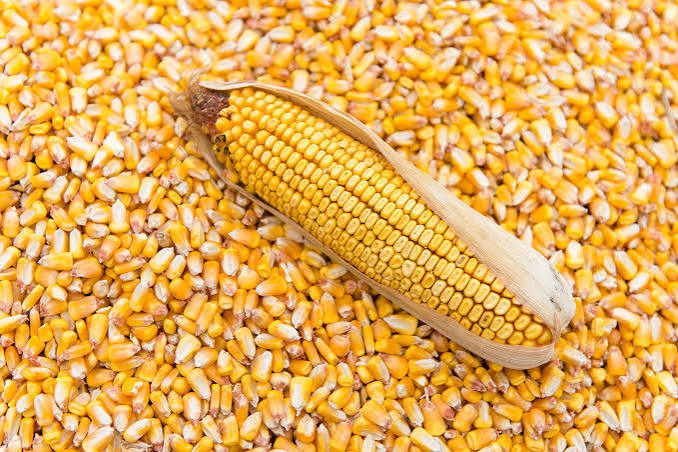
ARUSHA: TANZANIA is strengthening efforts to achieve sustainable food security through improved seed varieties, agricultural innovation, stronger extension services and collaboration among the government, private sector, research institutions, development partners and farmers.
Agricultural stakeholders say achieving food security requires more than increasing crop production, emphasising the need to develop resilient food systems capable of withstanding climate change, pests, diseases and other emerging agricultural challenges.
They have identified access to improved and certified seeds as a critical driver of agricultural transformation, alongside appropriate farming practices, reliable markets, effective extension services and investment in agricultural research.
Speaking during World Food Day commemorations organised by Bayer Life Science (T) Ltd in Arusha recently, National Agricultural Extension Services Agency (NAESA) Chief Executive Officer, Dr Wilhelm Mafuru, said food security is no longer simply about increasing production but ensuring food systems remain resilient and capable of serving all communities.
Dr Mafuru says agriculture remains central to Tanzania’s economy, livelihoods and national development, with millions of households depending directly or indirectly on the sector.
He explains that farmers are not merely food producers but also create rural employment, drive local economies and contribute significantly to national food and nutrition security.
However, he notes that climate variability, changing rainfall patterns, pests, diseases, rising input costs, market disruptions and post-harvest losses continue to undermine productivity and farmers’ incomes.
“These challenges remind us that food security must be addressed as a system, not as a single activity,” he said. According to him, building resilient food systems requires coordinated interventions, including access to quality seeds, timely extension services, reliable markets, adequate storage facilities and efficient transport systems.
He explains that the government has established NAESA under the Ministry of Agriculture to improve coordination, management and accountability in agricultural extension services.
Dr Mafuru emphasises that farmers must remain at the centre of agricultural interventions, noting that effective collaboration between extension officers and farming communities is essential in promoting improved seeds and recommended farming practices.
He cites drought-tolerant seed varieties promoted by Bayer as examples of privatesector innovations helping farmers maintain production under changing climatic conditions.
He commends Bayer and other agricultural partners for supporting efforts towards achieving food for all and hunger for none, while urging the media to increase public awareness and amplify farmers’ voices.
Bayer Communications Business Partner for Crop Science in Africa, Ms Lisa Bohlmann, said Tanzania has enormous agricultural potential, but smallholder farmers require better access to quality inputs, knowledge and modern technologies to realise it.
ALSO READ: How Zanzibar used World Food Day-2026 to encourage youth to embrace agribusiness
She observes that some smallholder farmers produce less than one tonne of maize per hectare, highlighting the need for innovations that enable them to increase yields without expanding their farmland or workload.
“One of the worrying statistics I read was that smallholder farmers often produce less than a tonne per hectare. You can imagine the amount of effort that goes into producing any crop, including maize,” she said.
She calls for stronger partnerships involving government institutions, industry players and development organisations to ensure proven technologies reach farmers.
She also stresses the importance of empowering women and young people by expanding their access to agricultural opportunities, knowledge and productive resources. Bayer Director in Tanzania, Mr Mwinyi Sango said the company is strengthening investment in research, improved seed varieties, farmer education and partnerships to address challenges facing smallholder farmers.
He says the company’s mission, “Health for All, Hunger for None,” reflects its commitment to improving livelihoods and contributing to sustainable food security.
Mr Sango identifies climateresilient maize hybrids with high-yield potential and tolerance to drought and diseases as important solutions for strengthening food production. “Maize is one of the key crops when it comes to food security.
We therefore have a responsibility to ensure farmers access the right seeds, including varieties with high-yield potential and tolerance to drought and diseases,” he said.
However, he cautions that improved seeds alone cannot guarantee higher productivity without appropriate agronomic practices. He points to the significant difference between farming standards demonstrated in research and demonstration plots and practices commonly used by farmers.
Meanwhile, Ongeza Agrovet Sales Manager, Mr Elias Ngajilo said the partnership with Bayer is helping smallholder farmers, particularly those in rural areas, access quality agricultural inputs and professional farming advice.
He explains that the programme provides training to farmers and agricultural input retailers, while demonstration plots enable farming communities to learn, observe and adopt improved production practices.
Tanzania Official Seed Certification Institute (TOSCI) Acting Northern Zone Head, Mr Erick Nangududa says the institute continues to strengthen seed quality assurance through inspections, laboratory testing and certification. He explains that both locally produced and imported seeds undergo quality assessments before being approved for distribution to farmers.
He highlighted that laboratory tests examine seed purity and germination capacity, with maize seeds required to achieve a germination rate of at least 90 per cent to qualify for certification. “We take seed samples, test them in laboratories and ensure they have proper germination capacity and meet the required quality standards before certifying them and making them available to farmers,” he said.
He cautions that poor storage practices can compromise seed quality even when products initially meet certification requirements. Mr Nangududa therefore urges farmers to purchase certified seeds from authorised dealers, saying quality assurance protects farmers’ investments and strengthens national food production.
Tanzania Seed Trade Association (TASTA) Executive Director, Mr Baldwin Shuma, said the country’s seed industry has recorded significant growth, expanding from only 10 seed companies in 2002 to more than 60 active companies and 12,000 agro-dealers.
He says this expansion has improved farmers’ access to quality seeds, although further investment and stronger partnerships remain necessary to meet the country’s growing food requirements. Maize and coffee farmer from King’ori Village in Meru District, Arusha Region, Mr Ndetaiywa Nnko says improved seeds and recommended farming practices have transformed his livelihood.
Mr Nnko, who has been recognised as one of the best farmers in Meru District three times, says his maize production reaches between 128 and 150 bags during favourable seasons.
Meru District Council Agricultural Extension Officer, Ms Digna Massawe, said more than 70 per cent of farmers in the district are now using improved seeds, contributing to increased agricultural production and food availability. She advises farmers to follow recommended maize production practices, including proper spacing, timely fertiliser application and effective weed control.