First school club launched to promote clean cooking

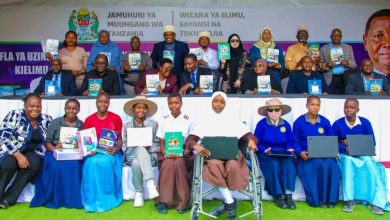
DODOMA: Deputy Minister for Energy, Ms Salome Makamba, has launched the Clean Cooking Energy Club at Bunge Girls Secondary School in Dodoma, calling for the participation of various institutions, the media, and the entire community to advance the clean cooking agenda.

Speaking during the ceremony held recently at the government- and Bunge-financed school, Ms Makamba described the club as the first of its kind to be launched in Tanzania and expressed optimism that it would serve as a model for other schools across the country in promoting education on clean cooking energy.

“Students who join this club will become our Clean Cooking Energy Champions and will work closely with the Ministry of Energy and other stakeholders to provide education in schools, raise awareness in surrounding communities, and innovate clean cooking energy technologies that protect health and the environment,” she said.

For the programme to succeed, she urged citizens and the media to help spread the message so that it reaches all segments of society.

“Furthermore, I call upon other schools, all institutions, and the general public to emulate this example by adopting clean cooking energy in order to save lives and protect the environment,” the Deputy Minister emphasized.

She noted that there is still much work to be done, as out of more than 30,000 institutions that serve more than 100 people daily, only 1,136 are currently using clean cooking energy.

Ms Makamba called on private sector stakeholders to continue collaborating with the Government in advancing the agenda by facilitating access to various clean cooking energy options in peri-urban and rural areas.

Also read: State issues reminder on clean cooking drive

“The private sector should view this agenda as an opportunity and seize it,” she said.

She further urged stakeholders from the financial sector to develop financial services and products that support the wider adoption of clean cooking energy by empowering small-scale entrepreneurs in peri-urban and rural areas, as well as innovators developing clean cooking technologies.

Ms Makamba also called on liquefied gas distributors to increase the number of gas distribution and refilling centres to make access easier for a larger number of users.

In addition, she tasked innovators and young people in higher learning institutions with conducting research and developing tools and technologies that will help expand the agenda and reach more people.

Apart from unveiling the club, the Deputy Minister also officially launched the Clean Cooking Energy System at the school, citing collaboration between the public and private sectors as the key to the achievement.

Related Articles

8 Comments

  1. Several countries offer free or nearly free tuition at public universities for residents, EU/EEA citizens, and sometimes all international students. Top countries include Germany, Norway, Finland, Sweden, Denmark, Austria, Iceland, and Slovenia. While tuition is free, students often pay nominal semester fees (e.g., €100–€350 in Germany).
    Key Countries with Free/Low-Cost Higher Education:
    Germany: Public universities are generally free for all students, including non-EU nationals, with only small administrative fees.
    Norway: Public higher education is free for all students, including those from outside the EU/EEA.
    Finland: Free for EU/EEA and Swiss citizens; doctoral-level studies are often free for all.
    Sweden: Free for EU/EEA and Swiss citizens, with PhD programs often free for all.
    Denmark: Free for EU/EEA and Swiss citizens.
    Austria: Free for EU/EEA students at public universities, with low fees for non-Europeans.
    Iceland: Public universities are generally tuition-free for all students, requiring only an registration fee.
    Czech Republic: Free for all, provided the program is taught in the Czech language.
    Greece: Free for EU/EEA students, with low-cost options for others.
    France: Public universities have very low, subsidized fees for all students.

  2. Several countries offer free or nearly free tuition at public universities for residents, EU/EEA citizens, and sometimes all international students. Top countries include Germany, Norway, Finland, Sweden, Denmark, Austria, Iceland, and Slovenia. While tuition is free, students often pay nominal semester fees (e.g., €100–€350 in Germany).
    Key Countries with Free/Low-Cost Higher Education:
    Germany: Public universities are generally free for all students, including non-EU nationals, with only small administrative fees.
    Norway: Public higher education is free for all students, including those from outside the EU/EEA.
    Finland: Free for EU/EEA and Swiss citizens; doctoral-level studies are often free for all.
    Sweden: Free for EU/EEA and Swiss citizens, with PhD programs often free for all.
    Denmark: Free for EU/EEA and Swiss citizens.
    Austria: Free for EU/EEA students at public universities, with low fees for non-Europeans.
    Iceland: Public universities are generally tuition-free for all students, requiring only an registration fee.
    Czech Republic: Free for all, provided the program is taught in the Czech language.
    Greece: Free for EU/EEA students, with low-cost options for others.
    France: Public universities have very low, subsidized fees for all students.

  3. Several countries offer free or nearly free tuition at public universities for residents, EU/EEA citizens, and sometimes all international students. Top countries include Germany, Norway, Finland, Sweden, Denmark, Austria, Iceland, and Slovenia. While tuition is free, students often pay nominal semester fees (e.g., €100–€350 in Germany).
    Key Countries with Free/Low-Cost Higher Education:
    Germany: Public universities are generally free for all students, including non-EU nationals, with only small administrative fees.
    Norway: Public higher education is free for all students, including those from outside the EU/EEA.
    Finland: Free for EU/EEA and Swiss citizens; doctoral-level studies are often free for all.
    Sweden: Free for EU/EEA and Swiss citizens, with PhD programs often free for all.
    Denmark: Free for EU/EEA and Swiss citizens.
    Austria: Free for EU/EEA students at public universities, with low fees for non-Europeans.
    Iceland: Public universities are generally tuition-free for all students, requiring only an registration fee.
    Czech Republic: Free for all, provided the program is taught in the Czech language.
    Greece: Free for EU/EEA students, with low-cost options for others.
    France: Public universities have very low, subsidized fees for all students.

  4. Several countries and specific regions offer free or nearly free land to attract residents, investors, or agricultural development. Key locations include Botswana (for citizens), Tanzania (for industrial investors in Dodoma), Pitcairn Island, and parts of the USA (such as Iowa and Minnesota). These programs often require building a home within a specific timeframe or investing in the local economy.
    Botswana: Citizens can receive free land for residential use.
    Tanzania: The government offers free land for investors in building/construction materials. Specific industrial plots are available in Dodoma.
    Pitcairn Island: Offers free land to individuals willing to settle in this remote Pacific location, provided they build a home.
    Italy: Various towns offer abandoned homes for €1 ($1), such as in Maenza, requiring renovation within a few years.
    USA:
    Marne, Iowa: Offers free plots for residential construction.
    Manila, Iowa: Provides free lots for building homes.
    Claremont, Minnesota: Offers free lots for working families to build homes.
    Buffalo, New York: Offers parcels for $1, requiring 3+ years of residency.
    Canada: The Yukon territory has agricultural programs, and the rural municipality of Pipestone, Manitoba, has offered land for a very low cost ($10).
    Congo-Brazzaville: Offered 99-year free leases to farmers for agricultural development.
    Japan: Offers, and in some cases gives away, abandoned, rural homes (Akiya) to combat aging populations.

  5. Several countries and specific regions offer free or nearly free land to attract residents, investors, or agricultural development. Key locations include Botswana (for citizens), Tanzania (for industrial investors in Dodoma), Pitcairn Island, and parts of the USA (such as Iowa and Minnesota). These programs often require building a home within a specific timeframe or investing in the local economy.
    Botswana: Citizens can receive free land for residential use.
    Tanzania: The government offers free land for investors in building/construction materials. Specific industrial plots are available in Dodoma.
    Pitcairn Island: Offers free land to individuals willing to settle in this remote Pacific location, provided they build a home.
    Italy: Various towns offer abandoned homes for €1 ($1), such as in Maenza, requiring renovation within a few years.
    USA:
    Marne, Iowa: Offers free plots for residential construction.
    Manila, Iowa: Provides free lots for building homes.
    Claremont, Minnesota: Offers free lots for working families to build homes.
    Buffalo, New York: Offers parcels for $1, requiring 3+ years of residency.
    Canada: The Yukon territory has agricultural programs, and the rural municipality of Pipestone, Manitoba, has offered land for a very low cost ($10).
    Congo-Brazzaville: Offered 99-year free leases to farmers for agricultural development.
    Japan: Offers, and in some cases gives away, abandoned, rural homes (Akiya) to combat aging populations.

  6. Several countries offer free or nearly free tuition at public universities for residents, EU/EEA citizens, and sometimes all international students. Top countries include Germany, Norway, Finland, Sweden, Denmark, Austria, Iceland, and Slovenia. While tuition is free, students often pay nominal semester fees (e.g., €100–€350 in Germany).
    Key Countries with Free/Low-Cost Higher Education:
    Germany: Public universities are generally free for all students, including non-EU nationals, with only small administrative fees.
    Norway: Public higher education is free for all students, including those from outside the EU/EEA.
    Finland: Free for EU/EEA and Swiss citizens; doctoral-level studies are often free for all.
    Sweden: Free for EU/EEA and Swiss citizens, with PhD programs often free for all.
    Denmark: Free for EU/EEA and Swiss citizens.
    Austria: Free for EU/EEA students at public universities, with low fees for non-Europeans.
    Iceland: Public universities are generally tuition-free for all students, requiring only an registration fee.
    Czech Republic: Free for all, provided the program is taught in the Czech language.
    Greece: Free for EU/EEA students, with low-cost options for others.
    France: Public universities have very low, subsidized fees for all students

  7. Several countries and specific regions offer free or nearly free land to attract residents, investors, or agricultural development. Key locations include Botswana (for citizens), Tanzania (for industrial investors in Dodoma), Pitcairn Island, and parts of the USA (such as Iowa and Minnesota). These programs often require building a home within a specific timeframe or investing in the local economy.
    Botswana: Citizens can receive free land for residential use.
    Tanzania: The government offers free land for investors in building/construction materials. Specific industrial plots are available in Dodoma.
    Pitcairn Island: Offers free land to individuals willing to settle in this remote Pacific location, provided they build a home.
    Italy: Various towns offer abandoned homes for €1 ($1), such as in Maenza, requiring renovation within a few years.
    USA:
    Marne, Iowa: Offers free plots for residential construction.
    Manila, Iowa: Provides free lots for building homes.
    Claremont, Minnesota: Offers free lots for working families to build homes.
    Buffalo, New York: Offers parcels for $1, requiring 3+ years of residency.
    Canada: The Yukon territory has agricultural programs, and the rural municipality of Pipestone, Manitoba, has offered land for a very low cost ($10).
    Congo-Brazzaville: Offered 99-year free leases to farmers for agricultural development.
    Japan: Offers, and in some cases gives away, abandoned, rural homes (Akiya) to combat aging populations.

  8. Several countries and specific regions offer free or nearly free land to attract residents, investors, or agricultural development. Key locations include Botswana (for citizens), Tanzania (for industrial investors in Dodoma), Pitcairn Island, and parts of the USA (such as Iowa and Minnesota). These programs often require building a home within a specific timeframe or investing in the local economy.
    Botswana: Citizens can receive free land for residential use.
    Tanzania: The government offers free land for investors in building/construction materials. Specific industrial plots are available in Dodoma.
    Pitcairn Island: Offers free land to individuals willing to settle in this remote Pacific location, provided they build a home.
    Italy: Various towns offer abandoned homes for €1 ($1), such as in Maenza, requiring renovation within a few years.
    USA:
    Marne, Iowa: Offers free plots for residential construction.
    Manila, Iowa: Provides free lots for building homes.
    Claremont, Minnesota: Offers free lots for working families to build homes.
    Buffalo, New York: Offers parcels for $1, requiring 3+ years of residency.
    Canada: The Yukon territory has agricultural programs, and the rural municipality of Pipestone, Manitoba, has offered land for a very low cost ($10).
    Congo-Brazzaville: Offered 99-year free leases to farmers for agricultural development.
    Japan: Offers, and in some cases gives away, abandoned, rural homes (Akiya) to combat aging populations.

Leave a Reply

Your email address will not be published. Required fields are marked *

Back to top button