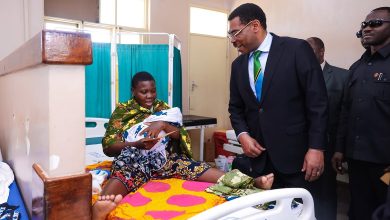
Experts call for immediate action to address growing NCD crisis

KIGALI: Non-communicable diseases (NCDs) have become a looming crisis across the African continent, threatening to undermine the public health systems and economic development of many nations.
Addressing this alarming trend, experts, leaders, and health professionals gathered at the three-day Africa Health Agenda International Conference in Kigali to discuss a number of health issues among was the urgent need for a comprehensive approach to combat NCDs.
In an interview with the Amref Tanzania Country Director, Dr Florence Temu, she told ‘Daily News’ the importance of focusing on prevention rather than waiting for diseases to emerge.
She called for increased efforts in health promotion, health literacy, and early intervention to prevent NCDs.
“We shouldn’t keep sitting and wait until diseases happen,” Temu said, advocating for a shift towards health strategies that promote better living from a young age.
“When people live healthier lives, fewer will fall ill, which reduces the burden on health systems and economies,” she stressed.
In the fight against non-communicable diseases (NCDs), Dr Temu highlighted the need for urban infrastructure that promotes physical activity and health.
She advised, “Our infrastructure should also look into putting in the facilities that people can use in terms of keeping fit, such as walkways and cycling paths. When we put in our roads, we must provide provisions for cyclists to work safely.”
Temu also underscored the importance of housing design that supports well-being rather than congestion. She added, “The housing infrastructure should be for better health, not congestion. How do you design windows to allow air to flow? How do you reduce air pollution to avoid respiratory diseases caused by contaminated air?”
During the conference the Amref Health Africa CEO, Dr Githinji Gitahi, also voiced a collective effort on the fight against Non-Communicable Diseases (NCDs), but should begin with each individual taking responsibility. “The journey begins with the individual—making conscious choices in our lifestyle and meals. It’s essential that each of us takes responsibility for our health,” he stated.
Gitahi stressed the importance of regular physical activity, urging everyone to incorporate exercise into their daily routines. “Aim to walk five kilometers a day. It may sound simple, but walking is one of the best ways to burn fats and improve your overall health,” he said.
On the topic of diet, Gitahi cautioned against overconsumption. “Too much of anything can be harmful—whether it’s salt, sugar, alcohol, or tobacco. Excessive intake of these can lead to serious health issues such as diabetes, heart disease, and even cancer,” he noted.
He also pointed out the high costs of treating these diseases, stressing that prevention is far more economical. “The cost of treating diseases caused by poor lifestyle choices is not only physically debilitating but financially draining. Prevention is far cheaper and healthier.”
He further highlighted the importance of instilling these habits from an early age. “This call to action must start at the family level and extend to the community. We need to teach children the importance of a healthy lifestyle, as this will shape the future of our societies.”
Gitahi also called on governments to create environments that encourage physical activity. “Governments must make it easier for citizens to stay fit, whether it’s during the day or at night. Increasing public safety is essential—people should feel secure enough to walk or exercise at any hour,” he urged. “When security is enhanced, everyone benefits, and a healthier population can emerge.”
Gitahi called for collective action—from individuals, families, and communities to governments—so that the fight against NCDs becomes a shared responsibility.
One shining example of proactive measures comes from Tanzania, where government leaders have taken concrete steps to address the rising threat of NCDs.
President Samia Suluhu Hassan, Vice President Philip Mpango, and Zanzibar President Hussein Mwinyi have led by example, calling on citizens to adopt healthier lifestyles, including participating in weekend jogs and other fitness activities.

Prime Minister Kassim Majaliwa has also been seen joining these fitness initiatives, reinforcing the government’s commitment to combating NCDs through community involvement.
The Tanzanian government’s initiative goes beyond public calls for fitness; it incorporates a holistic approach that includes investment in infrastructure that encourages physical activity.
Since the government made its call and leaders have actively supported the initiative, jogging clubs have been established to encourage people to engage in regular fitness activities.
In fact, last year, Tanzania took it a step further by introducing an innovative initiative: every Saturday from 6 AM to 9 AM, the road from Coco Beach through the Tanzanite Bridge is closed to traffic, allowing citizens to exercise freely.
This move aims to provide a safe and accessible space for people to participate in physical activities, further promoting a culture of health and fitness.
A Health Economist and Lecturer from the University of Cape Town, Dr Senzo Mthembu, provided a stark overview of the situation.
He explained that in 2019, NCDs were responsible for 37 per cent of deaths in the WHO African region, up from 24 per cent in 2000.
He warned, these statistics are expected to rise if proactive measures are not taken.
Dr Mthembu underscored the rise in NCDs is largely attributed to urbanization, changes in lifestyle, and inadequate access to preventative care.
“This trend poses a critical challenge, especially for Africa’s youthful population, which is central to the continent’s economic future,” said Dr Mthembu.
“The economic consequences are severe. The cost of treating advanced NCDs far outweighs the cost of investing in prevention and early detection.”
As the continent faces rapid economic growth, the increasing prevalence of NCDs threatens to destabilize economies, reduce workforce productivity, and escalate healthcare costs.
Dr Mthembu highlighted that the rising costs of treatment, combined with the loss of productivity due to sick workers, will continue to strain national budgets and exacerbate poverty.
Dr Tiruneh Baye, a Technical Officer at the Africa CDC, highlighted the role of education in addressing NCDs.
He pointed out that teaching children about the importance of maintaining a healthy lifestyle from an early age is critical. “If we start talking to our kids about healthy living now, we will see the impact 40 years from now,” he explained.
In this regard, the Africa CDC has launched initiatives to promote multisectoral collaboration, bringing together various sectors such as education, finance, and housing to tackle NCDs in a holistic way.
This collaborative approach is seen as essential to addressing the complex drivers of NCDs, such as poor diets, lack of physical activity, and tobacco use.
Dr Baye noted that the African Union’s departments are working together to create a unified strategy to combat NCDs, with the aim of securing a position to be endorsed at the African Summit.
The discussions at the Africa Health Agenda International Conference underscored that the fight against NCDs requires a unified, multisectoral approach.
Baye highlighted that prevention must take precedence, with investments in early detection, health literacy, and lifestyle changes as the cornerstone of any effective strategy. Public health initiatives should be integrated into schools, workplaces, and community spaces to build a culture of health from a young age.
Moreover, as Dr Mthembu pointed out, addressing NCDs is not just a healthcare issue but an economic one. “Healthy populations are essential for economic growth. If we want to build resilient economies, we must invest in the health of our people,” he said.
The call for action is clear: African governments, healthcare providers, and communities must work together to reduce the burden of NCDs. As demonstrated by Tanzania’s proactive initiatives and the commitment from its leadership, the fight against NCDs is not just a medical challenge but a societal one that requires collective effort and bold leadership to ensure healthier, more prosperous futures for the continent.