

Economic implications of Taifa Gas, Amber Energy acquisition of PAE for Tanzania
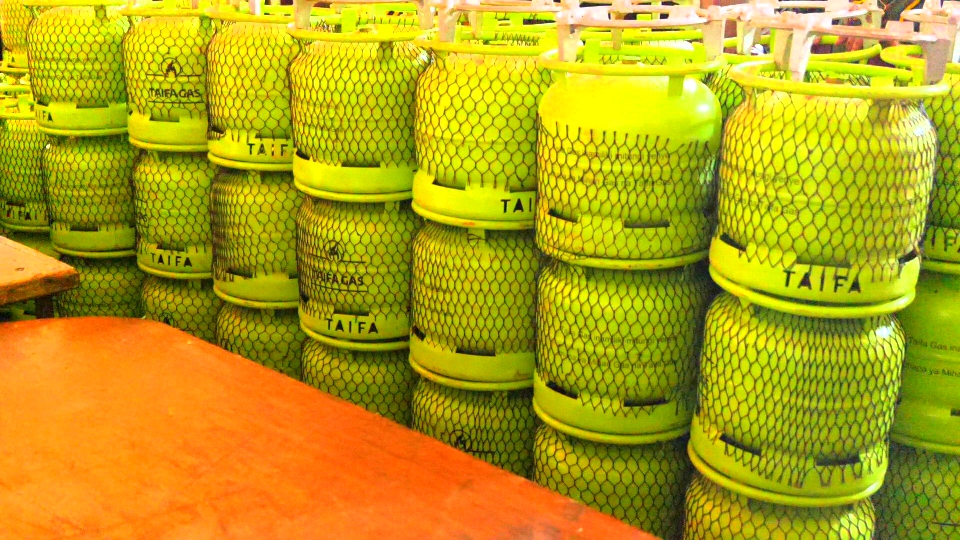
DAR ES SALAAM: THE disclosure of a Tanzanian investor’s purchase of a 49 per cent stake in Songosongo once again demonstrates the confidence local and foreign investors have in the Tanzanian government’s ability to maintain reliable policies and attract investment.
As the multiplier effect of such investments continues to benefit the Tanzanian nation in a variety of ways, particularly in terms of tax revenue, this is not flattery but commendation for such a bold investment decision.
While many analysts may have their views on such a strategic acquisition, as an economist, analyst and investment expert with extensive experience in strategic asset investment, gained through years of working with TIB Development Bank, a wholly owned government bank in Tanzania, the acquisition of PanAfrican Energy Corporation (PAE), the operator of Tanzania’s flagship Songo Songo gas field, by Taifa Gas (49%) and Amber Energy Investment L.L.C.-FZ (51%) represents one of the most consequential structural shifts in Tanzania’s energy sector in recent years.
From an economic perspective, this transaction is not merely a change in ownership, it signals a deeper transformation in the political economy of energy, domestic participation, and long-term energy security strategy that, when well managed, will continue to elevate Tanzania’s economic growth path.
Given that Songo Songo remains central to Tanzania’s electricity generation and industrial gas supply, the implications of this acquisition for a growing Tanzanian investor extend across macroeconomic stability, industrialization, and geopolitical positioning.
To those who aren’t aware, the Songo Songo gas field is Tanzania’s oldest and most important natural gas development, supplying gas for electricity generation and industrial use. Its ownership transition from Orca Energy (a foreign operator) to a consortium led by a strong domestic player (Taifa Gas) and an external investment partner (Amber Energy) reflects a deliberate shift toward localised control with strategic foreign partnership.
The deal structure of 49% local (Taifa) and 51% foreign (Amber) are particularly significant because it balances domestic participation and control with access to foreign capital, expertise, and risksharing.
This hybrid model reflects a growing trend in African resource governance: resource nationalism without full exclusion of foreign investment. One of the most immediate economic implications is the rise in local ownership of strategic energy assets.
Historically, much of the value generated by extractive industries in Africa has been repatriated abroad. This transaction alters that dynamic, as Taifa Gas, a Tanzanian firm with extensive downstream infrastructure and regional distribution networks, now participates directly in upstream gas production. Profits, dividends, and reinvestments are more likely to remain within the domestic economy.
This creates multiplier effects, including increased government revenues through taxes and royalties, expansion of local supply chains, and growth in domestic capital accumulation. As noted in the transaction rationale, increased Tanzanian ownership is expected to “keep profit in the country” and deepen industrial capacity. Taifa Gas’s entry into upstream gas production represents a strategic shift from the following.
Downstream dominance (LPG importation, storage, distribution) to full value chain participation (production to processing to distribution). Taifa Gas already has a wide distribution network across Tanzania and exports to regional markets such as Zambia, DRC, Rwanda, and Burundi.
Hence, this integration delivers several economic efficiencies: reduced supply-chain fragmentation, improved price stability, and enhanced bargaining power in regional markets. In economic terms, this reduces transaction costs and coordination failures, thereby improving overall sector efficiency. In my view, the transaction sends a strong signal to investors.
Tanzania is open to structured partnerships, not outright nationalisation. The government supportslocal champions scaling into strategic sectors, and the regulatory environment can accommodate large, complex transactions. At the same time, Orca’s exit motivated by regulatory uncertainty, tax disputes, and licensing risks highlights institutional challengesthat must be addressed to sustain investor confidence.
Thus, the deal sends a mixed signal, positive: an opportunity for local participation and new investment but also cautionary, given persistent regulatory and contractual uncertainties. Taifa Gas already exports LPG across East and Central Africa.
With access to upstream gas, Tanzania can strengthen its position as a regional energy hub by supplying gas to landlocked countries, supporting industrialisation in neighbouring economies, and enhancing cross-border energy trade. This has broader macroeconomic implications, including increased export revenues, an improved balance of payments, and strengthened regional economic integration.
From an investment-takeover perspective on the takeover of those 41% shares, energy security is fundamentally about reliability, affordability, and sovereignty. By increasing local ownership, Tanzania reduces dependence on foreigncontrolled operators, decisionmaking becomes more aligned with national priorities and the risk of external supply disruptions is minimised.
ALSO READ: Risk management capacity building to boost tax collection
This is particularly important given that Songo Songo gas underpins electricity generation and industrial supply. The integration of upstream and downstream operations under Taifa Gas will improve coordination between production and distribution, enable a more responsive approach to domestic demand fluctuations, and enhance storage and supply planning.
This will enhance resilience against shocks, including global energy price volatility, supply chain disruptions, and geopolitical tensions. Strategically, Amber Energy’s 51% involvement ensures continued access to foreign capital, risk-sharing for capital-intensive gas operations, and technical and financial support.
This reflects a key principle of energy security: diversifying partners rather than over-reliance on a single source or country. What many need to understand is that natural gas is central to Tanzania’s energy transition, as it supports electricity generation, fuels industrial processes, and provides a cleaner alternative to biomass and heavy fuels.
By strengthening control over gas resources, Tanzania is moving forward as it aligns to implement FYDIV from the 1st of July, 2026, enhancing its ability to drive industrialisation, support manufacturing growth, and expand clean energy access.
Hence, in my opinion, the acquisition signals a policy shift toward empowering local firms. Taifa Gas becomes a national energy champion, and this move encourages other Tanzanian firms to invest in strategic sectors that promote local entrepreneurship in extractive industries.
I simply wish to inform my fellow Tanzanians of the truth. This is not the time to contend that there is something concealed in such endeavours; rather, it is the time to commend and inspire investors for their courage in making difficult investment decisions in Tanzania for the greater good of the nation and Tanzanians. But we as a nation need to be smart moving forward.
The exit of Orca and the entry of a locally led consortium suggest a gradual shift away from foreign-operator dominance and toward greater emphasis on joint ventures and partnerships. This aligns with broader African trends in resource governance.
With Taifa’s existing regional footprint, the acquisition will support crossborder energy trade, regional energy security cooperation, and expansion of Tanzania’s influence in East and Central Africa. Despite its potential, the transaction, in my view as a professional guided by investment ethics, carries several risks. One, operational and technical capacity.
Upstream gas operations are complex and capital-intensive; hence, Taifa gas must scale capabilities beyond downstream operations. Two, regulatory and policy uncertainty.
Past disputes affecting Orca highlight governance challenges; hence, the stability of contracts and licenses remains critical. Three, Financing and Capital Requirements. Sustaining production and expansion requires significant investment; hence, dependence on foreign capital (Amber) remains a factor.
For the national interest, however, this could be a momentary bank, such as TIB Development Bank, wholly owned by the government of Tanzania, that steps in in whatever manner seems appropriate and forthrightly markets risks. Gas demand must continue to grow to justify investment; hence, price controls or policy shifts could affect profitability.
The acquisition of PAE by Taifa Gas and Amber Energy marks a turning point for Tanzania’s energy sector. Economically, it enhances domestic participation, strengthens value retention, and positions Tanzania as a regional energy hub. From an energy security perspective, it improves control of strategic resources, enhances supply resilience, and supports long-term industrialisation.
However, the true success of this transition will depend on strengthening regulatory stability, building technical and managerial capacity and maintaining a balanced approach to foreign partnerships Ultimately, this deal signals a broader strategic direction. As an economist and analyst, I see Tanzania moving towards a model of energy sovereignty, anchored in local participation yet integrated with global capital and expertise networks.



İstanbul seyahatlerinizde en seçkin VIP model kataloglarını, otel karşılama ve gece hayatı rehberlerini incelemek için ilçe portallarımızı ziyaret edebilirsiniz:
Fatih VIP Escort |
Bostancı Escort |
Levent VIP Escort |
Pendik Escort |
Kartal Escort |
Zeytinburnu Escort |
Bahçelievler Escort |
Bağcılar Escort |
Kağıthane Escort |
Beyoğlu Taksim Escort |
Florya Escort |
Nişantaşı VIP Escort |
Beşiktaş Escort |
Kadıköy Escort |
Şişli Escort |
Bakırköy Escort |
Ataşehir Escort |
Beylikdüzü Escort |
Maltepe Escort |
Ümraniye Escort |
Üsküdar Escort |
Mecidiyeköy Escort |
Sarıyer Escort |
Göktürk Escort |
İstanbul VIP Escort |
Taksim Gece Hayatı
Faydalı paylaşım için teşekkür ederiz! [mixjovbukyqkvngmyy]
İstanbul genelinde konaklama, VIP partner, otel karşılama ve lüks gece hayatı seçenekleri hakkında son derece kapsamlı ve faydalı bir paylaşım olmuş. Özellikle İstanbul escort bayan, VIP eskort ve otel transfer hizmeti arayanlar için bölge bölge hazırlanan güncel portföy ilanlarını aşağıdan detaylıca inceleyebilirsiniz:
– Mecidiyeköy Escort İlanları: Mecidiyeköy Escort VIP Partner
– Beylikdüzü Escort İlanları: Beylikdüzü Escort Bayan
– Ümraniye Eskort İlanları: Ümraniye Eskort Bayanlar
– Fatih Escort İlanları: Fatih Escort Tarihi Yarımada
– Beşiktaş Escort İlanları: Beşiktaş Escort VIP Partner
– Ataşehir Escort İlanları: Ataşehir Escort Bayanlar
– Bakırköy Eskort İlanları: Bakırköy Eskort VIP Transfer
– Sarıyer Escort İlanları: Sarıyer Escort VIP Partner
– Üsküdar Escort İlanları: Üsküdar Escort Bayan
– Kadıköy Eskort İlanları: Kadıköy Eskort VIP Partner
– Maltepe Escort İlanları: Maltepe Escort Bayanlar
– Bostancı Escort İlanları: Bostancı Escort VIP Partner
– Şişli Escort İlanları: Şişli Escort Bayan
– Kadıköy Moda Eskort: Kadıköy Moda Eskort
– Üsküdar Sahil Escort: Üsküdar Sahil Escort
– Mecidiyeköy Eskort: Mecidiyeköy Eskort Bayan
– İstanbul Escort Genel: İstanbul Escort VIP Partner
– Maltepe Eskort Rehberi: Maltepe Eskort İlanları
– Fatih Eskort Rehberi: Fatih Eskort Bayanlar
– Ümraniye Escort Rehberi: Ümraniye Escort VIP Partner
– Beşiktaş Eskort Rehberi: Beşiktaş Eskort İlanları
– Ataşehir Eskort Rehberi: Ataşehir Eskort Bayan
– Beylikdüzü Escort Rehberi: Beylikdüzü Escort VIP Partner
7/24 otel karşılama, bağımsız modeller ve VIP seyahat rehberi arayanlar güncel kataloğu yukarıdaki bağlantılardan doğrudan inceleyebilirler. Paylaşım için teşekkürler! [ghzehpqtakyamvqiqo]
Son günlerde mahalledeki eski binaların yıkım sürecini izlerken ister istemez kendi yaşadığım yerin güvenliğini düşünmeye başladım. Süreç hem çok yavaş ilerliyor hem de insanı biraz geriyor, acaba benzer durumlarla karşılaşanlar nasıl bir yol izledi? [tfzbxkflojukxkebom]