DSE’s half-year results: A milestone to depend on
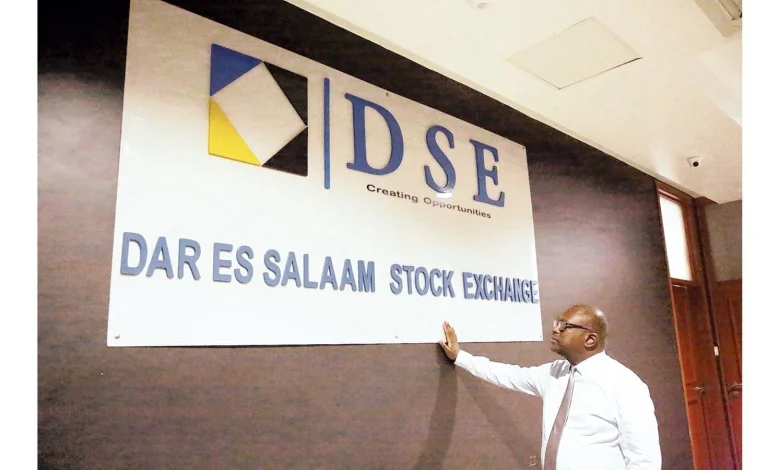
DAR ES SALAAM: THERE are moments in a nation’s economic journey that deserve more than a passing headline, they deserve reflection, celebration and renewed commitment. The performance of the Dar es Salaam Stock Exchange (DSE) during the first half of 2026 is one such moment.
With market capitalisation reaching 35.2tri/- and equity turnover surging by 227 per cent compared with the same period last year, Tanzania’s capital market has sent a powerful message: Confidence is growing, participation is expanding and the future looks increasingly promising. These achievements are no accident.
They reflect years of institutional reforms, market innovation, investor education and collaboration among stakeholders committed to building a vibrant and inclusive capital market.
First and foremost, the Capital Markets and Securities Authority (CMSA) deserves recognition for its unwavering commitment to strengthening the regulatory framework and promoting investor confidence.
A well-regulated market is the foundation of sustainable growth, and CMSA has continued to provide that stability while encouraging innovation and market development.
The Dar es Salaam Stock Exchange also deserves commendation.
Over the years, it has consistently introduced initiatives to modernise trading infrastructure, improve market accessibility and broaden investor participation.
Its efforts to position the exchange as a gateway for capital formation have played a significant role in attracting both local and foreign investors.
Licensed stockbrokers and investment advisers have also been instrumental in this progress.
As the primary link between investors and the market, they have expanded access to investment opportunities while providing valuable advisory services that enable investors to make informed decisions.
Their role has become even more important as investor interest continues to grow.
Special recognition also goes to Certified Financial Educators and other financial literacy champions across the country.
Through seminars, media engagements, social media platforms and community outreach, they have helped simplify investment concepts and gradually transform public perceptions about investing.
Financial education remains one of the strongest pillars of long-term capital market development, and its impact is becoming increasingly evident.
The private sector, institutional investors, pension funds, listed companies, financial institutions, policymakers and the investing public have each contributed to this remarkable progress.
A thriving capital market is never the achievement of a single institution; it is the product of collective commitment and shared confidence in the country’s economic future.
While these achievements are encouraging, they should serve as a foundation rather than a destination.
Tanzania’s capital market still holds enormous untapped potential. One of the most transformative steps would be accelerating the listing of selected government-owned enterprises on the stock exchange.
Strategic entities in sectors such as energy, telecommunications, transport, logistics, ports, insurance and infrastructure could significantly deepen the market while enabling ordinary Tanzanians to own shares in national assets.
Such listings would not only increase market capitalisation and trading activity but also strengthen corporate governance, enhance transparency, improve operational efficiency and broaden public participation in wealth creation.
At the same time, continued development of the corporate bond market and other fixed-income instruments should remain a national priority.
Encouraging more corporations, financial institutions, municipalities and government agencies to raise long-term capital through bonds would diversify investment opportunities, improve market liquidity and expand the fixed-income market.
ALSO READ: Banking stocks set to extend DSE rally
Likewise, broadening collective investment schemes and digital investment platforms would make investing more accessible to citizens regardless of income level.
Equally important is sustaining nationwide financial literacy initiatives. A growing capital market requires a growing pool of informed investors.
Investment education should become a continuous national agenda involving schools, universities, employers, financial institutions, regulators and the media.
The more knowledgeable investors become, the stronger and more resilient Tanzania’s capital market will be.
The first half of 2026 has demonstrated what is possible when vision, sound regulation, innovation and collaboration come together.
The question is no longer whether Tanzania can build a world-class capital market, we have already shown that it can.
The real challenge is sustaining this momentum, unlocking the vast opportunities that remain untapped, and transforming the capital market into one of Africa’s most dynamic engines of economic growth.
The milestones we celebrate today should inspire even bolder ambitions tomorrow, because the true measure of a successful capital market is not simply the value it creates for investors, but the prosperity it generates for the entire nation.