Diplomacy or deception? The reality behind Sweden’s aid withdrawal from Tanzania

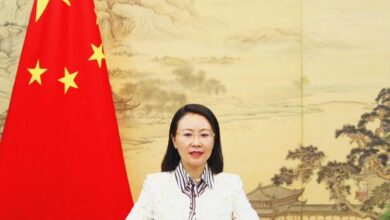
DAR ES SALAAM: A TEAM from local media spent the morning of April 29th 2026 at the Swedish Embassy in Dar es Salaam to discuss a sixty-three-year friendship between Tanzania and Sweden with Ambassador Charlotta Ozaki Macias and Ms Lena Bertilsson of EKN.
Bittersweet nostalgia permeated the atmosphere as the diplomats described a “graduation” that will allow Sweden to phase out its bilateral aid to Tanzania completely by August 31, 2026, thereby bringing to an end a decade of strong cooperation.
Accompanied by a warm exterior of brotherly selflessness, going from decades of mentorship to peer-to-peer partners for trade and co-owned assets, the underlying strategic reality points to a more dispassionate European withdrawal.
This interview repeats the polished government line; rather than conduct a thorough investigative survey for a Tanzanian public stepping into an age of fiscal isolation and swelling debt, it amounts to choreographed state messaging. The worst failing comes when Ambassador Ozaki Macias states that the end of sixty years of aid has no connection whatsoever to Tanzania’s violent and disputed October 2025 elections, “100 per cent,” she insists.
If there is international condemnation of internet shutdowns and arrests just a handful of weeks earlier, taking this at face value runs counter to the most essential laws of political timing and leverage in world affairs.
The piece fails to call for the benefits of proof through documentation, or for other internal policy documents that would settle it once and for all as a long-run strategy for Sweden or merely a reactionary nail of punishment against a backdrop of democratic backsliding.
This vast diversion of diplomatic attention is warranted solely by a “changing security environment,” says Ambassador Ozaki Macias, who notes that the primary force pushing Sweden to reallocate resources is the ongoing war in Ukraine.
This acknowledgement presents a significant logical contradiction that the article does not address: If funds are now being channelled into Sweden’s own backyard, Tanzania’s “graduation” is an eviction masquerading as success.
The piece protects the Swedish brand from being accused of leaving a long-term partner high and dry and from being drawn into the fray amid excessive regional instability following its budget-driven retreat.
This “geopolitical pivot” essentially reinforces the idea that Tanzanian developmental stability is now an afterthought in the broader European border security matrix, one that the interviewer neither challenges nor questions.
The case for and against Tanzania as an investment destination is set out in stark, one-sided terms, providing a catalogue of grievances over corruption, red tape and fragile institutional capacity, without exploring the extent to which foreign capital has historically underpinned these very same systems.
Swedish firms would be the last to complain about “red tape,” but rather than ask whether global corporations owe much of their success to tax exemptions, regulatory loopholes, or, at best, opaque negotiations that weakened the very state structure they now condemn. It builds a comfortable hierarchy in which a European diplomat is cast as a moral teacher, Tanzania as a permanently incomplete pupil.
The article steers clear of the idea that some investors make money from the very uncertainty they denounce, especially in places where poor oversight creates opportunities for lucrative contracts, tax deferrals, or preferential access to officials unavailable to local rivals. Most worryingly, we hear the claim that Swedish investors have difficulty finding Tanzanian workers skilled enough to go unchallenged.
That comment goes largely unchallenged in the interview, pivoting from a casual remark into a condemnation of all universities and colleges of vocational training, and the country’s technical workforce more broadly, with absolutely no counterpoint from Tanzanian academics, engineers or labour representatives.
The framing repeats a decadesold development grammar that sees African labour as chronically inadequate for higher-value technical roles. With such reasoning, expatriate managers and consultants for all strategic sectors, foreigners do elite engineering work while locals occupy low-value operational roles under projects like SGR.
There is equally little rigorous investigation of what the 1.3 billion US dollars Standard Gauge Railway financing programme actually consists of. The arrangement, she explains, is part of a “long-term commitment”, yet the article never asks the key question: Committed to who and to what, Tanzania’s development or Europe’s industrial supply chains?
While EKN’s triple-A credit rating is likely to keep borrowing costs down, these arrangements are often accompanied by tied-financing structures which stipulate the purchase of Swedish or European goods and services. As a result, much of the loan might circulate back through European industries before large parts of the value are realised within Tanzania’s domestic economy.
The article does not treat currency risk with the seriousness of purpose either. While loans are denominated in hard currencies, repayment obligations stretch decades into the future, so a shift to a weaker Tanzanian shilling could greatly increase the burden on taxpayers’ years, perhaps many years, away, as the diplomatic warmth around it recedes.
ALSO READ: Mwinyi lauded for advancing traditional medicine
While Sweden is protected from unexpected government defaults until 2045, Tanzania faces the sovereign risk of global currency volatility and must now guess at future fiscal sustainability.
In practice, what is celebrated as a generous partnership may leave the country facing decades of repayment commitments under bilateral contracts negotiated heavily outside Tanzania.
Even more surprising is the prescriptive way that Sweden’s ambassador compares Tanzania today to Sweden’s industrial ascent. There had been protectionism, technological sovereignty and a great deal of national control over industrial policy during Sweden’s period of industrialisation, conditions almost entirely unavailable to the vast majority of modern African economies operating under neoliberal trade regimes.
Today, Tanzania borrows for development within a new kind of financial architecture where the terms of borrowing are heavily determined by lenders (often governments and multinational firms), insurers and export credit agencies.
It idealises Sweden’s centenary experience, while ignoring the profound and systematic asymmetry between nineteenth-century European industrialisation and twentyfirst-century African debt-financed development. At a deeper level, the piece’s weakness is the absence of voices from Tanzania who could question this ‘gradualist and progressive’ approach to aid to trade.
No Tanzanian economist examines the debt implications, no civilsociety leader speaks about what going without direct development support means for society, and no industrial analyst wonders whether the new model actually serves local enterprise. Tanzania remains damned in a score, transitory and diplomatic, rather than a sovereign state with crucial motivations to feel anxious about its dependency.
The outcome is a reading that speaks confidently about Tanzania but limits the space Tanzanians have to write the argument themselves. For equally little, Sweden’s vulnerabilities are also scrutinised. The interview upholds an image of a Scandinavian administrative perfection, though Sweden has faced recent social fractures from gang violence, economic anxieties and declining public trust in institutions, but locates most governance failures firmly in the Global South.
It is hard to argue with, but if the ambassador had been challenged on Sweden’s internal pressures, the conversation could have become a more even-handed discussion of global problems of leadership, legitimacy and social solidarity.
Instead, the article perpetuates an old hierarchy where Europe is still viewed as the presumed custodian of institutional righteousness and African States are left to be subjects of reform eternally. The segment on the October 29th violence is particularly restrained. Diplomatic condolences and expressions of “shock” coexist with Sweden’s continued enthusiasm for financing major infrastructure projects, exposing a contradiction the article never meaningfully interrogates.
In the end, this is not adversarial journalism but diplomatic framing. Sweden’s retreat from aid is presented as maturation while obscuring how modern development partnerships are increasingly driven less by solidarity than by market logic, export interests and geopolitical calculation.