

CRDB’s 50bn/- on a golden prayer
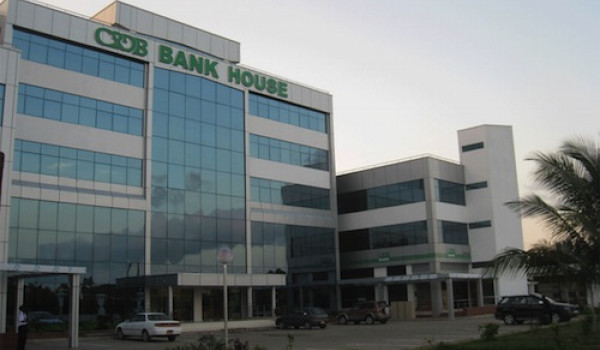
DAR ES SALAAM: LET’S be real: Handing a 50bn/- loan to the Songwe Gold Family is a sophisticated financial gamble that demands serious geological and economic math.
To evaluate the true prospectivity of licence ML 009/2014, the newly awarded asset likely driving CRDB’s approval, it must be rigorously benchmarked against the apex standard in the Songwe corridor: Shanta Gold’s New Luika Gold Mine.
Both operations sit within the Lupa Goldfield’s regional geology, characterised by heavily deformed, folded and metamorphosed Paleoproterozoic rocks. In this specific structural corridor, gold-mineralised quartz veins are strictly hosted within brittle-ductile to ductile deformational features, predominantly within the Gneiss Formation.
As the dominant orebearing host, this formation has been subjected to at least three separate granitic intrusive events, creating a highly complex, abrasive environment of felsitic, biotite and hornblende granite gneiss boasting a specific gravity of 2.65 to 2.75 tonnes per cubic metre.
Extracting ore from this matrix requires specialsed industrial drill-and-blast parameters far exceeding standard artisanal capabilities. Mineral Prospectivity Mapping (MPM) for ML 009/2014 indicates a primary NW-SE trending fault with a verified 1.2-kilometre strike length and a steep dip angle of 65 to 75 degrees, perfectly mirroring the second and third-order mylonitic shear zones exploited by New Luika.
At depths exceeding 200 metres, this operational benchmark maintains a highly consistent average underground reserve grade of 3.4 to 4.4 grammes per tonne (g/t). Furthermore, New Luika achieves an 89 per cent to 92 per cent recovery rate through a highly optimised CarbonIn-Leach and Carbon-In-Pulp (CIP) circuit processing upwards of 1,200 tonnes of ore daily.
For the Songwe Gold Family to successfully service a 50bn/- (approximately 19.2 million US dollars) capital expenditure assuming it is over a standard five-year tenor, they can no longer rely on the unpredictable, structurally erratic surface “high-grade” pockets typical of artisanal pitting.
If advanced deep-core drilling confirms a consistent industrial vein thickness of 2.5 metres within the Gneiss host down to the target depth of 300 metres, the mathematical requirement for financial survival becomes absolute.
The operation must extract a minimum of 150 tonnes of ore per day, totalling approximately 49,500 tonnes annually at a meticulously controlled head grade no lower than 4.0 g/t. Assuming a 90 per cent CIP recovery rate, this continuous throughput yields roughly 5,730 ounces of gold per year.
This establishes the absolute production baseline required to cover a projected All-In Sustaining Cost (AISC) of USD 1,300 per ounce alongside the 14.5bn/- annual debt service.
Should this head grade drop to 2.5 g/t, a remarkably common 37 per cent dilution risk when localised miners first attempt to navigate complex brittle-ductile shear zones with heavy mechanisation, the sheer volume and operational cost of hoisting waste rock from 300 metres deep will instantly consume the profit margin.
In the dense, hard-rock environment of the Ilunga and Saza Granite Formations, where secondary minerals like biotite and hornblende dramatically increase abrasive wear on drilling consumables, such a grade drop escalates mining costs exponentially. In that scenario, the project’s financial resilience deteriorates rapidly and the loan facility transitions from growth capital to balance-sheet risk.
Thus proving the credit quality of the loan rests on the geology performing exactly as modelled. Analysing the current Tanzanian banking sector landscape, commercial lending rates for high-risk, CAPEXheavy mining operations typically hover around 14 to 15 per cent per annum.
Assuming CRDB structured this Songwe facility over a standard five-year tenor with a 12-month grace period on the principal, the resulting financial pressure on the borrower is immense.
At a conservative 14 per cent interest rate over those five years, the annual debt service requirement will predictably balloon to approximately 14.5bn/-, translating to roughly 5.6 million US dollars at early 2026 exchange rates.
Thus logically, to generate this 5.6 million US dollars in net free cash flow strictly for debt repayment, the operation must produce far more than just the bank’s share. Assuming an All-In Sustaining Cost (AISC) of 1,300 US dollars per ounce and a gold price of 2,600/-, the operation realises a theoretical operating margin of 1,300 US dollars per ounce.
ALSO READ: China’s zero-tariff opportunity for African economies
On that basis, servicing 5.6 million US dollars in annual debt requires the production and sale of approximately 4,300 to 5,000 ounces per year solely for repayment purposes.
This threshold excludes reinvestment, contingency buffers, or shareholder return. Any sustained underperformance in grade, recovery, or throughput immediately compresses free cash flow and raises the probability of covenant stress or technical default directly threatening the viability of the entire flagship initiative.
The bank’s exposure is therefore tightly linked to global monetary conditions and currency dynamics. Institutional forecasts for the 2026–2031 period suggest continued structural support for gold prices, underpinned by central bank accumulation, elevated geopolitical risk and persistent macroeconomic uncertainty.
Under bullish scenarios, gold could appreciate 25 to 40 per cent over the medium term, potentially reaching 3,500 US dollars to 4,000 US dollars per ounce by decade’s end. However, macro tailwinds are not unambiguously protective.
The Tanzanian Shilling has historically depreciated against the US dollar at an average pace of approximately 3 to 5 per cent annually. Because gold is priced in dollars while the debt obligation is denominated in shillings, moderate currency depreciation can improve repayment capacity in local terms.
A stronger dollar increases the shilling value of gold sales, effectively reducing the number of ounces required to meet a fixed TZS obligation. However, this dynamic is a precarious double-edged sword. Industrial mining operations are heavily reliant on imported, dollar-denominated consumables such as sodium cyanide, specialised drilling steel, heavy equipment spare parts and industrial diesel.
If the Tanzanian Shilling depreciates too aggressively against the dollar, these operational costs forming the core of the All-In Sustaining Cost will violently expand.
This rapid inflation of daily expenses threatens to entirely consume the theoretical “currency advantage” long before those funds ever reach the bank’s repayment ledger, leaving the mining operation dangerously squeezed between rising overhead and inflexible debt obligations. To prevent this flagship asset from becoming a toxic non-performing loan, CRDB may enforce rigid covenants that extend far beyond standard protocols.
They could implement mandatory hedging, requiring the debtor to forward-sell a calculated percentage of their projected production. By locking in a portion of their yield at current high gold prices, the bank effectively insulates the debt service from sudden, devastating global market crashes. Furthermore, establishment of escrowed operational expenditure accounts is nonnegotiable.
The bank should mandate that 20 per cent of all gold sales processed through the Bank of Tanzania be automatically swept into an escrow account strictly reserved for essential imported consumables, such as sodium cyanide and industrial explosives. The operational reality is stark: A mine without explosives cannot extract ore, and therefore cannot pay its debt.
Finally, CRDB cannot afford to rely solely on the borrower’s internal assessments thus to guarantee transparency, the bank could opt to retain an independent geological consultancy to perform rigorous monthly grade control audits and reconciliations thus ensuring that the actual ore being fed into the CIP plant consistently matches the critical 4.0 grammes per tonne requirement necessary to keep the operation solvent, if modelled this way.


References:
Legiano Casino Umsatzbedingungen https://wellnessbeauty.ru/bitrix/redirect.php?event1=click_to_call&event2=&event3=&goto=https://bmp.pw/giselleegge902
References:
KingMaker Casino Bonus aktivieren https://reibert.info/
References:
Legiano Casino PayPal vidal.ru
References:
Legiano Casino Neukundenbonus go.115.com
References:
Legiano Casino VIP google.it
References:
Legiano Casino Registrierung omnimed.ru
References:
Legiano Casino Bonus ohne Einzahlung http://www.ut2.ru
References:
Legiano Casino Gutscheincode cse.google.sk
References:
Legiano Casino 2026 http://maps.google.sn/url?q=https://bridgedesign.site/wiki/Leguano_Barfussschuh_Gr_37_schwarz_30_1110_Wien
References:
Lollybet Casino Blackjack http://images.google.com.pr
References:
Lollybet Casino Bonus Code http://toolbarqueries.google.com.ph
References:
Lollybet Casino Bitcoin https://ok.ru/dk?cmd=logExternal&st.cmd=logExternal&st.name=accessibleVersion&st.link=http://urlscan.io/result/019f2cb6-e4ba-74db-ac6e-8706fcc827e2/&tkn=5427
References:
Best instant payid pokies australia real money htlm.ru
References:
Online pokies real money payid zeitfuer.abenstein.de
References:
Online pokies australia payid real money https://i.megapollos.com/@daveroderick80?page=about
References:
Australian pokies payid https://sportjobs.gr/employer/payid-send-and-receive-faster-online-payments/
References:
Online pokies with payid https://testgitea.educoder.net/
References:
Payid online pokies https://govtpkjob.pk/companies/enhancing-payment-security-the-role-of-payid-and-payto/
References:
Pokies net australia payid withdrawal https://nujob.ch/companies/social-casino-entertainment-free-social-casino-games-online-pokies/
References:
Lollybet Casino Login clients1.google.ro
References:
Lollybet Casino Neukundenbonus https://www.cosplayercam.com/external_link/?url=https://weadown.in/terriesoward55
References:
Lollybet Anmeldung traflinks.com
References:
Lollybet Casino Zahlungsmethoden https://cse.google.ca
References:
Lollybet Casino Freispiele https://55.xg4ken.com/
References:
Lollybet Spiele http://m.t.napoto.cafe24.com/member/login.html?noMemberOrder=&returnUrl=https://dlr.li/felishaskillen
References:
Lollybet Casino Spiele palm.muk.uni-hannover.de
References:
Lollybet Casino Bewertung http://images.google.cl
References:
Lollybet Casino Erfahrungen freerepublic.com
References:
Lollybet Freispiele scholar.google.es
References:
Lollybet Casino App Download http://clients1.google.co.zm/url?q=https://innvo.pro/lindsaytun
References:
Lollybet Willkommensbonus https://www.saltedge.com
References:
Lollybet Kundenservice https://cn.uniview.com/
References:
Lollybet Online Casino http://toolbarqueries.google.li/
References:
Lollybet Bewertung images.google.mv
References:
Lollybet Mirror Link http://rusnor.org/bitrix/redirect.php?event1&event2&event3&goto=https://biokita.id/thereseran
References:
Lollybet Casino No Deposit Bonus http://cse.google.ie/url?sa=i&url=https://short.thejat.in/leonorabarca7
References:
Lollybet Deutschland https://14.viromin.com/
References:
Lollybet Casino Bonus http://cse.google.com.gi/url?sa=i&url=https://sysurl.online/aimeebrenan28
References:
Online pokies with payid australia real money https://blagomedtaxi.ru:443/ssylki/l.php?link=https://instantcasinodeutschland.de/fr-fr/
References:
Payid online pokies australia pinki.nbbs.biz
References:
Payid pokies aus https://m.anwap.love/go_url.php?r=https://instantcasinodeutschland.de/fr-fr/
References:
Payid online pokies australia https://www.trevaskisfarm.co.uk/?URL=https://instantcasinodeutschland.de/fr-fr/
References:
%random_anchor_text% https://robbarnettmedia.com/employer/instant-casino-erfahrungen-2026-sicher-oder-ein-betrug
References:
Candy 96 https://gladjobs.com/employer/candy96-app-ios-android-review-for-australia-2026-3
References:
Candy96 Casino online https://findinall.com/profile/shannagrady481
References:
Star Casino Bonus https://careers.cblsolutions.com/employer/sofortige-auszahlungen-login
References:
Verde Casino Bonus ohne Einzahlung http://www.google.ee/url?sa=t&url=https://sht-link.com/haoleonora9536