COSTECH working to ensure research findings reach end-users
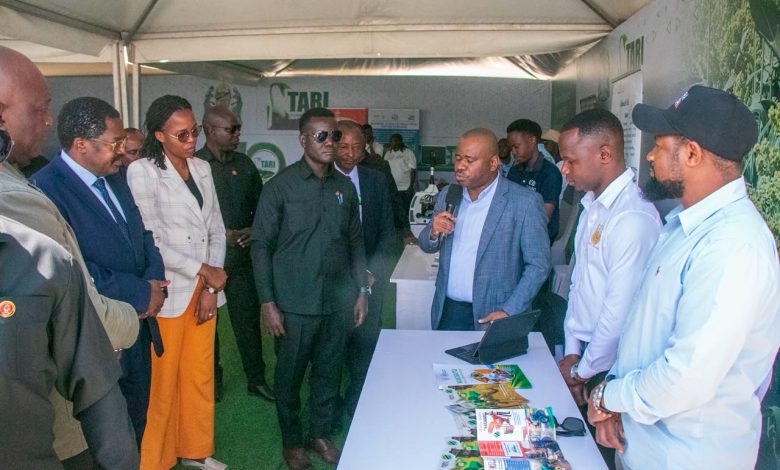
DODOMA: Tanzania Commission for Science and Technology (COSTECH) is working to ensure that research findings and innovations reach end-users and contribute to the development of various sectors, including agriculture, Director General Dr Amos Nungu has said.
Dr Nungu said the Commission is taking various initiatives to connect researchers with policymakers and end-users, ensuring that research findings do not remain on shelves but are put into practical use.
He made the remarks at the ongoing 2026 National and International Nane Nane Exhibition at the Dr John Samuel Malecela Grounds in Dodoma, where he also highlighted the role of the Samia Commercialisation Fund in helping researchers and innovators take their products to the market.
He said Tanzania’s decision to establish the Samia Commercialisation Fund has boosted the confidence of researchers and innovators, enabling their research findings and innovations to reach the market and contribute significantly to development.
“Sometimes, a researcher prepares a proposal for research, but when the research is completed, there are no funds available for the next stage because that stage was not included in the initial proposal.
“Therefore, through the Samia Commercialisation Fund, researchers and innovators with products, outputs or outcomes that have the potential to reach the market can access funding to commercialise them,” Dr Nungu said.
Under the new arrangement, he said, research findings and innovations that are ready for the market would no longer stall due to a lack of funding.
According to the COSTECH chief, research is sometimes conducted to test an idea or approach, and the results may not always be as expected, but they still provide valuable findings.
ALSO READ: Finance Minister directs TADB to focus on govt priorities
“What we are doing now is ensuring that researchers are directly connected with the end-users of their research,” he said.
Dr Nungu said that among the 39 climate change projects implemented by the Commission, COSTECH has focused on ensuring that research findings reach the end-users who can apply them.
“The end-user will have been involved and will understand that the findings have already demonstrated that a particular approach is not feasible. This is one of the ways we are connecting end-users with research practitioners,” he said.
As COSTECH marks 40 years since its establishment, Dr Nungu said the institution has funded numerous research projects, with more than 100bn/- invested in research and innovation in general.
He said that when COSTECH funds research, food security is one of the expected outcomes, adding that the research it supports contributes to development in many ways.
He said such research helps ensure food availability, supports the production of goods for industries, contributes to better health for industrial workers and supports the economy as a whole.
“Therefore, when we fund research, we are not simply spending money on research under Vision 2050. Rather, we are preparing for major developments that lie ahead, with research outcomes serving as the foundation for those developments,” he added.
The Samia Commercialisation Fund provides financial support of 4.6bn/- to help local researchers, young people, start-ups and content creators transform research and technological ideas into market-ready products.