COP31 presidency unveils global electrification, accelerates energy transition
TURKEY: AS climate negotiators from around the world gather in Germany for the Bonn Climate Change Conference, a new global push to accelerate the transition away from fossil fuels has emerged, placing electrification at the centre of future climate action.
The Bonn Climate Change Conference, taking place from June 8 to 18, 2026, brings together negotiators from Parties to the United Nations Framework Convention on Climate Change (UNFCCC) ahead of the COP31 Climate Summit scheduled for November in Antalya, Türkiye.
The annual gathering serves as a crucial platform for countries to shape priorities and build momentum ahead of formal climate negotiations later in the year. Against a backdrop of rising global temperatures, energy insecurity and increasing climate-related disasters, the incoming COP31 Presidency has proposed a bold new target aimed at transforming how energy is consumed across the global economy.
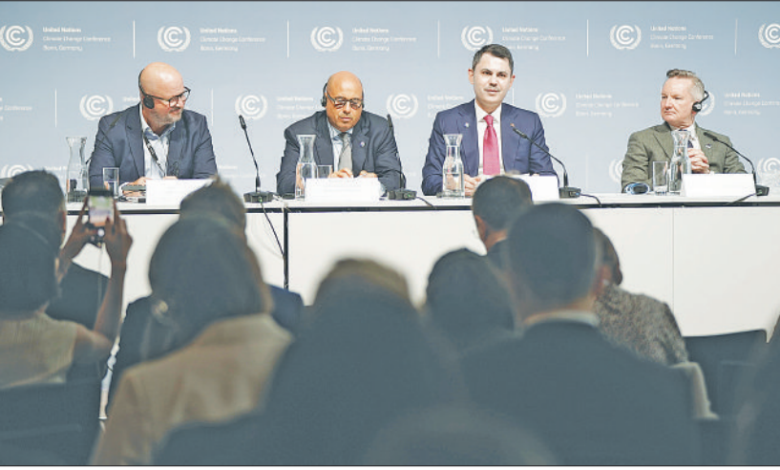
The proposal seeks to increase the share of final energy demand met by electricity from just over 20 percent today to 35 per cent by 2035. Speaking during the conference, COP31 President-Designate and Türkiye’s Minister of Environment, Urbanisation and Climate Change, Murat Kurum, said the world could no longer afford to delay action on clean energy.
“The Action Agenda is the driving force behind implementation. As the COP31 Presidency, we have been listening to everyone. This has helped us build an ambitious and holistic Action Agenda,” he said.
He added, “by electrifying daily life, from transport to buildings and industry, we can protect families and businesses from volatile energy markets. This 35 per cent by 2035 target will be one of the defining priorities of our COP31 Presidency.”
The proposal forms part of a broader package of initiatives unveiled by the Presidency under its Action Agenda, which focuses on practical decisions made every day by households, businesses, cities and industries.
These include families switching to electric vehicles and appliances, companies investing in electric industrial technologies, cities electrifying public transport systems and building owners installing solar panels, batteries and heat pumps.
The initiative is supported by analysis from the International Energy Agency (IEA) and the International Renewable Energy Agency (IRENA), both of which argue that electrification represents one of the fastest and most cost-effective pathways to reducing greenhouse gas emissions while strengthening energy security.
The target also aligns with the goals of the Paris Agreement and efforts to keep global temperature increases within 1.5 degrees Celsius above preindustrial levels. Mr Kurum first outlined the urgency of the issue during the opening plenary of the Bonn conference on June 8, warning delegates about the dangers of continued dependence on imported fossil fuels.
He said “how risky it is to remain dependent on imported fossil fuels, and how urgent it is to speed up the clean energy transition.” While electrification is expected to play a central role, experts emphasise that it must be accompanied by wider efforts to phase down fossil fuel use, expand renewable energy generation, strengthen electricity grids and storage systems, and improve access to affordable energy and climate finance, particularly in developing countries. The new target builds on commitments made at previous climate summits.
ALSO READ: ‘Maintaining’ young trees is not a one-day activity
At COP28, countries agreed to work towards tripling renewable energy capacity and transitioning away from fossil fuels. At COP29, governments and stakeholders advanced efforts to expand energy storage, modernise electricity grids and mobilise at least 300 billion US dollars annually by 2035 to support climate action in developing countries.
According to the COP31 Presidency, the electrification target represents the next logical step in translating those commitments into practical changes in how energy is used across transport, buildings and industrial sectors. Beyond energy, the Presidency announced a goal to halve the growth of global waste by 2035 as part of its broader ambition to achieve zero waste.
The initiative highlights the growing role of waste reduction in climate action, particularly given that food waste accounts for around 10 per cent of global greenhouse gas emissions through methane releases. Another key proposal seeks to reduce energy consumption intensity in the building sector by at least 25 per cent by 2035.
Officials say the measure could help reduce energy costs for households and businesses while improving climate resilience. Additional areas under development within the Action Agenda include food security, circular manufacturing systems and climate education initiatives.
The Presidency also provided further details on the proposed Climate Implementation Bridge, a mechanism designed to strengthen the link between national climate priorities, economic development goals and climate finance. The initiative aims to ensure that funding reaches communities and projects more quickly while delivering measurable impacts on the ground.
Australia’s Minister for Climate Change and Energy and COP31 President of Negotiations, Chris Bowen, said electrification could provide both economic and environmental benefits. “Accelerating the energy transition will ease shocks to our energy systems, better protect our economies and households from high costs, and help keep bending the curve of emissions downwards,” he said.
The Executive Secretary of the UNFCCC, Mr Simon Stiell, described electrification as a critical tool in reducing dependence on coal, oil and gas while strengthening economic resilience.
“Electrification has already sparked a global surge in clean energy, driving growth and jobs,” he said, adding that more resilient cities and reductions in waste would also be vital in tackling the climate crisis and its growing economic impacts. Support for the initiative has also come from leading international energy organisations.
IEA Executive Director Fatih Birol said the world is rapidly entering what he called the “Age of Electricity,” driven by growing demand from electric vehicles, air conditioning, industry and emerging technologies such as artificial intelligence. Similarly, IRENA DirectorGeneral Francesco La Camera said electrification powered by renewable energy offers one of the most immediate and scalable solutions available to countries seeking to reduce emissions while strengthening economic competitiveness.
The COP31 Presidency acknowledged that countries will pursue different pathways depending on their economic circumstances, development priorities and energy resources. For that reason, the Action Agenda aims to bring together governments, businesses, financial institutions, cities and civil society organisations to accelerate practical climate solutions alongside the formal negotiations process.
Officials hope the initiative will leave a lasting legacy beyond Antalya and create momentum that can continue through future climate conferences, including COP32 in Ethiopia, helping the world move closer to achieving its climate and energy goals by 2035.
As delegates continue discussions in Bonn, the message from the incoming Presidency is clear: the energy transition is no longer only about how energy is produced, but increasingly about how it is consumed. Electrifying homes, transport systems, industries and cities could become one of the defining climate actions of the next decade.