COLUMN: IN THE WILD. The glowing blue gecko of Kimboza forest
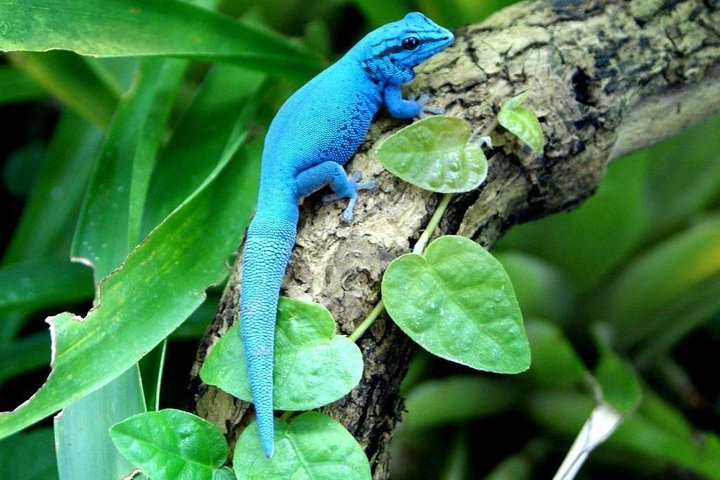
THE blue gecko or electric blue gecko or electric blue day gecko is a small lizard which is endemic to a small area ofTanzania.
This is Kimboza Forest, a lowland forest in Tanzania located at the foothills of the Uluguru Mountains. The Uluguru Mountains are a mountain range in eastern Tanzania, named after theLuguru tribe, this is an ecosystem which has many mountains capable of capturing moisture passing inland from the Indian Ocean making the east facing slopes to get enough rainy seasons.
With rainfall estimated at over 3,000 millimeters per annum, Uluguru mountains provide the water catchment areas for the streams and rivers.
This water flows mainly from the forest-capped peaks of the Uluguru Mountains into streams joining to form the Ruvu River, which provides the water supply to the city of Dar es Salaam.
On its side, Kimboza Forest is a beautiful area where the large Ruvu River crosses the reserve and the forest stretches to the top of the nearby hills. It is interspersed by massive rock outcrops and has several permanent small streams. Kimboza forest harbours over 100 plants, 2 birds, 2 mammals, 4 reptiles and 6 amphibians unknown elsewhere in the world.
The forest holds special significance for conservation of the electric blue gecko or electric blue day gecko, the small lizard is only one of two localities in Tanzania where this critically endangered species is found.
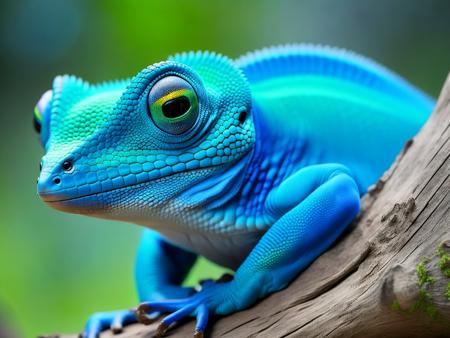
On the slopes of Uluguru mountains, Kimboza forest covers about eight square kilometres whereby together with other small forests of Ruvu Forest Reserve, Mbagalala and Muhalama they harbour more than 150,000 adult blue geckos at an altitude of 170 to 480 meters above sea level.
Zoologists at the site say the size of the remaining subpopulations is unknown, but their size is not thought to contribute significantly to the whole total population of these wonderful lizards in Tanzania, Africa and other ecosystems in the world.
History shows these lizards evolved between 199.6 and 145.5 million years ago but the most prominent ancestors of these beautiful lizards evolved about 100 million years ago in an area located between Mongolia and Myanmar. Historians say the ancient creature is considered to be a true ancestor of the modern gecko because it was equipped with adhesive pads on the feet similar to those of living geckos.
Many species are well known for their specialised toe pads, which enable them to grab and climb onto smooth and vertical surfaces and even cross indoor ceilings with ease. About 60 per cent of gecko species have adhesive toe pads which allow them to adhere to most surfaces without the use of liquids or surface tension.
Such pads have been gained and lost repeatedly over the course of gecko evolution. History shows adhesive toepads evolved independently in about eleven different gecko lineages and were lost in at least nine lineages. Study suggests that gecko adhesion is in fact mainly determined by electrostatic interaction which is caused by contact electrification not capillary forces.

The setae on the feet of geckos are also self-cleaning and usually remove any clogging dirt within a few steps. Scientists say Gecko adhesion is typically improved by higher humidity even on hydrophobic surfaces, yet is reduced under conditions of complete immersion in water. Gecko toes seem to be double-jointed, but this is a misnomer and is properly called digital hyperextension.
Their toes can hyperextend in the opposite direction from human fingers and toes.
This allows them to overcome capillary forces by peeling their toes off surfaces from the tips inward. Geckos’ toes operate well below their full attractive capabilities most of the time, because the margin for error is great depending upon the surface roughness and therefore the number of setae in contact with that surface.
Scientists say the use of small capillary forces force requires very large surface areas; every square millimeter of a gecko’s footpad contains about 14,000 hair-like setae. Apart from this mechanism, there are fatty substances which are produced naturally in their bodies, also come into play.
These are lipids which lubricate the setae and allow the gecko to detach its foot before the next step. The origin of gecko adhesion likely started as simple modifications to the epidermis on the underside of the toes.
Meanwhile gecko skin does not generally bear scales, but appears at a macro scale surface, which is made from hairlike protuberances developed across the entire body. Gecko skin has been observed to have an anti-bacterial property, killing gram-negative bacteria when they come in contact with the skin. Geckos can replace each of their 100 teeth every 3 to 4 months.
Geckos are small, mostly carnivorous lizards that have a wide distribution, found on every continent except Antarctica. Records show there are more than 1,850 species of geckos dwelling in different ecosystems around the world but the beautiful electric blue gecko or electric blue day gecko is endemic to Kimboza forest in Tanzania.
The Kimboza forest protection and management project was set up in 1964 and remains controlled by the Tanzania Forest Services Agency. It is currently recognised as an International Union for Conservation of Nature (IUCN) under a special category.
These attractive lizards live exclusively on the leaf crown of some endemic plants of Kimboza forest, zoologists say unlike other species the electric blue gecko prefer to dwell on large trees where they are attracted with those with large leaves measuring more than one meter long. A single leaf crown may accommodate a single individual, or an adult male, an adult female and juveniles.
Like all geckos, the male electric blue gecko is territorial, and do not generally tolerate the presence of other males. Social gestures include lateral flattening, puffing out of the throat patch, head shaking and head bobbing and tailwagging.
Scientists say just as humans dress according to their mood, these inquisitive, friendly lizards show how they are feeling through colour.

Full grown alpha males are brilliant blue, although they turn darker when they’re stressed and feeling threatened. Bright blue males are flamboyant, territorial studs who court their beautiful females with head bobbing and puffed out throats.
This is a unique approach and it is not everyone’s cup of tea, but for those attractive females who go on to pop out one or two eggs.
Electric blue day geckos can show colour differentiation about as early as 5 to 6 months. However, this method of sexing can be unreliable, as stressed or submissive males will exhibit the same coloration as females or juveniles. Zoologists say males of blue geckos court females with lateral flattening, puffing out of the throat pouch, and head bobbing.
Two to three weeks after copulation, the female lays a clutch of 1 or 2 pea-sized white, hardshelled eggs which are glued to a surface in a secure, hidden location and these eggs hatch in 60 to 90 days.
Electric blue day geckos are prolific during the breeding season, with females laying 2 eggs once every 3 to 4 weeks. These geckos are egg-gluers and will adhere their eggs to a surface; once glued, they cannot be safely removed without damaging the egg.
Scientists say the electric blue geckos can be very bold, territorial, active and social. Inside Kimboza forest they generally live their entire lives on a single plant, that is why the males are very territorial and won’t tolerate the presence of other males.
Social gestures, may include lateral flattening, puffing out of the throat patch, arching the back, head shaking, head bobbing and tail-wagging. Geckos are unique among lizards for their vocalisations, which differ from species to species.
Most of these lizards use chirping or clicking sounds in their social interactions. Some other species are capable of making hissing noises when alarmed or threatened. Many of these behavioural traits may also be observed in captivity. Colours of individuals can also vary depending on their mood, stress level or temperature.
Male colours can range from black, to gray, to brilliant electric blue. The females range from dark brown to brilliant green.
Both males and females have a black line that runs on each side of the head from the snout through the eye just past the neck. There is a second line which is V-shaped; this runs parallel to the line and appears on top of the head. The base colour of adult males is a bright electric blue, which extends over the entire top portion of the body. The females are coloured either golden or various shades of green to blue-green.
On the underside both sexes vary in colour from pale yellow to bright orange. The throats of the males vary from shades of blue with black markings to solid black. The throats of the females are lighter blue to green devoid of markings.
In some cases females can also exhibit a darker coloration of the throat. Between the hind legs, both males and females have pre-anal pores, but these are much more pronounced in the males.
As with most young reptiles, it is very difficult to determine gender when the animals are still juveniles; but as they age, it becomes much easier to identify the pre-anal pores on the males. The electric blue geckos is a wonderful lizard because their feet are covered with hundreds of hairs that allow them to stick to smooth surfaces, like screw pine leaves.
These are special lizards because they have got the same hairs under the tips of their tails. Scientists say these lizards can stick to visibly smooth surfaces because their bulbous toes are covered with hundreds of tiny microscopic hairs called setae and ach seta splits off into hundreds of even smaller bristles.
This is the reasons they are considered an arboreal gecko species spending all of its life in trees.
The electric blue gecko is considered to be diurnal because it is active during the daytime. This makes the species especially attractive to different enemies including people who would be pet owners since they are visible and active during the day.
All geckos lack eyelids, instead, the outer surface of the eyeball has a transparent membrane. They have a fixed lens within each iris that enlarges in darkness to let in more light.
Since they cannot blink, species of gecko with no eyelids generally lick some parts of their own eyes when they need to clear them of dust and dirt, in order to keep them clean and moist. Unlike most lizards, geckos are usually nocturnal and have excellent night vision; their colour vision in low light is 350 times more sensitive than human eyes.
Zoologists say the nocturnal geckos evolved from diurnal species, which had lost the rod cellsfrom their eyes.
The gecko eye, therefore, modified its cone cells that increased in size into different types, both single and double. Scientists say geckos have been retained and are sensitive to ultraviolet, blue and green.
They also use a multifocal optical system that allows them to generate a sharp image for at least two different depths. While most gecko species are nocturnal, some species are diurnal and active during the day, which have evolved multiple times independently.
Scientists say the electric blue geckos are restricted to a very small only a few square miles area in Tanzania’s Kimboza and Ruvu forests where they need protection from you and me.
These gorgeous blue geckos are incredibly sought after, but due to their status in the wild they have become increasingly rare in the pet trade. Losses to their already small habitat has rendered this species critically endangered in the wild.
Unfortunately collection of this species for the pet trade has also contributed to this species’ decline, but we are dedicated to producing captive bred individuals.
The writer can be reached via: rstanslaus@yahoo.com