Cocoa crash leaves West African farmers struggling
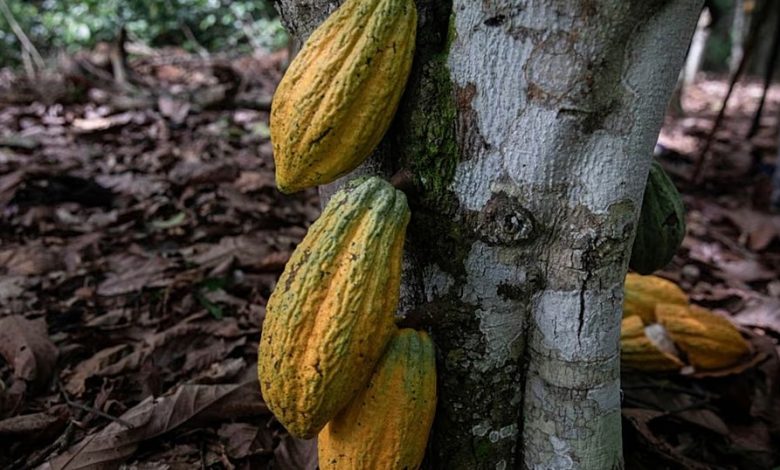
AFRICA: THERE is something quietly devastating about watching food rot.
For cocoa farmers in parts of Ghana and Ivory Coast, that is not a hypothetical, it is a reality some have faced in recent months, as beans they harvested have sat unsold, buyers unwilling or unable to take them at a price that makes the effort worthwhile.
It is a jarring turn for a crop that, not long ago, seemed to be having a moment.
Last year, cocoa prices surged to historic highs, briefly crossing $10,000 per tonne on global markets, a figure that made headlines and raised hopes across the farming communities of West Africa.
The spike was driven by poor harvests and mounting supply concerns, and for a brief window, it looked as though the people who grow the world’s chocolate might finally be getting their due. Then the market cooled.
And the optimism cooled with it. Prices have since dropped sharply, and according to reporting by the Associated Press, some farmers are now struggling to find buyers for their beans at all.
What looked like an opportunity has become, for many, another lesson in the oldest frustration in commodity agriculture: that the people who do the growing are rarely the ones who control what their crops are worth.
A system built on someone else’s terms
Ghana and Ivory Coast together produce roughly twothirds of the world’s cocoa.
That is an extraordinary concentration of supply, and yet the farmers at the centre of it operate with remarkably little power.
Both governments set official farmgate prices each season, an attempt to bring stability to an industry that is anything but stable.
ALSO READ: Why Tanzania’s cocoa deserves more attention
The intention is sound: protect farmers from the worst swings of a volatile market. But the mechanism cuts both ways.
When global prices soar, farmers are shielded from the upside just as much as the downside. And when conditions deteriorate, the price floors offer only limited comfort.
The result is a system in which millions of farming families are exposed to the consequences of global market movements they have no hand in shaping, while capturing only a fraction of the value their labour ultimately generates.
The chocolate industry is worth tens of billions of dollars annually. The farmers at its foundation see very little of that.
Looking elsewhere
In some communities, the math has simply stopped adding up, and farmers are drawing their own conclusions. Some are quietly turning to other crops.
Others, particularly in Ghana, have been drawn toward small-scale gold mining, an alternative that has grown more visible in recent years as cocoa’s financial returns have become harder to count on.
It is not a trend anyone in the industry welcomes, but it is an understandable one.
And it points to a concern that goes beyond the current price slump. West Africa’s cocoa farms are getting older. Tree diseases have taken a toll.
Changing weather patterns have disrupted harvests in ways that are becoming harder to predict or plan around.
And the generation that might logically take over these farms , younger people in cocoa-growing communities, is increasingly reluctant to do so.
The work is hard, the income is uncertain, and the rewards, more often than not, seem to flow elsewhere