Coal not dead: What rising global energy investment means for TZ untapped coal wealth
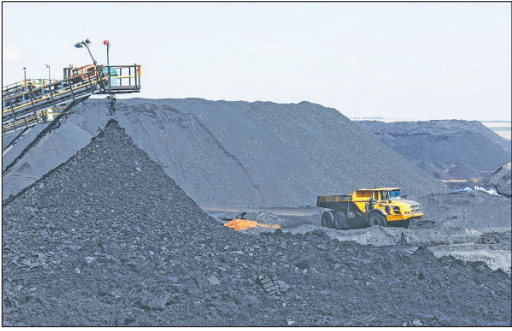
NJOMBE: THE global energy transition is often portrayed as straightforward: renewable energy is growing, fossil fuels are declining, and coal is becoming obsolete.
However, the most recent International Energy Agency World Energy Investment 2026 report reveals a more nuanced and strategically critical story, especially for countries like Tanzania.
Renewable energy investments are undoubtedly increasing globally. The IEA predicts that by 2026, the world will spend US$3.4 trillion on energy, mostly on renewables, electricity infrastructure, storage, nuclear power, and electrification. However, a crucial point frequently omitted in energy transition debates is that coal investments are projected to rise sharply to US$180 billion in 2026, reaching their highest level since 2012.
As an economic analyst, I believe this single figure should immediately attract Tanzania’s attention. Why? Tanzania possesses some of East Africa’s largest coal deposits, notably in Ngaka, Mchuchuma, the Ruhuhu Basin, and SongweKiwira, along with other exploratory sites.
Despite this extensive resource base, the country has not yet incorporated coal into a full industrial and energy plan that could foster major economic growth. The world is subtly signalling that many developing countries might not completely grasp: even with the green transition, concerns over energy security are prompting nations to diversify their energy sources instead of abandoning them suddenly.
The IEA report explains that global investment strategies are being reshaped by geopolitical tensions, supplychain disruptions, energy insecurity, and concerns over industrial competitiveness. Nations are now focusing on domestic energy security in addition to their clean-energy goals. Amid this, Tanzania’s coal story becomes strategically important.
For years, coal was treated almost as a politically uncomfortable mineral globally. Climate pressure from Western institutions pushed many countries away from coal financing, while international lenders increasingly shifted their focus towards renewables and low-carbon investments. Global realities are now evolving more quickly than climate narratives.
Europe reopened coal plants following gas supply disruptions caused by the Russia-Ukraine conflict. China remains a major investor in coal to maintain industrial stability and energy security. India also continues to heavily depend on coal to support industrial growth and meet electricity needs.
The IEA report states that China alone accounts for about 70% of global coal supply investments. This means coal has not disappeared. Instead, it is entering a new strategic phase in which countries are balancing climate commitments, industrial growth, energy security, and geopolitical uncertainty. Having served as a board director for STAMICO, a Tanzanian state-owned mining agency, I recognise both opportunities and risks.
ALSO READ: New plan to improve loan repayment
The opportunity is notable because Tanzania is among the few regional countries with large untapped coal reserves, which can fuel electricity, steel, cement, fertiliser industries, industrial parks, and exports. The warning is also clear: if Tanzania keeps postponing key decisions on coal commercialisation during the ongoing global energy market restructuring, it risks missing out as opportunities move to other countries.
The primary area where Tanzania can leverage opportunities is energy security. A major challenge to industrialisation in Africa is the unreliable and costly energy supply. Tanzania continues to experience energy vulnerabilities, primarily due to its reliance on hydropower, climate variability, high imported fuel costs and increasing urbanisation and industrial electricity needs.
Strategic mitigation measures can enable coal to offer stable baseload power essential for industrial growth. Nations tend to industrialise when they have access to affordable, reliable, and scalable energy sources.
For example, China, India, and South Africa heavily depended on coal during their initial industrial phases before progressively shifting toward cleaner energy technologies. Tanzania faces a strategic decision: can it effectively utilise its coal resources as a transitional fuel for industrialisation while also expanding renewable energy sources?
The answer is yes if managed carefully. Coal should be seen not just as an export commodity but as a foundation for industrial development. Tanzania’s true potential lies in adding value to its coal resources through sectors like integrated steel production, fertiliser manufacturing, cement, ceramics, industrial heat, and heavy industries.
This is especially vital because industrialisation depends on high-temperature energy systems, which renewables alone still find challenging to supply at scale in many developing economies. Without going into too much detail about kitchen food preparation, an important missed opportunity for Tanzania has been the sluggish rollout of the take-off of the Mchuchuma and Liganga integrated projects.
For years, these projects were anticipated to enable coal mining, iron ore processing, steel manufacturing, and industrial power generation. If these projects had been pushed forward ten years ago, Tanzania might already be establishing itself as a key regional centre for steel and industrial manufacturing.
However, progress was hampered by delays, funding uncertainties, contractual issues and policy inconsistencies. Now, global energy insecurity is creating another window.
Tanzania must not waste it again. The second key opportunity is in regional exports. As East Africa’s industrialisation speeds up, countries in the region, especially landlocked nations and those within the SADC economic area, have a growing need for cement, steel, electricity, industrial fuel, and construction materials.
Coal-related industrial projects, particularly those funded by state-owned banks and development finance institutions (DFIs), can enhance regional value chains rather than relying solely on the export of raw coal. Merely exporting raw coal provides limited longterm economic advantages. The real economic benefit comes from transforming coal into electricity, industrial products, processed minerals, and manufacturing supplies.
This is where employment opportunities, tax revenues, industrial ecosystems, and technology transfer are generated. The third opportunity resides in strategic bargaining power.
As geopolitical tensions cause global energy systems to become more fragmented, nations with diversified energy resources acquire increased strategic leverage. The IEA report emphasises that energy security concerns are driving countries to diversify their energy routes and infrastructure.
Tanzania holds strategic importance because of its natural gas and coal resources. To leverage these assets, the country should strive to become an industrial energy hub and a regional manufacturing centre, while also developing a diverse energy economy.
Achieving these objectives, however, will necessitate comprehensive policy reforms. Historically, Tanzania has faced challenges due to its policy approach toward strategic investments and delays in decision-making. Investors in large-scale mining, energy, and commercial farming seek clarity on issues such as taxation, infrastructure, licensing, power-purchase agreements, environmental regulations, and long-term industrial strategies.
Without serious strategic thinking, coal resources may remain underground while neighbouring economies attract industrial investment. Infrastructure remains a major challenge.
To commercialise coal, it is essential to develop railways, roads, power supplies, industrial zones, and export logistics. Additionally, creating integrated industrial corridors around resource-rich regions is crucial.
For example, the Mtwara Corridor, Southern Highlands industrial zones, and railway-linked mining clusters could become pivotal centres of economic growth if they are effectively coordinated. Financing continues to be a major hurdle.
Many Western financial institutions have reduced direct coal funding worldwide in response to climate policies. Tanzania, therefore, needs to explore more strategic financing options. With over a decade of experience working with a development finance institution in Tanzania and involvement in strategic projects across SADC, potential solutions could include blended financing, public-private partnerships, Asian strategic investors, sovereign partnerships, and integrated industrial funding, rather than isolated coal projects. Importantly, Tanzania should avoid the mistake of positioning coal against renewables. The future global energy system is not likely to be “coal or renewables.”
It will increasingly be about diversification, transition management, industrial competitiveness, and energy security. Tanzania should therefore pursue a balanced strategy in exploiting energy sources. The country possesses rare advantages in energy diversification that many nations lack.
While coal investment is rising, renewables still dominate global energy spending. Tanzania, therefore, must not ignore the parallel opportunities emerging in graphite, nickel, rare earths, lithiumrelated supply chains, and industrial minerals.
The future belongs not to countries that blindly choose a single energy source, but to countries that strategically manage multiple energy opportunities. That is why Tanzania’s coal story should not be viewed narrowly as mining. It should be viewed as industrial policy, energy security, regional competitiveness, export strategy, and economic transformation.
The world is entering an era where energy geopolitics will increasingly shape industrial power, manufacturing competitiveness, and national influence. For those fortunate enough to have read the 2026 IEA report, it is more than just an energy update; it serves as a warning to resource-rich nations that the global energy system is changing quickly.
Countries that do not strategically develop their resources risk becoming exporters of raw materials rather than sources of industrial wealth. Tanzania remains poised for success. Natural resources alone are insufficient for prosperity; strategic planning is essential.
Through effective coordination of coal commercialisation, industrial policy, infrastructure, energy diversification, and investment stability, Tanzania can capitalise on the growing global demand for coal, turning it into a significant industrial opportunity within its recent economic growth.