Climate project gets 2.6bn/- boost

DODOMA: THE Vice-President’s Office has set aside 2.6bn/- for a major climate resilience project targeting communities and ecosystems in Tanzania’s miombo woodland zones and parts of Zanzibar.
The funding, covering the 2025/26–2026/27 period, will support implementation of a five-year programme designed to strengthen the capacity of communities to withstand the impacts of climate change while promoting sustainable livelihoods.
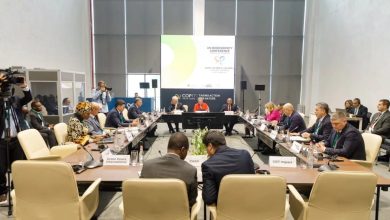
Opening a meeting of the project’s executive committee in Dodoma on Friday, the Deputy Permanent Secretary (Environment) in the Vice-President’s Office, Ambassador Baraka Luvanda, said the initiative focuses on boosting the use of climate adaptation technologies across key sectors.
He said the project is being implemented in Mainland Tanzania’s miombo forests as well as in arid areas of Zanzibar through a partnership involving the VicePresident’s Office, the First Vice-President’s Office of Zanzibar, the Zanzibar Ministry of Agriculture, Irrigation, Natural Resources and Livestock and the Tanzania Forest Services Agency (TFS).
Ambassador Luvanda said the project will also strengthen value chains for non-timber forest products, vegetables and livestock fodder, creating new economic opportunities for communities in vulnerable areas.
“The government is working to widen access to climate adaptation initiatives while building capacity among communities facing financial limitations and low awareness of modern production techniques,” he said.
ALSO READ: Tanzania banks on the Economic Freedom Audit Report to drive policy reforms by 2050
Project Coordinator, Mr James Chuyi said implementation will cover seven regions across both Mainland Tanzania and Zanzibar, including Tabora, Rukwa, Katavi, North Unguja, South Unguja, North Pemba and South Pemba. Funded by the Global Environment Facility (GEF) and implemented under the Food and Agriculture Organisation of the United Nations (FAO), the project will run from 2025 to 2029.
The initiative is part of broader national efforts to strengthen resilience against climate shocks while safeguarding ecosystems that support livelihoods and economic growth.
Tanzania has in recent years experienced increasing climate variability, including prolonged droughts, erratic rainfall and land degradation, particularly in semi-arid and forestdependent areas such as the miombo woodland belt.
The miombo ecosystem, which spans a large portion of central and southern Tanzania, supports millions of people through agriculture, livestock keeping and forest-based products. However, the area is increasingly under pressure from climate change, unsustainable land use practices and deforestation.
Experts note that without targeted interventions, communities in these areas face declining agricultural productivity, reduced water availability and loss of biodiversity, all of which threaten livelihoods and food security.
The government has been scaling up efforts to address these challenges through policy reforms, institutional coordination and investment in climate adaptation projects.
The current initiative forms part of these broader efforts, with a focus on integrating communitybased solutions and modern technologies. Funded by the Global Environment Facility (GEF) and implemented under the Food and Agriculture Organisation of the United Nations (FAO), the project will run from 2025 to 2029.
The programme is expected to enhance resilience among vulnerable communities while protecting ecosystems that play a critical role in sustaining economic activities and environmental stability.