Climate change fight needs action, says Masauni
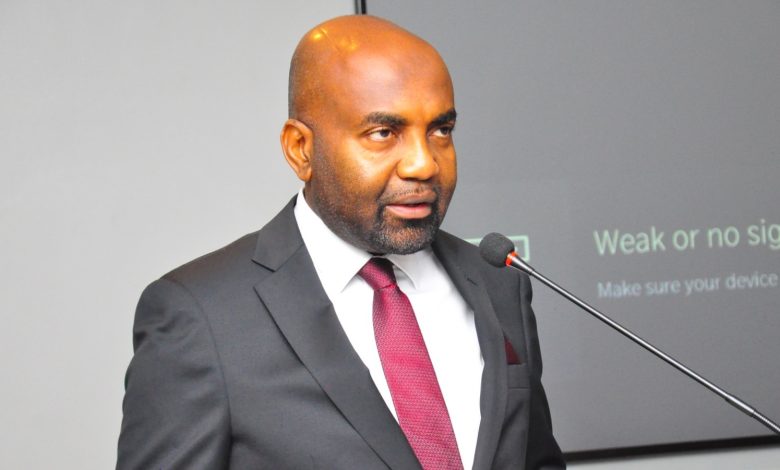
DAR ES SALAAM: TANZANIA generates between 12 million and 17 million tonnes of solid waste annually, with only a small percentage recycled, the government has said. Minister of State in the Vice-President’s Office (Union and Environment), Eng Hamad Yussuf Masauni, said the volume could rise to between 30 million and 60 million tonnes annually by 2050 if urgent measures are not taken.
Speaking in Dar es Salaam while issuing a government statement on the 2026 World Environment Day commemorations, Eng Masauni said 60 to 75 per cent of future waste is expected to be biodegradable, while 10 to 15 per cent will consist of recyclable materials. He called on Tanzanians to take concrete action to protect the environment and combat climate change.
“Every Tanzanian must act now to ensure that development does not negatively affect the environment and the lives of future generations. We must demonstrate commitment through practical environmental conservation and climate change mitigation measures,” he said.
The minister said the government, through the 2021 National Environmental Policy and its implementation strategy, continues to strengthen conservation efforts through sustained tree-planting campaigns and promotion of clean and alternative energy sources. He also cited Tanzania Development Vision 2050, noting that its third pillar focuses on environmental conservation and climate resilience.
As the country prepares for World Environment Day celebrations culminating on June 5, 2026, the government is mobilising citizens to participate in tree planting, environmental clean-up campaigns and adoption of clean cooking energy. Planned activities include symbolic tree-planting exercises and clean-up campaigns involving leaders and residents in Arusha, Dar es Salaam, Dodoma, Mbeya, Mwanza and Tanga.
Other events include a Scientific and Environmental Research Conference to mark the 40th anniversary of the National Environment Management Council (NEMC), as well as the launch of an Environmental Stakeholders Forum.
Eng Masauni also announced plans to launch the African Youth Capacity Building Centre on Climate Change aimed at empowering young people to participate in environmental management and international climate discussions.
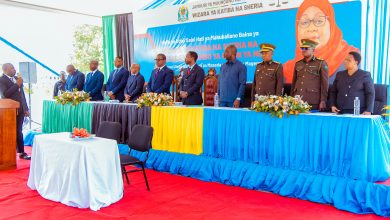
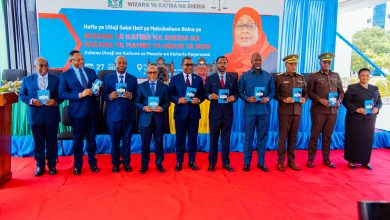
During the briefing, the minister was accompanied by senior officials from the VicePresident’s Office, including Permanent Secretary Dr Richard Muyungi, NEMC Director General Dr Immaculate Sware and National Carbon Monitoring Centre (NCMC) Chief Executive Officer Ms Kathryn Kigaraba.
ALSO READ: Families ignore risks behind unregistered domestic workers
The international theme for World Environment Day 2026 is: “Taking Action on Climate Change,” focusing on accelerating efforts to reduce greenhouse gas emissions, promote renewable energy and strengthen climate resilience.
Meanwhile, the government is set to roll out a comprehensive environmental transformation programme covering 2026 to 2030 to address urban waste challenges and the broader impacts of climate change. The programme is expected to be officially launched by President Samia Suluhu Hassan during national World Environment Day celebrations in Dodoma next month.
Eng Masauni said the strategy forms part of wider reforms in the environmental sector and targets poor waste management, unsustainable exploitation of natural resources and environmental degradation.
“Through this strategy, we expect to significantly reduce indiscriminate waste disposal in cities and instead turn waste into valuable resources, including energy generation and other economic products,” he said.
The programme will also focus on afforestation, livestock management and plastic waste control. The minister further revealed that the government has transformed the National Carbon Trading Centre into an independent strategic institution. Previously operating under Sokoine University of Agriculture, the centre now has a full governance structure, including a board of directors, management team and permanent offices in Mtumba, Dodoma.
“We have strengthened our carbon centre to become a strong national institution with full leadership, staff and permanent offices,” he said.
He added that carbon trading regulations introduced in 2022 and refined in 2023 are already guiding the sector. Permanent Secretary in the Vice-President’s Office (Union and Environment), Dr Richard Muyungi, said the ministry is closely supervising implementation of the reforms to ensure Tanzania fully benefits from carbon trading opportunities.
He said the government has earmarked 5bn/- to establish operational systems for the carbon centre.
“Our goal is to position Tanzania among Africa’s leading countries in the carbon sector through programmes that enhance economic returns while safeguarding the environment,” he said. Globally, this year’s World Environment Day will be hosted in Baku, Azerbaijan.