CJ calls for stronger justice sector cooperation ORD320601
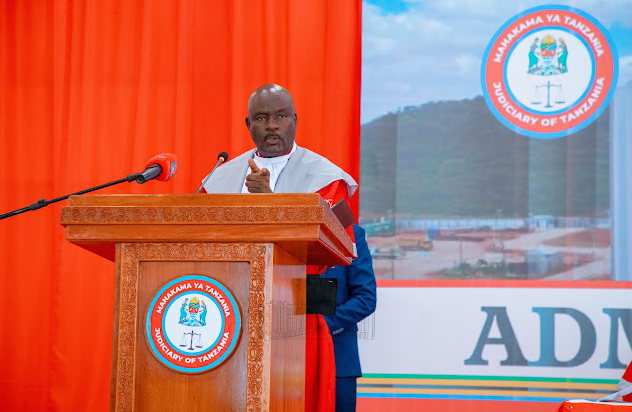
DODOMA: CHIEF Justice George Masaju has underscored that effective cooperation among criminal justice institutions is not optional but a legal obligation.
Meanwhile, the Chief Justice also announced that the Judiciary achieved a significant milestone by disposing of more cases than were filed during the previous year.
Closing the first 2026 meeting between the Judiciary and stakeholders at the Judiciary Headquarters on Monday in Dodoma, the Chief Justice said institutional collaboration is central to safeguarding the rule of law, accelerating case disposal and driving national development.
According to the Judiciary’s 2025 Comprehensive Performance Report, courts heard and determined 254,793 cases, surpassing the 243,848 new cases lodged during the same period, a development he attributed to improved coordination among justice sector players.
“The foundation of our cooperation is rooted in the constitutional mandate to uphold justice for all citizens without delay,” he said, stressing that the partnership among justice institutions is a statutory duty rather than a goodwill gesture.
He commended stakeholders for implementing nine reform strategies agreed upon during a September 24, 2025 meeting, including quarterly coordination sessions, while urging institutions facing challenges to rectify them and report progress at the next meeting.
Citing directives issued by President Samia Suluhu Hassan during the opening of the 13th Parliament in November 2025 and reiterated on Law Day 2026, the Chief Justice emphasised that national progress depends on respect for the rule of law and timely delivery of justice.
He reminded stakeholders to implement presidential instructions, including adherence to constitutional principles under Articles 107A and 107B, protection of judicial independence, strengthening integrity and transparency, improving bail management and expanding the use of Information and Communication Technology (ICT).
ALSO READ:
Justice Masaju further called for implementation of recommendations made by the Criminal Justice Commission and expansion of legal aid services to ensure access to justice for citizens unable to afford representation.
On regulatory reforms, he revealed that between June and December 2025, the Judiciary formulated and improved 22 sets of rules aimed at streamlining justice delivery.
He urged stakeholders to propose further legal and procedural reforms where necessary. Highlighting the Judiciary’s role in economic transformation, the Chief Justice noted that peace, security and legal certainty are key pillars of Tanzania’s Development Vision 2050.
“Efficient handling of criminal and commercial disputes builds confidence among citizens and investors, thereby directly contributing to national development,” he said.
He underscored that the Judiciary alone cannot achieve these objectives, calling for collective responsibility among all criminal justice institutions.
The meeting brought together senior representatives from the Attorney General’s Chambers, Ministry of Constitutional and Legal Affairs, Prevention and Combating of Corruption Bureau (PCCB), Drug Control and Enforcement Authority (DCEA), Prisons Service and the Tanganyika Law Society (TLS).