Celebrate Women’s Day, remember rural woman
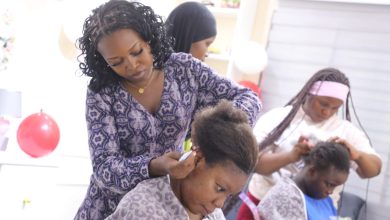
DAR ES SALAAM: EVERY March, the world prepares to celebrate International Women’s Day. Streets and halls are decorated with colourful posters, women wear vibrant khangas, and conferences, speeches, dinners, and ceremonies fill calendars. Laughter, music, photographs, and good food mark the occasion as women gather in town halls and hotels to celebrate achievements and progress.
All of this is important. Women deserve recognition, appreciation, and joy. Yet each year, I find myself asking an uncomfortable but necessary question and that is one I also challenge others to consider: where is the rural woman in our celebration?
Too often, we spend significant resources celebrating in urban centres while forgetting the woman who walks long distances every day, carrying children, water, firewood, food, and, quite literally, the economy on her back. Data consistently shows that women form the backbone of rural life.
They dominate agriculture, sustain households, and drive the informal economy. Yet they remain the furthest from basic services, safety, and opportunity. According to Tanzania’s National Bureau of Statistics (NBS), women account for about 51 percent of the country’s population, with the majority living in rural areas.
Labour and agriculture statistics further indicate that women contribute between 60 and 70 percent of agricultural labour, particularly in food crop production, post-harvest handling, and household-based economic activities.
Despite this, rural women are more likely to walk long distances to reach health facilities, water sources, markets, and schools. Poor rural roads and seasonal isolation expose them to daily risks that are often invisible to policymakers and celebrants alike.
For a long time, this reality was just data to me and figures in reports and presentations. Then one day, it became personal. I was returning from interior villages in Morogoro after a long day of fieldwork. We had started focus group discussions at sunrise and stretched them into the late afternoon.
The road challenged us throughout the day: deep potholes, slippery mud, and stretches where it was hard to tell whether we were still on a road at all. There were moments when the driver hesitated, moments when determination felt like stubbornness, and moments when silence filled the car as each of us quietly prayed it would make it through.
It didn’t. Just as we were nearing a small town where we usually stopped to rest, the engine failed. The sun was setting quickly, daylight was fading, and the wind had picked up with purpose. Dark clouds gathered heavily, promising rain.
As the driver opened the bonnet to inspect the engine, I heard something before I saw it and the sound of wet soil being pressed under tired feet. A woman was walking fast, not because she was late, but because daylight was leaving her behind. On that road, darkness is dangerous.
When the rain comes, the road disappears entirely. She carried a baby on her back close, warm, and patient. In one hand, she held a small plastic bag with medicine.
ALSO READ: INTERNATIONAL WOMEN’S DAY: ‘Let’s build upright nation’
In the other, a simple kitochi phone with a battery nearly finished. She had walked many kilometres from a village that barely appears on maps to a dispensary that appears in government plans but still feels impossibly far when you are on foot, especially during the rainy season. Now she was walking back home.
We greeted each other, and slowly her story unfolded. That road had shaped her entire life. It was the road she walked for seven years of primary school. It was the same road she attempted to walk when she joined Form One.
By Form Two, exhaustion had set in. Like many girls, when the rainy seasons came and reaching school became impossible, she stopped attending altogether. “Tumeshazoea,” she said quietly.
This is our life. I gathered what I could from the car as snacks, juice, bottled water, and a kitenge bag I often carry during fieldwork—and gave them to her. She nearly knelt down in gratitude. We could not take her to her village; the car was still unwell.
Ironically, she ended up helping us by calling her brother, a bodaboda rider in a nearby town, who brought a small part the driver needed to attempt one more repair. That encounter has never left me. On paper, this is called a transport problem. In real life, it is a women’s problem.
At its core, it is a dignity problem. As we prepare our Women’s Day celebrations, we must remember that for many rural women, life does not pause for conferences, speeches, or colourful attire.
Roads determine whether they reach a clinic in time, whether their children reach school, whether their produce reaches the market, and whether they return home safely before nightfall. When roads fail, women walk longer. When roads disappear, women carry more. When the rain comes, women absorb the impact first.
This is why rural accessibility matters. It is not merely about infrastructure or development targets; it is about whether progress reaches the woman who feeds the nation. When a rural road is improved, many things change at once. Transport costs fall. Farmers sell more produce. Clinics receive supplies on time. Teachers remain at their posts.
Girls stay in school. Young women begin to imagine futures that are not dictated by weather patterns or the setting sun. A road is never just gravel and concrete. A road is the state saying to a rural woman: You matter.
We see you. So, this Women’s Day, as we dress up, sing, dance, and celebrate, let us also remember the woman walking on a muddy path, racing against sunset, carrying a child, medicine, and tomorrow on her back. Flowers, speeches, and celebrations mean little if she is still struggling in the mud.
True celebration begins when a woman can reach a clinic without fear, send her child to school without rain stopping her, and return home safely before darkness falls.
Until then, our celebrations may be colourful, but they remain incomplete. Let our celebration not end in town. Let it reach the rural road. This op-ed is written by Annastazia Rugaba, Independent Consultant. She can be reached at annarugaba@gmail.com.