What 200bn/- will bring for youth, women

DODOMA: THE government has released 200bn/- to facilitate empowerment programmes for youth and women engaged in various economic sectors, part of President Samia Suluhu Hassan’s pledges in the first 100 days in office.
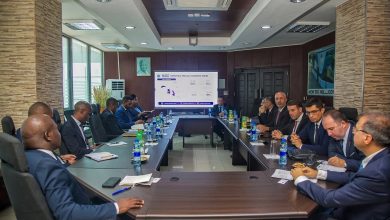
Speaking during the fund handling ceremony recently in Dodoma, Prime Minister Dr Mwigulu Nchemba directed responsible ministries and public institutions to ensure the capital reach targeted beneficiaries.
Dr Nchemba said the disbursement also aligns with implementation of the Chama Cha Mapinduzi (CCM) Election Manifesto for 2025–2030 as well as the Fourth Implementation Plan of the National Development Vision 2050.
At the event which recorded notable turnout, Minister for Finance Ambassador Khamis Mussa Omari presented a 200 billion-dummy cheque to the Prime Minister, who in turn handed it over to the Minister of State in the President Office’s Youth Development Mr Joel Nanauka, on behalf of all ministers and heads of institutions implementing empowerment initiatives.
Dr Nchemba said the funds which will be channelled through various local banks implementing empowerment programmes is an extension of existing initiatives with similar objectives encompassing the empowerment programme under the district councils entailing allocating 10 per cent of their revenues to support youth, women and persons with disabilities.
“Our President does not want these funds to remain within government coffers, but to reach the targeted beneficiaries. We must ensure the money is spent for its intended purpose. We have already made changes to the 4-4-2 programme to eliminate ghost groups and unintended beneficiaries,” Dr Nchemba said.
He further directed ministries and institutions to review their respective programmes to ensure they align with the national empowerment policy, stressing that the government should act more as a facilitator rather than a controller.
“We should not only focus on managing the funds, but also on measuring the impact of these empowerment programmes,” he said.
Dr Nchemba noted that empowerment is a key pillar for the growth of manufacturing, trade, investment and social welfare, particularly for youth and women, adding that the sixth phase government continues to prioritise economic empowerment in line with national development needs.
He said that between 1984 and 2025, Tanzania established a total of 75 funds and programmes aimed at empowering youth and women.
According to the Prime Minister, between 2024 and 2025 alone, the government disbursed a total of 66.9bn/- in loans and guarantees to more than 13,000 beneficiaries through various empowerment programmes.
He expressed optimism that the newly released funds will boost employment opportunities, production, food security and the agricultural sector.
Meanwhile, the Minister of State in the Prime Minister’s Office (Policy, Parliament, Coordination and Persons with Disabilities), Mr William Lukuvi, commended President Samia for her continued leadership in promoting economic empowerment and expanding access to capital for youth and women.
He said limited access to capital, including loans, equipment, machinery and tools, remains a major obstacle to the growth of youth- and women-led economic activities.
Mr Lukuvi said the allocation of 200bn/- reflects the President’s vision and commitment to expanding access to affordable capital, enabling youth and women to compete effectively at national, regional and international levels.
He identified priority sectors including agriculture, mining, arts, industry and trade, fisheries and technology and underscored the importance of accountability and transparency in implementing empowerment programmes.
In a press conference in Dar es Salaam, Dr Nanauka outlined ambitious strategies to empower youth economically ranging from supporting ideas, innovations, financing start-up businesses and establishing over 100,000 youth-led companies to drive the manufacturing sector and the country’s economy at large.
He underlined the importance of the youth in accelerating industrialisation and the country’s economic growth at large.
“The government is committed to empowering youth economically, to make a shift from owning microbusinesses to running major companies and leading the manufacturing economy,” Dr Nanauka said.
Adding “we want to have a huge portion of youth who are producers and manufacturers,” He said the ministry under a youth investment programme in the next five years aims at establishing over 100,000 youth led companies out of which 20,000 will be accommodated in Special Economic Zones in collaboration with the Tanzania Investment and Special Economic Zones (TISEZA) to benefit with a designated funding scheme encompassing asset financing.
Asset financing helps businesses acquire necessary equipment and machinery.
He said the shortlisted 20,000 youth lead manufacturing companies will be required to create at least 50 jobs in contributing to the ministry mission of generating about one million jobs in the next five years.
Dr Nanauka said the youth led companies in SEZs will invest in priority sectors including agro-processing and digital creative industries.
He noted that placement of youth led manufacturing companies in SEZs will earn them trust from the private sector including banks to support them financially.
He insisted that the SEZs will have in-built supportive investment infrastructures including electricity and Information Communication Technology (ICT) featured by the TISEZA’s One Stop Facilitation Centre to address the need of the youth manufacturers.
He said the ministry will diversify sources of capital for youth by establishing credit guarantee scheme and requesting banks to open up full-fledged youth investment window for them to access affordable loans not necessarily with collateral.
In ensuring youth excel in businesses, Dr Nanauka said all the initiatives on empowering youth economically will be complemented by coaching and mentorship aiming at enriching them with marketing, resiliency, volunteerism and entrepreneurship skills.
On skills mismatch, he urged all youth to continue learning after graduating saying the life span of any acquired knowledge is two and half a year.
Dr Nanauka said the government for its part continues to strengthen internship programmes at workplaces which are funded by the Skills Development Levy (SDL) in efforts of bolstering youth competitiveness in job markets.
He said the government is committed to continue creating enabling environment for the youth to thrive both in the local and international jobs markets.
Dr Nanauka said the government will also ensure all youth are connected under the Youth Digital One Platform to voice up their opinions which will act as basis of the ministry to improve service delivery.
Moreover, the minister explained that he has sat with community development officers from all regions across the country and directed them to form youth data bases in which the government will use them as blueprint for strategising and planning various programmes for the young generation.
Optimistic about the future of digital economy, Dr Nanauka said the government is set to establish an Open Coding School for youth to acquire digital skills which are useful in digitalising their economic activities.
He underlined the importance of the young generation to use digital space for economic development saying digital space offers massive opportunities which the youth can earn incomes beyond using them only for communication.
Statistically, he reminded that youth currently form over 50 per cent of the country’s workforce.