CCM stresses full utilisation of Nyerere school

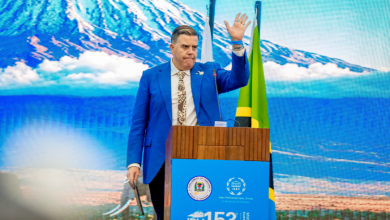
KIBAHA: CHAMA Cha Mapinduzi (CCM) Secretary General, Dr Asha-Rose Migiro has called on the founding parties of the Mwalimu Julius Nyerere Leadership School (MJNLS) to fully leverage the institution as a strategic platform for strengthening ideological, political and governance capacity across liberation movements.
Dr Migiro made the call during the 5th Ordinary Meeting of the School’s Board of Trustees, held at the MJNLS campus in Kibaha.
The meeting marked the first formal Board session since the school achieved full registration and completed its governance structures in 2024.
Describing the leadership school as a living continuation of liberation philosophy, Dr Migiro emphasised that MJNLS transforms historical memory into practical learning while turning solidarity into structured political education.
She stressed that effective utilisation of the school is both practical and ideological, noting that a leadership institution only fulfils its purpose when classrooms are active, ideas are freely debated and knowledge is consistently applied in organisational and political practice.
Utilisation, she said, should not be seen merely as an administrative metric but as the foundation of a vibrant learning institution.
“When parties conduct training at the school, hold meetings on campus, generate research through its academic systems and share ideas on scholarly platforms, they reinforce the principle that knowledge is central to leadership development and can drive social and political transformation,” she said.
Dr Migiro noted that while the school’s pedagogical capacity is strong, its institutional utilisation by founding parties has not always matched shared aspirations.
ALSO READ: Migiro launches PhD, master’s degrees programme at Nyerere school
She urged stakeholders to demonstrate ownership through active participation in training programmes, academic initiatives, and intellectual platforms.
She added that a fully utilised institution becomes more credible to development partners, more attractive to strategic allies, and more sustainable in the long term.
Drawing inspiration from Mwalimu Julius Nyerere’s philosophy, Dr Migiro said the school represents more than an academic institution, it is a strategic investment in the intellectual resilience of liberation movements and Africa’s broader development trajectory.
She said that in a world undergoing rapid technological, informational, and political transformations, leaders must be intellectually prepared to interpret global trends, defend national interests, and communicate credible alternatives grounded in shared values.
“The strength of the school will not be measured only by physical infrastructure but by the vibrancy of its intellectual community and the relevance of its training programs,” she said.
“Our responsibility is clear. We must nurture this school as a shared intellectual home where solidarity is studied and practised, leadership is deliberately formed, and knowledge is harnessed in service of transformation,” Dr Migiro concluded.