How Tanzania’s election violence inquiry separated truth from digital disinformation
DAR ES SALAAM: DURING periods of political conflict, truth often becomes one of the first casualties. In moments of fear and uncertainty, unverified claims can spread rapidly through digital platforms, fuelling anger, panic and division within society.
Manipulated images, edited videos, misleading narratives and online propaganda can significantly distort public understanding of unfolding events.
That challenge became particularly visible during and after Tanzania’s October 2025 General Election, when social media platforms were flooded with claims relating to violence, deaths, attacks and other allegations circulating rapidly both domestically and internationally.
Amid that atmosphere of tension and confusion, the Presidential Commission of Inquiry into the violence and breakdown of public order faced one of its most critical responsibilities: separating verified facts from digital misinformation and propaganda.
One of the commission’s most significant achievements was the way it used scientific investigation methods and modern technology to verify or challenge information circulating online.
Rather than relying on rumours, political narratives or emotionally driven claims, the inquiry sought to build its conclusions on scientifically verified evidence and professional forensic analysis.
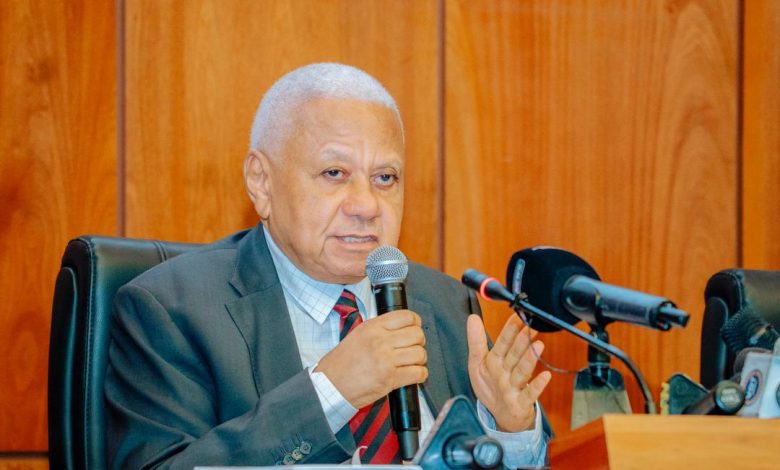
While presenting the commission’s report, former Chief Justice Mohamed Chande Othman said digital evidence became an essential component of the investigation, particularly in understanding the scale and nature of the violence that occurred during the unrest.
According to the report, the commission collected 450 still images and 860 video recordings obtained from witnesses, members of the public, media organisations, social media platforms, security agencies and other open sources.
The volume of material reflected the enormous amount of digital information circulating during the crisis.
Yet the commission recognised that in an era shaped by artificial intelligence, sophisticated editing software and the speed of online communication, digital evidence itself could easily be manipulated to create misleading narratives.
For that reason, the commission turned to forensic specialists and scientific investigators to conduct detailed analysis of the material submitted before the inquiry.
ALSO READ: Tanzania inquiry chair calls for ‘fair accountability’ over election violence
“Some of the images were analysed and subjected to forensic investigation using certified experts,” Justice Chande said.
According to the report, investigators used forensic analysis techniques together with Geographic Information System (GIS) technology to determine the authenticity of images and videos circulating online.
Through those methods, experts were able to identify where images were captured, when they were recorded and whether they had been edited or removed from their original context.
In one of the most significant remarks from his presentation, Justice Chande warned about the dangers posed by manipulated digital content during periods of instability.
“Some of the materials were authentic and genuine, while other content was manipulated using artificial intelligence or presented as partial truths,” he said.
The statement illustrated the scale of the challenge confronting the commission. During periods of political unrest, even information containing elements of truth can be distorted and repackaged into propaganda capable of intensifying public anger and social tension.
One of the most striking examples highlighted in the report involved claims that mass graves existed in the Kondo area of Kunduchi in Dar es Salaam.
The allegations had circulated widely on social media and were repeated by some international media organisations, generating anxiety both within Tanzania and abroad.
Rather than dismissing the claims politically or ignoring them, the commission launched a detailed scientific investigation involving satellite imagery analysis, field inspections and expert assessments.
According to the report, specialists in remote sensing and geographic information systems participated in the investigation in order to determine whether the allegations could be substantiated. After completing its investigation, the commission concluded that the claims could not be verified.
“Based on the commission’s field investigations, together with findings from forensic experts, the commission established that allegations regarding the existence of mass graves in the Kondo area could not be substantiated,” Justice Chande said.
The example demonstrated the importance of scientific investigation during periods of crisis. Without evidence-based verification, unconfirmed claims can continue spreading widely and potentially damage social cohesion, national stability and a country’s international reputation.
Beyond analysing photographs and videos, the commission also relied on specialists in forensic audio analysis, ballistics, DNA analysis, image examination and pathology in order to verify evidence presented during the inquiry.
The report highlighted how modern investigations increasingly depend on scientific expertise rather than witness testimony alone.
In contemporary conflicts, digital manipulation and misinformation can spread rapidly, making forensic technology essential to establishing accurate accounts of events.
Within justice systems, scientific evidence plays a particularly important role because it helps reduce the risk of conclusions being influenced by emotion, bias or political pressure.
Scientific analysis allows evidence to be examined through methods that can be tested, reviewed and independently verified.
Justice Chande emphasised the success of those investigative methods when he said: “This methodology enabled the commission to distinguish between authentic and manipulated images.”
His remarks reflected a broader lesson emerging from the commission’s work: in a world where misinformation can spread globally within seconds, the ability to distinguish truth from propaganda has become essential not only for justice but also for national security and social stability.
For Tanzania, the experience has highlighted the importance of continuing to strengthen institutions responsible for forensic investigation and digital information analysis.
As technology continues to evolve, the risks associated with digital disinformation are likely to become even more sophisticated.
The report also suggested that citizens themselves have an important responsibility to approach online information with caution. Not every image, video or message circulating online is necessarily genuine.
During periods of conflict especially, responsible use of information becomes essential to protecting peace and national unity.
Ultimately, one of the commission’s most important achievements was demonstrating that truth can be pursued through science, evidence and careful investigation rather than through propaganda or emotional narratives.
At a time when digital misinformation has the potential to threaten social stability and public trust, the commission’s reliance on forensic investigation reinforced the importance of evidence-based accountability in protecting truth, justice and national cohesion.