Breaking traditions: Young father redefines parenting in Engaruka
ARUSHA: PARENTHOOD was not new to 25-year-old Kilole. Already a father of two, he thought he understood what it meant to be a dad.
Yet when he recently sat in a parenting class organised by the Mzazi Hodari project in Engaruka Ward, what he heard sounded strange, even unsettling.
Like many men in his Maasai community, Kilole had stepped away from his pregnant wife, Joyce, believing in the long-held tradition that men should not share a bed with expectant partners.
To him, this was how things had always been done. But in that small room, surrounded by 10 other young fathers, he found himself listening to something radically different.
The trainer, Ombeni—just 20 years old and a Mzazi Hodari alumnus from the same community—spoke passionately about fatherhood.
He explained the science of the first 1,000 days, the critical window when a baby’s brain, body, and immune system develop most rapidly. He urged the fathers to abandon harmful myths and embrace responsive parenting.
“Fathers have a role to play even before birth,” Ombeni told them. “Your voice matters. Your presence matters.”
For Kilole, the words sparked turmoil. What if Ombeni was right? What would people say if he defied tradition and changed?
That evening, when he returned home, Joyce—who was also attending Mzazi Hodari sessions for women—looked at him differently. She asked him to return to their bed.
He hesitated, but something in him shifted. That night, he made a quiet, almost invisible decision: he would try.
“At first, I didn’t fully believe it,” he recalls. “But I started spending more time with my wife, talking to our unborn child, and paying attention to what we ate. Things began to feel different.”
From that point, a transformation began—one that even Kilole did not anticipate.
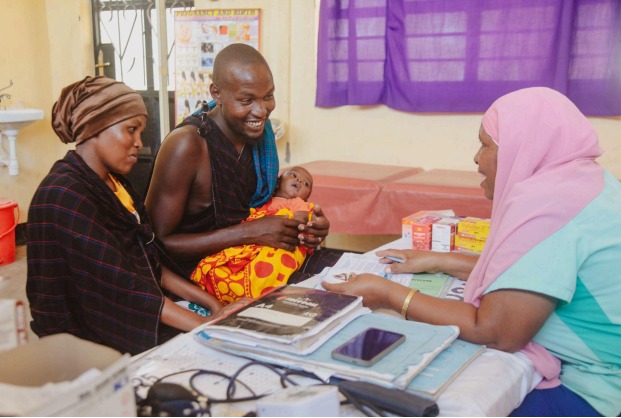
He started helping with housework, bonding with his toddlers, and, perhaps most strikingly, walking with Joyce to monthly clinic visits. The first time he entered the health centre, he felt nervous and out of place. But instead of ridicule, he received warm smiles, a pat on the back, and mothers even allowing Joyce to move ahead in line.
“That day changed me,” he says softly. “I’ve gone to every clinic appointment since.”
The lessons from Mzazi Hodari reshaped his understanding of fatherhood. He learned the importance of exclusive breastfeeding during the first six months, the need for balanced meals, and how daily interaction builds children’s confidence and potential.
“No more one-meal days, no more waiting for a cow to die before eating meat,” he says, shaking his head. “I can’t believe we used to live that way.”
At home, his relationship with Joyce blossomed. With his children—Ndidayo, aged three and a half, Sinyati, one and a half, and their newborn, Papakinyi—he discovered the joy of play, conversation, and shared chores. A man who once left for months without looking back now misses his family after only a few days away.
But Kilole’s journey did not end within his household. With new confidence, he began mobilising others. Together with fellow villagers, he launched a small initiative: each member contributed a young goat, which they raised and sold for profit. The proceeds were used to ensure families could afford nutritious meals. He and Joyce also started cultivating vegetables, rearing poultry, and even opening a solar-powered barbershop.
“When we started making decisions together, everything changed,” he says.
The changes did not go unnoticed. At first, some peers mocked him, saying he had been “bewitched” by his wife. Kilole did not flinch. Today, the same men who laughed now point to his healthy children, peaceful household, and improved finances as proof that he made the right choice.
“They’ve stopped laughing,” he says, smiling.
Ombeni, the young trainer who first challenged Kilole, remains inspired. “He’s a role model now. What he’s done takes real courage,” he says proudly.
For Kilole, this is just the beginning. “I wish I could reach the whole community,” he says. “We need more champions. More fathers are stepping up. More families are thriving.”
In Engaruka Ward, myths are slowly crumbling. Fathers are beginning to see that caregiving is not weakness but strength, and that love and presence are as vital as providing food and shelter.
Yet Kilole’s story also reveals a wider truth: for every father who discovers this path, hundreds more remain without access to the life-changing knowledge Mzazi Hodari provides. The potential is enormous, but scaling up requires investment and commitment.
If more communities could be reached, more children would grow up nourished, supported, and loved by both parents. Families would be stronger, poverty reduced, and harmony deepened.
The change has begun. Fathers like Kilole are proving that when tradition bends toward love and responsibility, the future becomes brighter. Now is the time to take that change further—so no child, and no parent, is left behind.