Beyond vision, Africa must deliver results
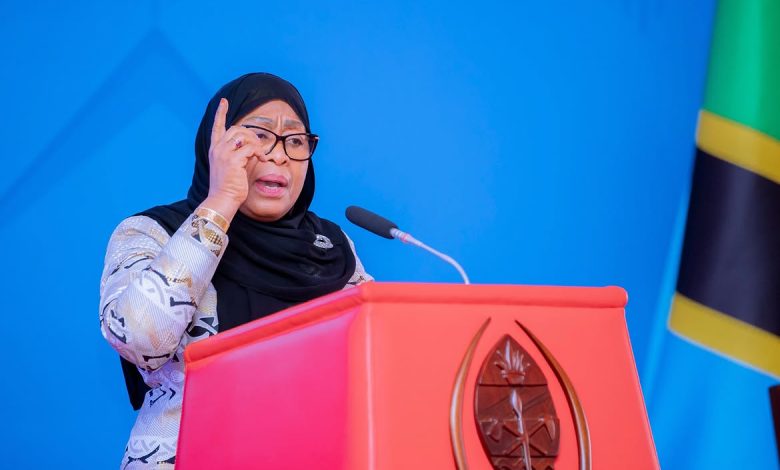
DAR ES SALAAM: ACOMPREHENSIVE review of the speeches delivered at the Africa50 Infrastructure Forum and President Samia Suluhu Hassan’s inaugural message reveals a central challenge facing Africa: The continent has never lacked vision; it has lacked execution.
For decades, African leaders have outlined ambitious national development plans, supported the African Union’s Agenda 2063 and promoted the African Continental Free Trade Area (AfCFTA) as a foundation for future prosperity.
The challenge has not been generating ideas or strategies, but translating those ambitions into bankable projects, completed infrastructure and productive economies.
The Africa50 Infrastructure Forum, inaugurated by President Dr Samia Suluhu Hassan under the theme “From Vision to Delivery,” represents more than another continental gathering. It presents an opportunity to change how Africa finances, prepares and delivers development projects.
However, without sustained political commitment and accountability, the forum risks becoming another platform for inspirational speeches rather than measurable outcomes, a concern also highlighted by Kenya’s Vice-President, Kithure Kindiki.
The true measure of Africa50’s success will not be the number of presidents, ministers or investors attending its meetings.
Its success will depend on whether it can convert political commitments into financially viable, sustainable projects. Africa has become skilled at announcing infrastructure ambitions.
The harder task has been completing the technical studies, legal frameworks, procurement systems, risk structures and financing arrangements required to move projects from government plans to construction sites.
This implementation gap explains why many strategically important projects remain delayed for years despite Africa’s urgent infrastructure needs.
Africa50’s importance lies in recognising that the continent’s biggest challenge is often not a shortage of capital, but a shortage of investment-ready projects.
By focusing on project preparation, equity participation and mobilisation of domestic capital, the institution is attempting to bridge the gap between political ambition and investment reality. This distinction matters.
Development discussions often focus heavily on attracting more money. But capital alone does not create transformation. Investors require projects with reliable revenue streams, transparent governance, manageable risks and predictable regulations.
Africa50’s emphasis on project preparation may therefore be one of the most important shifts in Africa’s development approach.
The institution also challenges the traditional belief that governments alone should finance infrastructure.
With many African countries facing rising debt obligations, limited fiscal space and increasing social demands, public budgets cannot independently fund the scale of infrastructure required for transformation.
The future of African infrastructure will increasingly depend on mobilising institutional investors, including pension funds, insurance companies, sovereign wealth funds and private capital.
Africa50’s model seeks to use public resources as a catalyst to attract larger pools of private investment through better project preparation and risk-sharing mechanisms. Energy demonstrates why this approach matters.
Industrialisation depends on reliable and affordable electricity. But the measure of success should not only be the number of megawatts generated. The real question is how energy investments transform economies.
Reliable electricity lowers production costs, supports manufacturing, strengthens agro-processing, enables cold-chain logistics, expands digital businesses and improves export competitiveness.
A power project should therefore be judged not only by its engineering achievement but by its ability to create industries, jobs and economic opportunity. The same principle applies to transport infrastructure.
Africa loses significant economic opportunities because of fragmented transport networks, costly logistics and inefficient border systems.
AfCFTA’s promise will remain limited if goods cannot move efficiently across borders. A railway should do more than connect cities; it should connect producers to markets.
Ports should become engines of industrial development rather than simply cargo-handling facilities.
Border systems should reduce transaction costs rather than create additional obstacles. Africa50’s focus on transport corridors therefore represents more than construction. It is about improving regional productivity.
Digital infrastructure is equally important. Africa’s competitiveness now depends not only on roads and power but also on data centres, fibre networks, digital platforms and broadband access.
ALSO READ: Educating for the Future: Tanzania’s Vision 2025 and beyond
The continent’s young population can become an economic advantage only if entrepreneurs have access to digital systems that support innovation, trade and financial inclusion.
However, Africa50’s most important contribution may be changing how governments view infrastructure itself. Infrastructure should not be seen merely as physical assets. It should be understood as a foundation for productivity, industrialisation and economic transformation.
The success of Africa50 will ultimately depend on governance and political commitment. Investment follows confidence, and confidence requires predictable regulations, transparent procurement systems, enforceable contracts, credible tariffs and effective institutions. Even the most innovative financing models cannot overcome weak governance.
For Tanzania, President Samia’s inauguration of the Africa50 Forum provides an opportunity to strengthen its position as an investment destination. Projects such as the Standard Gauge Railway, ports, energy developments and industrial initiatives demonstrate the country’s focus on infrastructure-led transformation.
The next challenge is ensuring these assets generate manufacturing growth, stronger exports, higher productivity and quality employment. Africa50 should not be judged by conferences held or memoranda signed.
Its real impact should be measured by projects reaching financial close, private capital mobilised, electricity generated, logistics costs reduced, digital connectivity expanded, businesses created and jobs delivered. Africa’s future will not be determined by the quality of its vision documents.
It will be determined by its ability to execute. President Samia’s inauguration of the Africa50 Forum is therefore more than a ceremonial moment. It is a reminder that Africa’s next development chapter must be built on delivery, not declarations.