Beyond Cash Transfers: TASAF’s shift toward economic independence and inclusive growth

DAR ES SALAAM: The Tanzania Social Action Fund (TASAF) has been urged to strengthen its institutional foundation, expand resource mobilisation efforts, and reposition itself as a stronger driver of citizen empowerment in line with Tanzania’s long-term development aspirations.
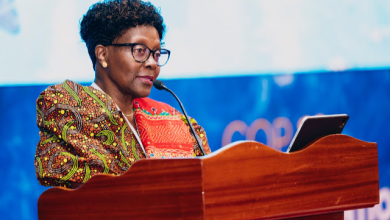
The call was made by Deputy Minister in the President’s Office responsible for Public Service Management and Good Governance, Regina Qwaray, during her official visit to the TASAF Office in Dar es Salaam, where she encouraged management to prioritise efforts towards formalising TASAF as a statutory public
institution.
The Deputy Minister said such a move would strengthen TASAF’s sustainability, enhance accountability, create opportunities for accessing resources from different sources, and support the continuity of social protection programmes beyond individual project cycles.
Her remarks come as Tanzania continues implementing the National Development Vision 2050, which seeks to build a competitive and inclusive economy that uplifts every citizen. Within this context, she said TASAF must continue evolving from being perceived mainly as a provider of social assistance into a platform that builds
citizens’ capacity to become economically productive and self-reliant.
“I expect TASAF to move away from the perception that it exists only to provide social assistance and instead focus on building citizens’ capacity to become self- reliant,” she said.
She stressed that social protection interventions should not only address immediate vulnerabilities but also create pathways for households to improve their livelihoods, increase productivity, and participate more effectively in economic activities.
“Every shilling invested in TASAF must be reflected in improved lives for citizens,” she pointed out.
Strengthening TASAF’s institutional foundation
Equally, she noted that formalising TASAF as a statutory institution would provide a stronger foundation for delivering sustainable social protection interventions.
She said the process should be given priority because a stronger institutional structure would enhance accountability, improve operational stability, and open opportunities for TASAF to access additional sources of funding beyond traditional support mechanisms.
ALSO READ: Samia unveils new BRT corridors from Dar to three Pwani districts
“Formalising TASAF as an institution will strengthen the institution, enhance accountability, open opportunities for accessing funding from other sources, and improve the sustainability of social protection programmes,” she said.
She explained that a stronger institutional framework would enable TASAF to plan for the long term, strengthen partnerships, and continue responding effectively to the changing needs of vulnerable communities.
The call comes at a time when TASAF is preparing for the implementation of the third phase of the Productive Social Safety Net Programme (PSSN III), following the completion of preparations.
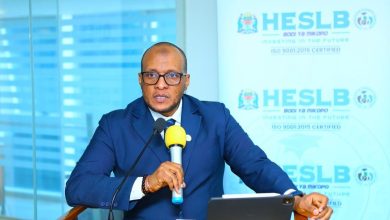
According to TASAF Executive Director Shedrack Mziray, the programme has continued to improve through different phases, with each phase introducing reforms aimed at increasing effectiveness and strengthening support to vulnerable households.
“TASAF has been implementing its interventions through different phases. We successfully completed the second phase with significant achievements, and we are now moving towards the implementation of the third phase,” Mziray said.
PSSN III: A greater focus on empowerment
Mziray explained that the third phase will place greater emphasis on supporting the poorest households while strengthening interventions that enable beneficiaries to overcome extreme poverty.
“This phase will focus on reaching the poorest households and placing greater emphasis on empowering them so that they can escape extreme poverty,” he said.
He noted that the Government’s objective is not only to provide temporary assistance but to ensure that beneficiaries receive support that enables them to become economically independent.
During the second phase, TASAF reached more than 1.3 million households. Some beneficiaries have successfully graduated from the programme and have been able to sustain their livelihoods through improved economic activities.
Mziray said the programme has demonstrated that carefully targeted social protection interventions can create meaningful changes in communities. “Many households that were previously living in extreme poverty have now
improved their lives and become economically independent,” he said. However, ensuring that beneficiaries successfully transition from receiving assistance to sustaining themselves remains a key challenge.
Elaborating, Qwaray noted that some beneficiaries continue to depend on programme support even after receiving opportunities for empowerment. She called for stronger approaches that ensure households graduating from the programme remain economically stable and do not return to poverty.
She said TASAF should continue exploring ways to connect beneficiaries with available economic opportunities within their communities, including productive activities, employment opportunities, and other forms of support that strengthen self-reliance.
ALSO READ: COSTECH highlights the protection of youth innovation rights
Again, one of TASAF’s major achievements has been the improvement of payment systems through the introduction of electronic platforms. Mziray explained that the transition from cash payments to electronic payments has improved efficiency, transparency, and the security of beneficiaries.
Previously, beneficiaries faced challenges associated with travelling to collect cash payments, including risks of losing money or being exposed to insecurity. “With the current electronic payment system, beneficiaries can receive their funds safely without the need to travel long distances or carry cash,” Mziray said.
The Deputy Minister recognised these improvements, noting that digital systems have reduced complaints, improved accountability, and ensured that support reaches beneficiaries on time.
As Tanzania continues moving towards a digital economy, Qwaray urged TASAF to further strengthen the use of technology in beneficiary registration, monitoring of results in real time, and protection of beneficiary information. Beyond direct support to households, TASAF has continued supporting community-driven projects in sectors such as education, health, water, and infrastructure.
During her visit to TASAF-supported projects in Arusha Region, Qwaray witnessed how these interventions have improved livelihoods and contributed to local economic development.
She highlighted examples of communities that benefited from water projects, particularly women engaged in agricultural activities such as vegetable production. Improved access to water has enabled farmers to increase production, expand businesses, improve household incomes, support their children’s education, and
improve their living conditions.
TASAF-supported education projects have also helped address challenges related to access to learning facilities through the construction of classrooms and dormitories, while infrastructure projects such as roads and bridges have brought essential services closer to communities.
“These projects demonstrate that TASAF interventions directly touch and transform people’s lives,” Qwaray said.
Despite its achievements, TASAF continues to face the challenge of limited resources compared with the growing demand from communities.
Qwaray acknowledged that many Local Government Authorities require support, but available resources require careful prioritisation to ensure that areas with the greatest needs are reached. She directed TASAF management to continue exploring alternative sources of financing and strengthening cooperation with development partners.
The Deputy Minister noted that repeated inquiries from citizens regarding when TASAF programmes would continue demonstrate the importance of the programme and the impact it has created among communities.
On another note, Qwaray stressed that TASAF’s success should be measured by actual improvements in people’s lives rather than the number of activities implemented.
She said key indicators should include the number of households that have escaped poverty, young people and women who have gained sustainable economic opportunities, increases in beneficiaries’ income, and citizens’ satisfaction with services provided.
She also emphasised the importance of tracking households after graduation to ensure that progress achieved through TASAF support is sustained. With TASAF managing significant public resources, she called for continued
strengthening of internal controls, transparency, and value-for-money practices.
Strong partnerships for greater results
The Deputy Minister further emphasised that poverty reduction requires collective action involving multiple stakeholders. She urged TASAF to continue strengthening cooperation with TAMISEMI, other
Government institutions, the private sector, development partners, and civil society organisations.
“The challenges of poverty cannot be solved by one institution alone. We must work together to achieve greater results,” she said. As Tanzania advances towards the goals of Vision 2050, TASAF is expected to continue playing a critical role in protecting vulnerable households while helping create pathways towards productivity, employment, and economic independence.
The institution’s future impact will depend not only on the number of beneficiaries reached, but on its ability to build lasting resilience, strengthen partnerships, mobilise resources, and transform social protection into a foundation for inclusive economic growth.