AI listens to coughs to fight against deadly diseases

DAR ES SALAAM: AS the world marked World Tuberculosis Day, a quiet but potentially transformative innovation was set in motion across Tanzania and that is one that listens, quite literally, to the sound of illness.
The School of Nursing and Midwifery, East Africa at Aga Khan University has launched an ambitious research initiative that harnesses artificial intelligence (AI) to improve the detection and management of respiratory diseases.
The project, aptly named the Kikohozi Classifier “kikohozi” meaning cough in Swahili aims to bring sharper diagnostic precision to conditions that have long burdened the country’s healthcare system. If machines can now recognise your face, your voice, and even your questionable music taste, it seems only fair they learn to identify a cough too.
The initiative will be implemented across five regions Dar es Salaam, Dodoma (including Dodoma Urban and Bahi), Kilimanjaro, Shinyanga and Iringa reaching a wide cross-section of communities.
Its goal is straightforward but critical: to help healthcare providers diagnose and manage respiratory diseases such as tuberculosis (TB), asthma, pneumonia and bronchitis more efficiently and accurately. Tuberculosis remains a formidable global health threat.
Despite being both preventable and curable, it continues to claim millions of lives. Nearly two billion people worldwide are estimated to be infected with TB, making it the deadliest infectious disease on the planet.
In Tanzania, while progress has been made with improved treatment success rates offering cautious optimism the need for faster, more accurate diagnostic tools remains urgent. Delayed diagnosis often means delayed treatment, and in the case of infectious diseases, delay can be costly not just for patients, but for entire communities.
The Kikohozi Classifier Project seeks to address this gap by enabling earlier detection, improving treatment outcomes and reducing transmission rates. Dr Riziki Kisonga, Programme Manager at the National Tuberculosis and Leprosy Programme under the Ministry of Health, underscored the project’s importance.
She noted that strengthening mechanisms for detecting and managing respiratory diseases is essential for the country’s public health strategy. The pilot phase, she added, will be critical in determining whether the intervention can be expanded nationwide.
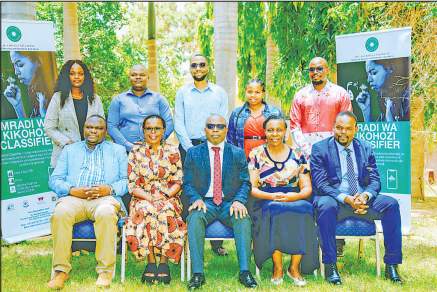
Respiratory diseases remain one of Tanzania’s most persistent health challenges. According to the Ministry of Health, lower respiratory infections were among the top five causes of death in health facilities in 2024, accounting for approximately seven per cent of total mortality.
These conditions also rank among the leading causes of hospital visits and admissions, placing a heavy burden on already stretched healthcare resources.
ALSO READ: Tanzania’s silent agric revolution empowers millions of farmers
Early diagnosis is widely recognised as one of the most effective ways to improve patient outcomes. By identifying diseases at an earlier stage, healthcare providers can initiate treatment sooner, reducing complications and improving survival rates.
The integration of AI into this process could mark a significant shift in how such conditions are managed. At the heart of the initiative is collaboration.
The project brings together expertise from Muhimbili University of Health and Allied Sciences, specifically its Emerging Technologies for Health Laboratory, as well as international partners including the University of Warwick.
The involvement of these institutions reflects a growing recognition that complex health challenges require multidisciplinary and crossborder solutions.
The project has also received endorsement from Tanzania’s Ministry of Health and the National TB and Leprosy Programme, signalling strong alignment with national health priorities. Such backing is crucial, not only for implementation but also for ensuring that successful innovations can be scaled and integrated into the broader healthcare system.
For the Aga Khan University’s School of Nursing and Midwifery, the initiative represents more than just a technological milestone, it is also a testament to its evolving academic identity. Professor Eunice Ndirangu, Dean of the School, reflected on this transformation.
For more than two decades, she noted, the institution has been recognised primarily for the quality of its academic programmes. However, over the past ten years, there has been a deliberate push to strengthen its research capacity.
Securing a grant from a United Kingdom research institute for this project marks a significant achievement in that journey. The use of AI in healthcare is not entirely new, but its application in low- and middleincome countries is still emerging.
Projects like the Kikohozi Classifier demonstrate how technology can be adapted to local contexts, addressing specific challenges in resourceconstrained settings. In practical terms, the system is expected to analyse cough sounds and other clinical data to assist healthcare providers in identifying potential respiratory conditions.
While it will not replace medical professionals no algorithm, however sophisticated, can replicate clinical judgement, it can serve as a valuable decision-support tool, particularly in areas where access to specialised diagnostic equipment is limited.
And if it occasionally gets a cough wrong, it will still be doing better than most of us during flu season. Beyond its immediate clinical benefits, the initiative also contributes to broader global health goals. It aligns with United Nations Sustainable Development Goal 3, which focuses on ensuring healthy lives and promoting well-being for all.
By improving disease detection and management, the project supports efforts to reduce mortality from communicable diseases and strengthen health systems. The potential impact extends beyond Tanzania. If successful, the model could be adapted for use in other countries facing similar challenges, offering a scalable solution to one of the world’s most persistent health threats.
For now, the focus remains on the pilot phase—collecting data, refining algorithms and evaluating outcomes. It is meticulous work, requiring patience and precision.
But the stakes are high, and the potential rewards even higher. In a world where technology often feels distant from everyday realities, the Kikohozi Classifier Project offers a reminder that innovation can be both practical and profoundly human.
By turning something as ordinary as a cough into a diagnostic clue, it brings cutting-edge science closer to the communities that need it most. And in doing so, it may help ensure that fewer coughs go unheard—and fewer lives are lost.