Language, culture deepen Tanzania-China people-to-people ties
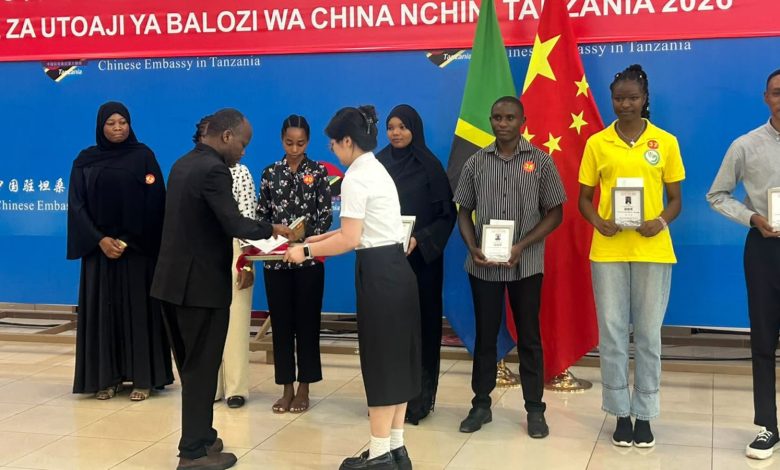
DAR ES SALAAM: FROM classrooms in Tanzania to universities in China, language learning is creating new bridges of friendship, opening opportunities for young people and strengthening the longstanding relationship between the two countries.
As more Tanzanian students embrace Chinese language studies, the benefits are extending beyond academic achievement to include international exposure, employment prospects and a deeper understanding of Chinese culture.
At the same time, the growing introduction of Kiswahili programmes in Chinese universities is giving more Chinese students an opportunity to understand Tanzania, its people and their cultural heritage, making language education an increasingly important part of bilateral cooperation.
The exchanges are reinforcing a relationship that has developed over decades through cooperation in education, science, technology, innovation and other areas of mutual interest.
Chinese Ambassador to Tanzania, Ms Chen Mingjian, says language learning is among the most effective ways of bringing people together, as it enables them to appreciate different cultures, establish connections and build lasting friendships.
Speaking recently during the 2026 Chinese Ambassador Awards ceremony, where 133 Tanzanian teachers and students were recognised for their contributions to Chinese language teaching and achievements in learning the language, she said such exchanges are important in strengthening mutual understanding between the two countries.
She explained that learning a foreign language goes beyond acquiring communication skills, as it also provides an opportunity to understand the values, traditions and experiences of other societies.
“Such exchanges provide opportunities for people from both countries to understand each other’s cultures and strengthen the historical friendship established by their founding fathers,” she said.
The award recipients were drawn from the Confucius Institutes at the University of Dar es Salaam and the University of Dodoma, the Confucius Classroom at the State University of Zanzibar, as well as higher learning institutions and secondary schools across the country.
They were recognised for their dedication, innovation and contributions to Chinese language teaching and learning during the past academic year.
Ms Mingjian said the increasing number of Tanzanians studying Chinese, both locally and in China, demonstrated the growing interest in the language and the opportunities associated with it.
She also pointed to the increasing number of Chinese universities introducing Kiswahili as a language major, describing the development as evidence of expanding educational and cultural exchanges.
The ambassador disclosed that more than 2,000 Chinese language learners in Tanzania had sat for the HSK proficiency examinations over the past 10 months, reflecting growing enthusiasm for the language.
Across Africa, she said, more than 20 countries had incorporated Chinese into their national education systems by the end of 2025, while over 50 higher learning institutions had established Chinese language majors or teaching programmes.
She challenged Tanzanian teachers and students to use their knowledge and experiences to strengthen people-to-people relations, describing them as important ambassadors of friendship between the two countries.
“I do hope that the teachers and students act as ambassadors of friendship for the two countries and peoples,” she said.
She added that the longstanding relationship between Tanzania and China, founded on mutual respect and trust, continued to grow through cooperation in various sectors, expressing confidence that further collaboration would support the development ambitions of both countries.
For Tanzanian learners, however, the growing popularity of Chinese is not only about cultural appreciation but also the opportunities that come with mastering an international language.
Commissioner for Education in the Ministry of Education, Science and Technology, Dr Lyabwene Mtahabwa, said Chinese language skills were becoming increasingly important as more Tanzanian pupils, students and graduates sought to learn the language.
Speaking at the ceremony, where he represented the ministry’s Permanent Secretary, he said proficiency in Chinese could widen employment opportunities for individuals in both domestic and international labour markets.
ALSO READ: Tour of Chinese Foreign Minister cements Tanzania-China ties
He commended the learners who demonstrated their abilities during the ceremony, noting that their achievements reflected commitment and determination.
Dr Mtahabwa also expressed appreciation to the Chinese government for its longstanding cooperation with Tanzania, particularly in education, science, technology and innovation.
He observed that a genuine development partner was one that contributed to transforming education because improvements in the sector had far-reaching implications for national development.
However, while encouraging Tanzanians to embrace opportunities offered by international exchanges, he cautioned against losing their cultural identity in the process of globalisation.
He argued that national identity should go beyond possessing a national identity card and instead be reflected in people’s values, behaviour, language, dressing and everyday practices.
“Globalisation does not mean that national identity no longer matters. It matters a lot, and it is not confined to possession of a national identity card,” he said.
Dr Mtahabwa cited China’s approach to passing cultural values and traditions to younger generations as an example from which Tanzania could draw lessons.
He said the country should ensure that its people remain connected to their cultural heritage while acquiring knowledge and skills that enable them to participate in the global community.
His argument was that international engagement and cultural preservation should complement each other, allowing Tanzanians to embrace new opportunities without abandoning the values that define them.
The benefits of language learning are already becoming evident among some Tanzanian students, whose experiences demonstrate how classroom lessons can develop into international exposure and professional opportunities.
One of the award recipients, Mr Ridwan Mohamed, a secondyear student at the University of Dar es Salaam Confucius Institute, said his interest in Chinese began when he was in Form One at a secondary school in Lindi Region.
He later continued learning the language at Usagara Secondary School in Tanga before joining the University of Dar es Salaam, where he is pursuing a Bachelor of Arts with Education in Chinese and English.
Interestingly, his inspiration came from Chinese martial arts films, particularly those featuring actor Jet Li, whose performances motivated him to explore the language and culture.
He said what began as an interest in watching films gradually developed into a serious commitment to learning Chinese.
His determination eventually took him into language competitions, where he participated in three contests and won the third one, earning an opportunity to travel to China for an international competition.
The experience exposed him to fellow learners from different parts of the world, allowing him to establish friendships and appreciate the international community of Chinese language learners.
Although he described the competition as challenging, he said the experience strengthened his determination to continue studying the language.
“I enjoyed the experience, although the competition was very difficult. I cannot stop learning Chinese because I continue to see different opportunities emerging from it,” he said.
Mr Mohamed said his language skills had already attracted requests from Chinese nationals seeking his assistance with interpretation.
However, his academic commitments had limited his ability to take up such assignments regularly, although he remained interested in exploring more opportunities as he advanced his studies.
For him, the recognition as Student of the Year was particularly meaningful, as it reflected his academic performance and achievements in Chinese language competitions.
He described the award as his 11th, saying such recognition served as a reminder of personal achievements while potentially opening doors to future employment.
“For me, this award means a lot. Awards remind you of the good things you have achieved, but they can also help create employment opportunities,” he said.
For Tanzania and China, investing in language education therefore represents an opportunity to strengthen an already longstanding friendship while preparing young people to benefit from an increasingly interconnected world.