Strategic transport investments propel TZ towards $1trillion economy
DODOMA: INTERGRATED logistics features 48 times in Tanzania’s National Development Vision 2050, signalling its strategic importance in the country’s ambition to build a 1 trillion million economy.
The emphasis reflects a growing recognition that Tanzania’s geographical position is a powerful economic asset that, if fully harnessed through modern transport corridors, world-class logistics infrastructure, digitalised trade systems and stronger regional partnerships, can transform the country into a leading regional trade and logistics hub, unlocking new investment, accelerating cross-border commerce and driving sustainable economic growth.
Recognising its importance to the country’s development, Dira 2050 identifies five catalytic drivers to support its implementation, with integrated logistics among them.
Through the development of integrated domestic and regional logistics systems, Tanzania aspires to become a regional trade hub by upgrading infrastructure, including railways, ports and road networks, to facilitate the efficient movement of goods, services and people.
The efforts will be supported by streamlined tax and regulatory systems and improved professionalism in service delivery. “Integrated logistics entails harmonising the movement of people, goods, services and information throughout the supply chain network.
It requires seamless coordination among entities engaged in production, transportation, warehousing, distribution and delivery, with the aim of achieving optimal efficiency, reliability and cost-effectiveness.
“As Tanzania gears up to transform its economy, transitioning to an integrated domestic and regional logistics system is paramount,” states the 64-page Dira 2050 document.
Following significant investments and notable progress in the sector, Tanzania is increasingly positioning itself to capitalise on its strategic geographical location as a gateway to Eastern and Southern Africa.
Key developments include substantial investments in road networks, the modern Standard Gauge Railway (SGR), and the expansion of ports and airports.
Aviation investments under President Samia’s second term
As Tanzania celebrates the first anniversary of President Dr Samia Suluhu Hassan’s second term in office, her administration has continued to invest heavily in the transport sector, particularly aviation, as part of broader efforts to strengthen the country’s economic competitiveness and support its ambition of attaining upper-middle-income status.
According to a report presented by the Minister for Transport, Professor Makame Mbarawa, during the Government’s first 100 days in office, construction of the Presidential Pavilion at Terminal I of Julius Nyerere International Airport had been completed.
The modern facility, officially launched on January 16, 2026, is the first of its kind in East Africa. It can accommodate five heads of state simultaneously, enhancing Tanzania’s international standing and prestige.
Meanwhile, preliminary preparations had begun for the construction of Serengeti International Airport and a new regional airport at Kyabajwa in Kagera Region.
Preparations are also underway for the rehabilitation of the runway and the construction of a VIP terminal at Kilimanjaro International Airport (KIA).
These projects are important for promoting tourism and trade while improving connectivity between strategically important areas of the country and regional and international markets.
In passenger transportation, the Government has continued to improve and expand services through Air Tanzania Company Limited (ATCL).
During the period under review, ATCL added Victoria Falls in Zimbabwe, Cape Town in South Africa and Accra in Ghana to its network, bringing the total number of destinations served to 32. Of these, 15 are domestic destinations, 14 are within Africa and three are international destinations outside the African continent.
The opening of these new destinations has improved flight connectivity, making travel more efficient and convenient for citizens conducting their daily activities and pursuing development opportunities.
During the same period, the Ministry ensured that all 16 aircraft in the fleet remained operational to support the continued provision of services.
These are among several projects being implemented in line with the 2025–2030 election manifesto of the ruling Chama Cha Mapinduzi (CCM), whose main objectives include strengthening Tanzania’s regional and international transport connectivity, positioning the country as a major trade and transport gateway for landlocked countries, and enhancing national economic competitiveness.
The CCM 2025–2030 Election Manifesto states that the ruling party will oversee the Government to ensure adequate investment in infrastructure. Priority areas include improving road, railway, port and air transport services.
Building an integrated transport system
However, when delivering her address at the official opening of the 13th Parliament of the United Republic of Tanzania in Dodoma on November 14, 2025, President Samia outlined her administration’s policy direction for the transport sector, emphasising the development of an integrated transport system.
The President said a multimodal transport system would ensure that ports, airports and railway stations were interconnected, enabling passengers and cargo to move seamlessly between different modes of transport.
Through improvements to railways, ports, airports and maritime safety, Tanzania continues to strengthen its position as a logistics hub in East and Central Africa. These developments are expected to improve transport services, increase government revenue, create jobs and enhance citizens’ welfare.
Progress towards first anniversary
Presenting his Ministry’s expenditure plan of 2.872tri/- for the 2026/27 financial year, which was unanimously approved by Members of Parliament, Minister Mbarawa identified strengthening Air Tanzania Company Limited (ATCL), improving airports and developing the Civil Aviation Training Centre as priority areas.
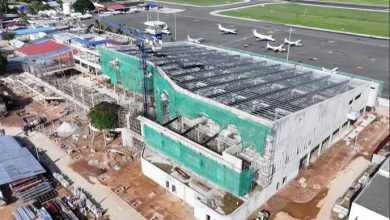
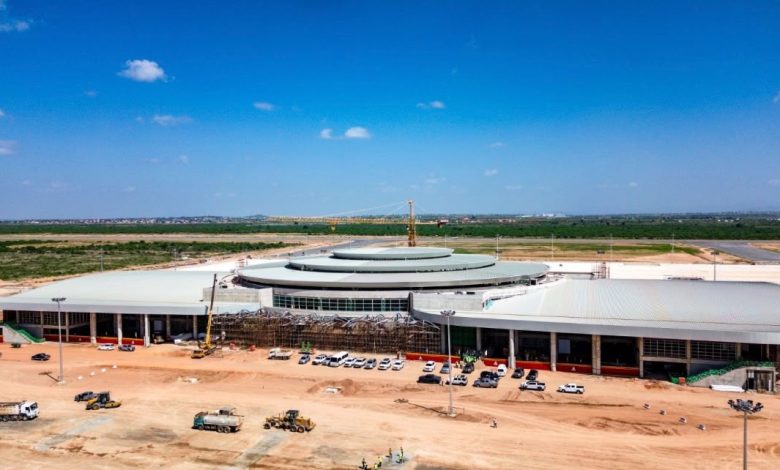
The budget, which marked the beginning of the implementation of Dira 2050, has supported the implementation of various aviation projects, including the development of Msalato International Airport in Dodoma. As of September 2026, Msalato International Airport had entered its final phase of construction, with the infrastructure package 89 per cent complete and the buildings package 78 percent complete.
ALSO READ: Business efficiency in transportation heralds strategic talks between TNCC and Isuzu East Africa
The latest report by the Tanzania National Roads Agency (TANROADS) indicated that infrastructure works were scheduled for completion by November 2026, while the buildings were expected to be completed by December 2026.
TANROADS Chief Executive, Engineer Mohamed Besta, said the agency was closely monitoring contractors’ work programmes, the delivery and installation of equipment, and the coordination of interdependent activities to ensure that the remaining works were completed on schedule.
The agency’s September report further indicated that Package One had reached 89.02 per cent completion. The runway was 98 percent complete, while the taxiways and aircraft apron had each reached 99 percent completion. Access and internal roads, together with vehicle parking areas, were 75 per cent complete, while the water supply system had reached 89 per cent completion.
Fencing and gates were 76 per cent complete, while electrical works and aircraft guidance equipment had reached 90 per cent completion. The remaining works included landscaping and grassing of safety areas, installation of airfield and road lighting, water pipes and an underground water tank, fencing, and the installation of communication and navigation systems.
The buildings package had reached 78.37 per cent completion, with the passenger terminal at 81 per cent, the air traffic control tower at 74 per cent, the fire station at 88 percent and the meteorological services building at 87 per cent.
According to the TANROADS boss, the country’s flagship project had created employment opportunities for 9,059 Tanzanians, with 3,571 employed under Package One and 5,488 under Package Two. An additional 47 foreign workers had also been engaged.
The airport is being developed to Category 4E standards under the International Civil Aviation Organisation (ICAO), with a runway measuring 3,600 metres.
Upon completion, it is expected to handle up to 1.5 million passengers annually and accommodate large aircraft, including Boeing 787 Dreamliners. Engineer Besta urged Dodoma residents to prepare to take advantage of the business opportunities expected to emerge once the airport becomes operational.