Budget performance powers development gains

TANZANIA: A NATIONAL budget is more than a financial blueprint or a statement of government expenditure, it is a powerful engine for economic growth, social progress and improved livelihoods. Its impact is felt in the life of a student whose academic dreams are kept alive by a higher education loan, a household gaining access to electricity for the first time and a small trader securing business credit to expand operations.
Beyond the trillions of shillings allocated and spent, the real measure of public investment lies in the opportunities it unlocks, the livelihoods it transforms and the foundations it lays for a more prosperous economy.
The implementation of the 2025/26 national budget offers a glimpse into the development priorities pursued during the first year of President Samia Suluhu Hassan’s second term, following her inauguration on November 3, 2025.
From expanding access to education and electricity to upgrading transport infrastructure and supporting productive activities, public spending has been directed towards improving essential services, strengthening economic capacity and opening new avenues for growth.
Parliament approved 56.49tri/- for the financial year to finance government operations, public services and development programmes. Between July 2025 and April 2026, government expenditure reached 40.92tri/-, excluding principal debt repayments, equivalent to 98.8 per cent of the target for the period.
The expenditure supported programmes benefiting learners, households, patients, farmers and entrepreneurs, alongside major investments in transport, electricity and water infrastructure. For millions of children, one of the most direct benefits came through fee-free compulsory education.
During the reporting period, 16,838,013 students benefited from the programme, while 284,487 students received higher education loans to support their studies. The government spent 1.58tri/- on vocational training, youth skills development, learning infrastructure and higher education support.
These investments helped sustain access to education while equipping young people with the skills and qualifications needed to compete in the labour market. Beyond the classroom, electricity investments continued to widen opportunities for households and businesses.
The government spent 1.59tri/- on electricity generation, transmission and distribution, while the Rural Energy Agency disbursed 521.3bn/- towards rural electrification. According to the reported figures, 39,003 hamlets gained access to electricity, extending the benefits of power to more communities.
For households, reliable electricity means better lighting and greater access to modern appliances. For small businesses, it can open the door to longer operating hours, the use of productive equipment and the expansion of services that depend on a stable power supply.
The expansion of electricity access was matched by investment in generation capacity. The Julius Nyerere Hydropower Project has a reported capacity of 2,115 megawatts, while national electricity-generation capacity reached 4,522.54MW.
Together, investments in generation and rural connections reflect a two-pronged strategy: boosting the country’s capacity to produce electricity while extending its reach to communities and businesses that need it.
Transport infrastructure also attracted substantial funding, with 2.86tri/- spent on roads, bridges and airports and a further 1.27tri/- allocated to railway infrastructure, including 1.12tri/- for the Standard Gauge Railway (SGR). For passengers travelling between Dar es Salaam and Dodoma, the operational SGR section covering Lots 1 and 2 provides a modern railway link between two major economic centres.
Beyond passenger convenience, the service offers opportunities to strengthen trade and commercial connections by facilitating the movement of people and goods.
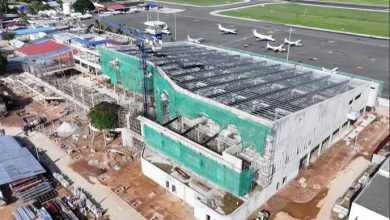
The government additionally spent 302bn/- on infrastructure and stadiums, including preparations for the 2027 Africa Cup of Nations. In Dodoma, the Government City at Mtumba, the State House at Chamwino and the development of Msalato International Airport form part of wider infrastructure investment intended to strengthen the capital’s administrative role and support economic activity.
The benefits of public spending are also visible in essential services, particularly healthcare and water supply. The government spent 681.7bn/- on medicines, medical equipment, reagents and the construction and rehabilitation of health facilities.
These investments support the availability of medical supplies and the improvement of facilities where people seek treatment. By March 2026, the Ministry of Health had received approximately 1.11tri/- against an approved budget of 1.76tri/-.
Water supply was another priority. By April 2026, the Ministry of Water had received 748.61bn/- out of its approved 898.28bn/- budget, representing 83.3 per cent. Of the funds received, 688.90bn/- went towards development expenditure.
The investment supported water infrastructure development, including initiatives associated with the National Water Grid and dam projects. Kidunda Dam, intended to serve Morogoro, Pwani and Dar es Salaam regions, is part of wider efforts to address growing demand for water.
For communities facing pressure on water supplies, such infrastructure is important to improving access to a reliable resource used in households, public institutions and economic activities. Economic opportunities also depend on the ability of farmers, traders and businesses to access financing and markets.
By March 2026, the Ministry of Agriculture’s three budget votes had received 532.51bn/- against combined approved allocations of approximately 1.193tri/-. Of the amount received, 436.54bn/- was for development projects and 95.97bn/- for recurrent expenditure.
Agricultural investment matters to rural households because the sector supports livelihoods, food production and the supply of raw materials to domestic industries. Funding for development programmes can help sustain efforts to improve production and strengthen the sector’s contribution to the wider economy.
In industry and trade, the Ministry of Industry and Trade had received 95.63bn/- of its approved 135.79bn/- budget by April, equivalent to 70.43 per cent. Development projects had received 21.03bn/- against an allocation of 41.89bn/-.
The Ministry of Minerals had received 82.90bn/- against an approved allocation of approximately 224.98bn/-. These sectors are important sources of employment, business opportunities, domestic production and export earnings.
Their contribution to people’s livelihoods depends on the ability of investment and public programmes to support productive activity and connect businesses to markets. For small-scale traders and groups seeking to expand their incomes, access to capital is another important part of the development agenda.
By April 2026, the government had provided 135.8bn/- in credit to 13,062 groups through the scheme allocating 10 per cent of local government authorities’ own-source revenue for lending to eligible groups.
The Machinga Empowerment Fund received 18.5bn/- during the financial year, while the National Youth Economic Empowerment Programme disbursed 52.6bn/- from its 200bn/- allocation.
The programmes were intended to help eligible groups and young people finance income-generating activities and participate more actively in the economy.
The government also launched the Logistics and Export Facilitation Centre to help entrepreneurs, young people and investors access equipment, capital and international markets. The initiative is intended to support business development and improve access to trade and export opportunities.
ALSO READ: Energy Ministry presents its quarterly budget implementation report for 2026/27
For older people and vulnerable groups, the budget included 3.2bn/- for essential care between July 2025 and April 2026 in government-managed elderly care homes, providing funding for services for people who need additional support.
Government spending also had implications for businesses awaiting payment for completed work or supplied goods and services. During the period, the government reported paying 667.3bn/- in verified arrears to suppliers, service providers, contractors and consultants.
Settling these obligations provided payments to businesses and contractors owed money by the government, helping them meet their own financial commitments and sustain their operations. The implementation of these programmes took place alongside adjustments to the original budget.
During the financial year, the government proposed reallocating resources to cover obligations omitted from the initial estimates, including requirements associated with the newly established Ministry of Youth Development, while retaining the overall approved budget ceiling.
The financial year began in July 2025, several months before President Samia’s November 3 inauguration. The reported expenditure therefore covers the period before and after her inauguration, while offering a picture of the development priorities financed during her first year in office.
Across education, electricity, transport, healthcare, water supply and economic empowerment, the budget supported services and programmes intended to improve people’s access to essential services and economic opportunities.
The wider test of these investments lies in the benefits they deliver to communities: more reliable services, improved connections between economic centres, stronger support for productive activities and greater opportunities for people to earn a living.
Through its spending on public services, strategic infrastructure and economic empowerment, the 2025/26 budget has helped finance the programmes and investments intended to translate national development priorities into benefits for Tanzanians.