MV Chambo incident exposes urgent need for stronger maritime safety, disaster preparedness and cross-border coordination
RUVUMA: The recent rescue of 41 passengers from a burning vessel on Lake Nyasa has renewed attention to the importance of cooperation between Tanzania and Mozambique, highlighting how solidarity among neighbouring communities can save lives and strengthen cross-border relations.
The incident involving the MV Chambo on October 11, 2026, demonstrated the importance of timely intervention when emergencies occur along shared waterways. It also provided an opportunity for officials from the two countries to consider how closer coordination could improve maritime safety, disaster preparedness and relations between communities living on either side of the lake.
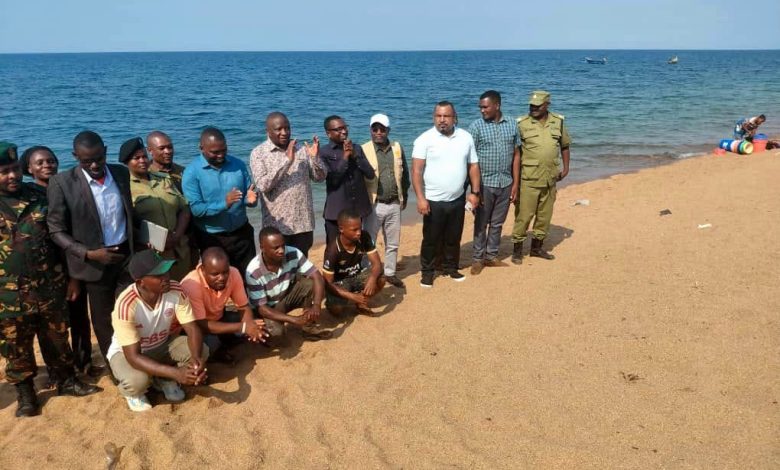
In recognition of the rescue efforts, Lago District Commissioner José Achida Assane of Mozambique’s Niassa Province visited Nyasa District in Tanzania’s Ruvuma Region on October 19 and 20, 2026, to thank local security authorities and residents for their role in saving the passengers.
The passengers had been travelling aboard the MV Chambo from Mbamba Bay Port in Nyasa District, Tanzania, to Mitengula Port in Mozambique when the vessel caught fire while crossing Lake Nyasa. The emergency prompted a rescue effort involving local residents and security authorities, whose response helped save all 41 passengers.
Mr Assane was received by Nyasa District Administrative Secretary Salum Ismail, accompanied by members of the district security committee, on behalf of Nyasa District Commissioner Peresi Magiri.
During the visit, the Mozambican official commended the committee and residents of Undu Village, situated along the lakeshore in Mtipwili Ward, Nyasa District, for responding swiftly and working together to rescue those aboard the burning vessel.
The incident demonstrated how coordinated action by local communities and public institutions can make a decisive difference during emergencies, particularly where transport routes connect people across national borders. For communities around Lake Nyasa, the water body is more than a geographical feature separating two countries. It also serves as a transport route and supports fishing, commerce and other economic activities.
The movement of people and goods across the lake makes safety and cooperation essential to the daily lives of residents on both shores. Mr Assane said the successful rescue illustrated the value of cooperation between neighbouring communities and authorities, especially when human lives are at risk.
The incident showed that timely intervention, effective coordination and a shared commitment to protecting people can help prevent emergencies from resulting in greater loss of life. The rescue also involved immigration authorities, who assisted the survivors after they were brought to safety.
The 41 passengers came from different countries, including Tanzania, Mozambique, Malawi and Lesotho, making immigration support important in addressing their respective circumstances.
Mr Assane expressed appreciation to Nyasa District Immigration Officer, Senior Superintendent of Immigration Albert Peter Massao, on behalf of the Commissioner General of Immigration Tanzania, CGI Dr Anna Makakala, and Ruvuma Regional Immigration Officer, Assistant Commissioner of Immigration Elizabeth Mzimya, for their cooperation in the rescue and the provision of necessary immigration assistance.
Their involvement highlighted the role of immigration services in cross-border emergencies, where survivors may have different nationalities and require assistance in accordance with their circumstances. However, the lessons from the MV Chambo incident extend beyond the successful rescue.
The fire has drawn attention to the need for Tanzania and Mozambique to strengthen cooperation in maritime safety, emergency preparedness and disaster management, particularly in areas where communities depend on shared waterways. Regular communication among security agencies, immigration officials, maritime authorities and local government leaders could improve information-sharing and coordination when accidents occur.
Clear communication channels and established emergency procedures would help authorities in both countries respond more efficiently, protect passengers of different nationalities and reduce the risk of fatalities in similar incidents. Preparedness is especially important in cross-border transport because an emergency can quickly require the involvement of institutions from more than one country.
Cooperation established before an incident occurs can help ensure that the relevant authorities understand their responsibilities and can act without unnecessary delays.
Beyond emergency response, closer relations between the two countries could strengthen border management and control while facilitating the lawful movement of people and goods. Such cooperation is important for communities whose livelihoods depend on trade, fishing, transport and other economic activities linked to Lake Nyasa.
ALSO READ: Trade finance holds key to TZ export growth
A safer and more predictable cross-border environment could also support trade and investment by improving confidence among traders, transport operators and residents who rely on movement between the neighbouring countries.
The rescue has further demonstrated that good-neighbourly relations are not confined to diplomatic meetings and formal agreements. They are also reflected in practical actions taken by ordinary citizens and public institutions to protect lives, assist people in distress and build trust across national boundaries.
The actions of Undu Village residents and local security authorities illustrated how cooperation at the community level can reinforce relations between governments.
Their response provided a practical example of solidarity in circumstances where swift action was essential. Building on that experience, Mr Assane proposed the establishment of regular good-neighbourliness meetings between Lago District in Mozambique and Nyasa District in Tanzania’s Ruvuma Region.
He said the meetings would provide an opportunity for the two districts to strengthen border management and control while promoting economic development in both countries. Regular engagements could also provide a platform for local authorities to discuss shared challenges, improve coordination among government institutions and encourage peaceful coexistence among communities living on either side of the border.
Sustained dialogue would allow the districts to address issues of common concern before they develop into more serious problems. Mr Assane was accompanied by a Mozambican government delegation that included Senior Transport and Communications Officer Marcelino Luis Ferreira and Senior Trade Officer Mauro Pius, both from Mitengula, a town on the Mozambican shore of Lake Nyasa that hosts an important port.
Their participation highlighted the relevance of transport and trade in the broader relationship between the neighbouring districts. Strengthening cooperation in these areas could complement efforts to improve safety, facilitate cross-border movement and support economic activities around the lake.
The visit concluded with renewed emphasis on stronger institutional relations and regular engagement between Tanzania and Mozambique. While the rescue of the 41 passengers was the immediate reason for the visit, the incident also offered a broader lesson: protecting lives on shared waterways requires more than responding to emergencies after they occur.
It requires preparedness, effective communication, cooperation among public institutions and trust between neighbouring communities. By translating the experience of the MV Chambo rescue into stronger practical arrangements, Tanzania and Mozambique have an opportunity to improve passenger safety, strengthen border relations and support the prosperity of communities connected by Lake Nyasa.