Mwalimu Nyerere, education reformist who fought ignorance
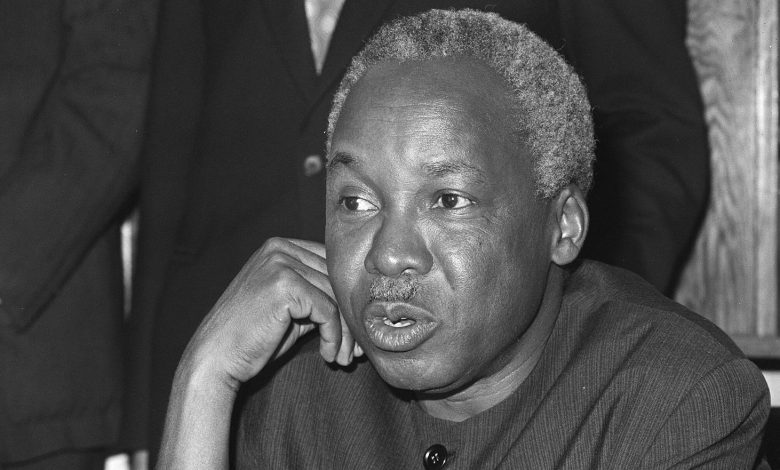
DAR ES SALAAM: HE just inherited the country from the hands of colonialists, at that time, the population was approximately nine million people with only 11 indigenous university graduates.
Tanzania’s civil service was dominated by expatriates and an illiteracy rate estimated at between 77 and more than 80 per cent.
Imagine, too, that the majority of the population had limited access to formal education, while hunger, disease and poverty continued to undermine the prospects of national development.
This was the formidable challenge confronting Mwalimu Julius Kambarage Nyerere when Tanganyika attained independence on December 9, 1961.
The country had emerged from decades of colonial rule under Germany and Britain, but political independence did not immediately translate into the human capacity required to govern, develop and transform the nation.
For Mwalimu, the task ahead was clear: independence had to mean more than the transfer of political authority from colonial administrators to African leaders.
It had to become the beginning of a broader struggle to liberate the people from ignorance, poverty and disease, which he identified as the three principal enemies of the nation. Education was central to that struggle.
Mwalimu Nyerere understood that a country could not meaningfully exercise its independence if its people lacked the knowledge, skills and confidence necessary to participate in national development.
Neither could Tanzania overcome its inherited economic and social difficulties without educating the millions whose labour sustained the country’s agricultural economy.
As a teacher before becoming a national leader, Mwalimu Nyerere approached education not simply as a government service or a route to individual advancement, but as an instrument of social transformation.
His vision challenged the colonial understanding of schooling, which had largely served the administrative and economic interests of the colonial state, and sought to establish an education system responsive to Tanzania’s own circumstances and aspirations.
More than six decades after independence, the scale of that undertaking remains an important part of the country’s educational history.
Mwalimu’s campaign against illiteracy, his emphasis on adult education, his philosophy of Education for Self-Reliance and the introduction of Universal Primary Education (UPE) formed interconnected parts of an ambitious effort to make learning accessible to a much larger proportion of the population.
At independence, Tanzania inherited an education system that had developed unevenly under colonial administration.
Before colonial rule, education was largely informal, with communities transmitting knowledge, values and practical skills from one generation to the next. Children and young people learned through family life, participation in community activities, observation and apprenticeship.
This system helped communities preserve their traditions and acquire skills relevant to their immediate environments. German colonial rule introduced formal schooling, although its principal purpose was to serve the requirements of colonial administration.
Schools provided selected Africans with literacy, language skills and basic administrative knowledge that could be used within the colonial system.
Under British rule, educational policy gradually expanded its attention to local conditions, including the needs of an economy heavily dependent on agriculture.
Nevertheless, access to formal education remained limited, and the opportunities available to Africans did not reflect the educational needs of the wider population. The result was a serious shortage of educated Tanzanians at independence.
The country needed teachers to educate its children, administrators to manage public institutions, professionals to provide essential services and technically skilled workers to support economic development.
Yet the supply of trained personnel was far below what the new nation required. The reported figure of only 11 indigenous university graduates offered a stark illustration of the challenge.
Meanwhile, historical accounts indicate that expatriates occupied approximately 71 per cent of senior civil service positions.
Estimates of illiteracy varied, with some records placing it at 77 per cent and others suggesting that it exceeded 80 per cent. These figures represented more than an educational deficit.
They reflected the structural inequalities of colonial rule and exposed the difficulties facing a government determined to build national institutions with limited human and financial resources.
Mwalimu Nyerere recognised that Tanzania could not wait for conventional schooling alone to produce the educated population required for development. Building enough schools, training sufficient teachers and expanding university education would take time.
Even as these institutions were being developed, millions of adults needed opportunities to acquire basic literacy and numeracy. His response was to make adult education a central element of the national campaign against ignorance.
Farmers needed access to useful information, the ability to understand written instructions and opportunities to discuss methods of improving production.
Communities needed knowledge that could help them respond to disease, protect their environment and address persistent food shortages.
Citizens also needed to understand public policies and participate more effectively in decisions affecting their lives.
For Mwalimu Nyerere, adult education had to address these interconnected needs. The campaign mobilised people from different sections of society.
Volunteer primary school pupils, among others, contributed their time to teaching adults, helping extend literacy instruction beyond the conventional classroom.
Teachers, education administrators and policy coordinators also played important roles in organising and supervising the initiative.
The involvement of schoolchildren in educating adults reflected the urgency of the campaign and the effort to make learning a collective responsibility.
ALSO READ: From childhood, Nyerere showed leadership signs
Education was not to remain the preserve of children enrolled in formal institutions; it was to become an opportunity available to people regardless of age or previous access to schooling.
The results were significant. According to the historical figures cited in accounts of the campaign, the illiteracy rate had fallen to approximately 69 per cent by 1967. By the mid-1980s, it had dropped to below 10 per cent.
Such a reduction represented a profound change in the country’s educational landscape, although it should be understood within the context of the historical estimates and measurement methods used at different times.
Educationists, including Professor of Education Abel Ishumi of the University of Dar es Salaam, have explained that the purpose of adult education in Tanzania extended beyond teaching people to read and write.
It was intended to help them identify and address problems such as hunger, disease, ignorance and soil erosion. This approach placed education within the broader struggle to improve living conditions.
Literacy was a means through which people could acquire knowledge, interpret their circumstances and participate in finding solutions to the challenges confronting their communities. Adult education therefore became an important instrument in promoting Ujamaa, or African socialism, particularly in rural areas.
The policy emphasised cooperation, shared responsibility and the pursuit of collective welfare.
In this context, education was intended to help communities understand the principles of cooperation and apply them to the practical challenges of rural development. Yet Nyerere’s educational ambitions were not confined to adults.
He also sought to transform the formal education system inherited from colonialism, questioning whether it was adequately preparing Tanzanians for the society they intended to build.
This concern found its clearest expression in the philosophy of Education for Self-Reliance, which became a defining feature of his educational reforms.
Mzee Pius Msekwa, Tanzania’s first CCM executive secretary and a former Speaker of the National Assembly, has identified Nyerere’s commitment to Education for Self-Reliance as a central element of his campaign against ignorance.
The philosophy received formal expression in the Arusha Declaration, promulgated on February 5, 1967, which established the principles of socialism and self-reliance as guiding elements of the country’s development strategy.
Colonial education, in his view, had been designed primarily to prepare a limited number of Africans for positions within the colonial administration and economy.
Its structure encouraged the pursuit of qualifications that could lead to salaried employment, while giving insufficient attention to the needs of the majority who lived and worked in rural communities.
The danger, Nyerere argued, was that an independent Tanzania might reproduce the attitudes and inequalities of the colonial period even after removing colonial administrators from positions of authority.
Education for Self-Reliance sought to challenge this outlook by connecting learning with productive work, social responsibility and the development needs of the country.
As Nyerere argued, education had to cultivate commitment to the entire community and instil values suited to Tanzania’s future rather than its colonial past.
Those values included respect for human dignity, equality, participation in cooperative activities and a commitment to productive labour. Education for Self-Reliance also reflected Nyerere’s concern about social inequality.
An education system that benefited only a small section of the population could not adequately serve a nation seeking to establish a more equal society.
Educational opportunities had to expand, and the values communicated through schooling had to support rather than undermine the country’s development objectives.
Gloria Ndisha Mbogoma’s academic work (such as her study on Julius Nyerere’s Education for Self-Reliance in Post-Colonial Tanzania) analyses how Mwalimu Julius Nyerere sought to dismantle the colonial education model and replace it with an Afrocentric, people-centered framework.
She argues that the system inherited after independence did not adequately serve Tanzania’s social objectives.
She identifies Education for Self-Reliance as an attempt to make education more relevant to Tanzanians, address socioeconomic inequalities and cultivate a culture of self-reliance. The shortage of trained teachers was one of the most significant constraints facing the government.
Increasing enrolment without expanding the teaching workforce would have placed considerable pressure on existing schools and risked undermining the quality of instruction. Mwalimu Nyerere’s administration therefore had to pursue school expansion and teacher preparation together.
Training programmes were enlarged to help meet the demand, while the government continued working to develop the human resources necessary to sustain the expanding system.
Universal Primary Education was accompanied by a substantial expansion of school enrolment. More children entered classrooms, including those from communities that had previously experienced limited access to formal education.
The programme helped strengthen the idea that literacy and basic education were national priorities requiring collective investment.
The implementation of Ujamaa villages also formed part of the broader effort to extend social services to rural populations.
By organising settlements and directing development resources towards rural communities, the government sought to improve access to facilities such as schools and other public services.
Education was also recognised within the constitutional framework as a basic human right, reinforcing the principle that access to learning was central to the responsibilities of the state and the aspirations of the nation.
At the centre of his thinking was the belief that education should help people understand and transform their circumstances.
A person who could read and write, but remained unable to apply knowledge to everyday problems, had not necessarily received the full benefits that education could offer.
Equally, a school that produced academically qualified individuals without encouraging social responsibility risked separating personal advancement from the needs of the community.
Mwalimu Nyerere sought to bridge that divide by linking education with citizenship, productive work and collective development. His approach also challenged the idea that learning should end when a person leaves school.
Through adult education and the broader philosophy of lifelong learning, he emphasised that individuals and communities needed continuing opportunities to acquire knowledge as their circumstances changed.
For a country in which the majority of adults had been denied substantial opportunities for formal schooling, this was a particularly important principle.
It recognised that educational exclusion in childhood should not become a permanent barrier to participation in national life.