Nyerere political life, struggles, rise to power in party, govt
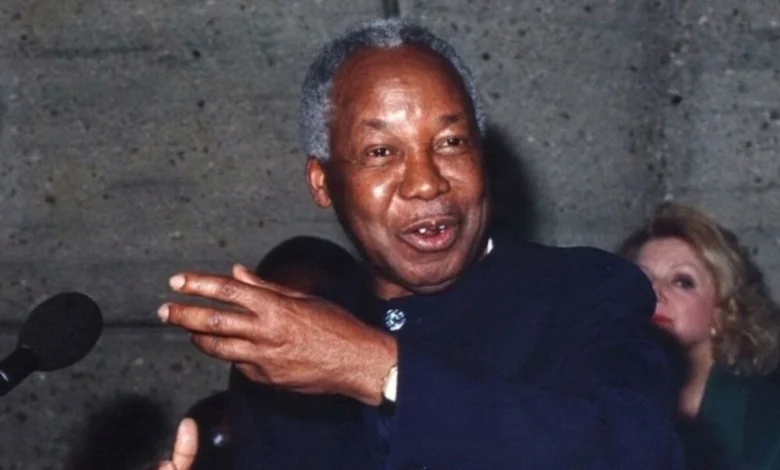
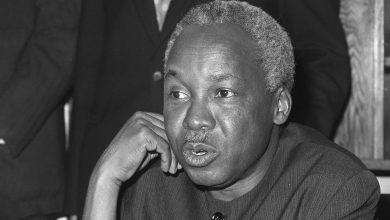
DAR ES SALAAM: TANZANIA and the world today mark 27 years since the death of Mwalimu Julius Nyerere, a towering independence leader whose vision shaped Tanzania’s national unity, identity and development.
He was born in March 1922 at Butiama, Tanganyika (now in Tanzania) and died on October 14, 1999 at St Thomas Hospital in London, England.
He became the first Prime Minister of independent Tanganyika in 1961 and later served as its first President when the country became a republic in 1962. Mwalimu Nyerere was the son of the chief of the small Zanaki ethnic group.
He was educated at Tabora Secondary School and Makerere College in Kampala, Uganda. He taught in several Roman Catholic schools before joining Edinburgh University. He was the first Tanganyika to study at a British university.
He graduated with an MA in history and economics in 1952 and returned to Tanganyika to teach. By the time Mwalimu Nyerere entered politics, Tanganyika had come under a United Nations (UN) trusteeship administered by Britain, with independence as the ultimate goal.
He was an anti-colonial activist, politician and political theorist who served as Tanganyika’s Prime Minister from 1961 to 1962.
Ideologically an African nationalist and African socialist, he promoted a political philosophy known as Ujamaa.
Seeking to hasten the process of emancipation, Mwalimu Nyerere joined the Tanganyika African Association (TAA), quickly becoming its president in 1953. In 1954 he converted the organisation into the politically oriented Tanganyika African National Union (TANU).
Mwalimu Nyerere preached non-violent protest to achieve independence. His administration pursued decolonisation and the ‘Africanisation’ of the civil service while promoting unity between indigenous Africans and the country’s Asian and European minorities.
Under Mwalimu Nyerere’s leadership, the organisation advocated peaceful change, social equality and racial harmony while rejecting tribalism and all forms of racial and ethnic discrimination.
Professor Palamagamba Kabudi, a former University of Dar es Salaam lecturer and now Minister of State in the Prime Minister’s Office (Policy, Parliament, Coordination and Persons with Disabilities), recalls Nyerere’s determination to secure independence for Tanganyika.
In 1944, according to Prof Kabudi, he talked tough against some people colonising others or even having thoughts that some are poised to rule others and that the helpless could get justice only on discretion of the powerful ones.
He was deeply committed to nation-building and, following the 1964 coup attempt, demonstrated a commitment to reconciliation and national unity, seeking to unite Tanzania’s more than 120 ethnic groups into one cohesive nation.
In 1955 and 1956, Mwalimu Julius Nyerere travelled to New York City to present Tanganyika’s case for independence before the United Nations Trusteeship Council and the Fourth Committee, which dealt with trust and non-self-governing territories.
After a debate that secured him an opportunity to speak, he called on the United Nations to set a date for Tanganyika’s independence.
Although the British administration rejected his demand, the discussions that followed established Nyerere as the leading nationalist spokesman for Tanganyika.
The British administration later nominated him to the Tanganyika Legislative Council.
However, he resigned in 1957 to protest against the slow pace of progress towards independence.
In the 1958–59 elections, Nyerere and the Tanganyika African National Union (TANU) won a significant number of seats in the Legislative Council, strengthening the movement’s push for independence.
ALSO READ: Nyerere’s Arusha declaration, a pillar of integrity in Tanzania’s political landscape
Sir Richard Turnbull, the last British Governor of Tanganyika, described Mwalimu Nyerere as having “a tremendous adherence to principle” and exhibiting “rather a Gandhian streak”.
The scholar of education J Roger Carter noted that Mwalimu Nyerere’s peaceful withdrawal from the leadership “suggests a leader of unusual quality and a national spirit, largely of his own creation, of some maturity”.
The Russian historian, Nikolai Kosukhin, described Mwalimu Nyerere as a leader of a “charismatic type, symbolising the ideals and expectations of the people”, in this manner comparing him to Gandhi, Nkrumah, Sun Yat Sen and Leopold Sedar Senghor.
For Kosukhin, Nyerere was “a recognised standard bearer of the struggle for African liberation and a tireless champion of the idea of equitable economic relations between the rich North and the developing South”.
In this way, Kosukhin thought Mwalimu Nyerere belongs not only to Tanzania and Africa, but also to all mankind.
In Godfrey Mwakikagile’s view, Mwalimu Nyerere epitomised the best among the founding fathers of independence African states, citing him alongside such “Big Men” as Kenyatta, Nkrumah, Sekou Toure, Patrice Lumumba and Modibo Keita In a subsequent election in August 1960, his party (TANU) managed to win 70 of 71 seats in Tanganyika’s new Legislative Assembly.
Progress toward independence owed much to the understanding and mutual trust that developed during the course of negotiations between Nyerere and the British Governor, Sir Richard Turnbull.
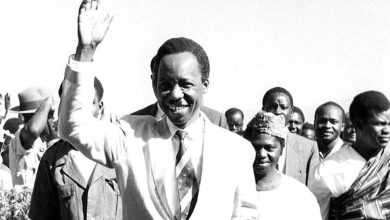
Tanganyika finally gained responsible self-government in September 1960, and Nyerere became chief minister at this time. Tanganyika became independent on December 9, 1961, with Mwalimu Nyerere as its first Prime Minister.
The next month, however, he resigned from the position to devote his time to writing and synthesising his views of government and of African unity. One of Mwalimu Nyerere’s more important works was a paper called ‘Ujamaa— The Basis for African Socialism’.
It was later served as the philosophical basis for the Arusha Declaration (1967). When Tanganyika became a republic in 1962, he was elected president, and in 1964 he became president of the United Republic of Tanzania after a merger of Tanganyika and Zanzibar.
Mwalimu Nyerere was re-elected president of Tanzania in 1965 and was returned to serve three more successive five-year terms before he resigned as president in 1985 and handed over his office to his successor, Ali Hassan Mwinyi.
From independence on, Mwalimu Nyerere also headed Tanzania’s political party, Chama Cha Mapinduzi (CCM).
As outlined in his political programme, the Arusha Declaration, Mwalimu Nyerere was committed to the creation of an egalitarian socialist society based on cooperative agriculture in Tanzania.
He collectivised village farmlands, carried out mass literacy campaigns and instituted free and universal education.
He also emphasised Tanzania’s need to become economically self-sufficient rather than remain dependent on foreign aid and foreign investment.
Mwalimu Nyerere termed his socialist experimentation “Ujamaa”, a name that emphasised the blend of economic cooperation, racial and tribal harmony and moralistic self-sacrifice that he sought to achieve.
Nyerere’s concerns on the domestic front were dominated by economic hardships and by difficulties between Mwalimu Nyerere and Idi Amin of Uganda.
In 1972 Nyerere denounced Amin when the latter announced the expulsion of all Asians from Uganda.
When Ugandan troops invaded Tanzania through Kagera in 1978, Mwalimu Nyerere pledged to bring about the downfall of Amin, and in 1979 the Tanzanian army invaded Uganda in support of a local movement to overthrow him.
Nyerere’s intervention helped to unseat Amin and brought about the return to power in Uganda of Milton Obote in 1980. Mwalimu Nyerere continued as chairman of the CCM until 1990.
Thereafter he assumed the role of elder statesman and was regularly called upon to act as arbiter in international crises such as those in Rwanda and Burundi.
Soft-spoken, unpretentious and quick to laugh, Mwalimu Nyerere was widely credited with impressive oratorical skills and unusual powers of political perception.
His thoughts, essays, and speeches are collected in his books, ‘Uhuru na Umoja’ (1967; Freedom and Unity), ‘Uhuru na Ujamaa’ (1968; Freedom and Socialism) and ‘Uhuru na Maendeleo’ (1973; Freedom and Development).