Nyerere’s Arusha declaration, vision that shaped TZ development
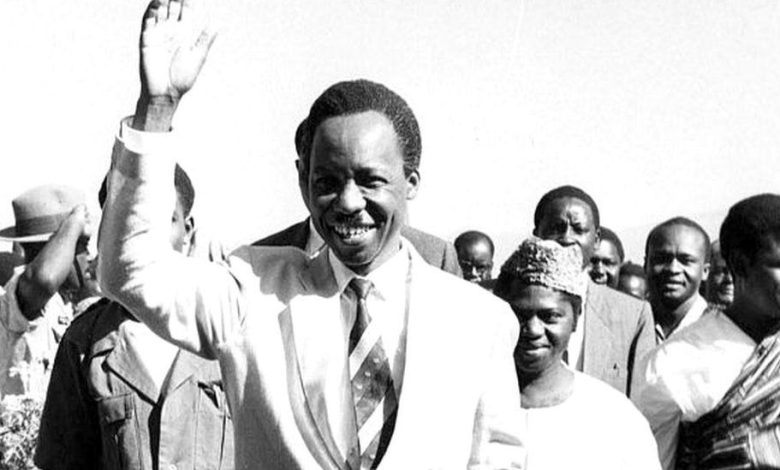
ARUSHA: AS Tanzania reflects on the legacy of its founding father, Mwalimu Julius Nyerere, 27 years after his death, his vision of unity, self-reliance and African solidarity continues to shape conversations about the country’s development and the continent’s future.
A leader driven by conviction and a deep commitment to social transformation, Nyerere championed ideas aimed at building a united nation and advancing Africa’s collective aspirations.
His legacy extends beyond the independence struggle to policies and principles that sought to redefine Tanzania’s social, political and economic direction.
Among his landmark initiatives was the 1967 Arusha Declaration, which marked a turning point in Tanzania’s history.
The declaration set out a development path anchored in socialism and self-reliance, seeking to promote equality, collective responsibility and greater national control over the country’s resources.
It stood as a firm pillar in the fight against the illegitimate accumulation of wealth and corruption in politics, redefining leadership as a moral duty rather than a pursuit of personal gain.
Championed by the nation’s Founding Father, Mwalimu Julius Nyerere, the Arusha Declaration sought, among other goals, to safeguard the inherent dignity of every individual in line with the Universal Declaration of Human Rights.
These principles remained close to Mwalimu Nyerere’s heart, the values that Tanzanians continue to reflect upon as the nation marks the 26th anniversary of his passing.
“Certainly, Mwalimu did his best as far as the declaration is concerned,” says Dr Paul Loisulie, an analyst and Lecturer at the University of Dodoma.
The foundations laid by Mwalimu Nyerere on Ujamaa (African socialism) are still evident in the everyday lives of Tanzanians, even though many people may not realise they are living by those principles.
He said the key areas that Tanzanians should continue to uphold include, ethical leadership, clean politics and good governance.
Others are self-reliant economy, quality education that prepares individuals for selfreliance and above all, strong patriotism for the nation.
Dr Loisulie added that Mwalimu Nyerere was able to oversee the establishment of the Arusha Declaration after realising that colonisers were able to dominate Tanzania by breaking down and destroying thoughts after removing the foundational ways of life and imposing their own.
He said the Father of the Nation decided to come up with the Arusha Declaration as the right way to dismantle the coloniser’s ideas and introduce new foundations with an African orientation.
“The Arusha declaration was a remedy to remove colonialism from people’s minds,” said Dr Loisulie.
According to Dr Loisulie, Mwalimu Nyerere applied various methods and strategies to ensure Tanzanians understood their positions in building their nation.
He said some of the methods used by Mwalimu Nyerere include providing education on Socialism and Relf-reliance to build a nation that understands itself and governs itself.
He also established the National Service (JKT) as one of the important ways to unite the nation and build a foundation of patriotism.
Moreover, the Father of the Nation emphasised the Swahili language as a vital connector for all ethnic groups.
“Mwalimu also utilised various slogans such as ‘Siasa ni Kazi’ loosely translated as “Politics is Work,” ‘Kilimo cha Kufa na Kupona’ loosely translated as ‘Agriculture for Life or Death’ and others to encourage people to love work and be self-reliant,” he explained.
ALSO READ: Nyerere’s United States of Africa dream remains unfinished, still resonates
Moreover, Mwalimu Nyerere established the Ujamaa villages to unite the country and bring services closer to the people.
Dr Loisulie said: “despite the shortcomings that arose in these methods, Mwalimu Nyerere’s decisions shaped the nation that we have today.”
A Dar es Salaam resident and political analyst, Mr Sylivanus Zahoro said that any discussion on the Arusha Declaration inevitably points to Mwalimu Julius Nyerere, its chief architect.
“Through the Arusha Declaration, Mwalimu Nyerere laid the foundation of his socialist policy, which advocated for a classless society,” he said.
Mr Zahoro explained that Mwalimu Nyerere envisioned the declaration as a means to eliminate exploitative systems rooted in capitalism and imperialism.
It was within this framework that the villagisation policy of the 1970s was introduced, leading to the establishment of formal villages across the country.
“Whether the villagisation policy succeeded or not is a debate for another day,” he said.
“What remains important is that today’s villages continue to reflect Mwalimu Nyerere’s original vision.”
He added that through Nyerere under Arusha declaration, education for self-reliance was introduced in which schools were turned into vocational entities to enable graduates to acquire skills for them to conquer the nature.
It is through the Arusha Declaration that Tanzanians developed a strong sense of brotherhood and solidarity, rooted in the spirit of Ujamaa. To this day, many Tanzanians take pride in helping one another without expecting anything in return.
Moreover, some politicians who worked with Mwalimu Nyerere during the implementation of Arusha Declaration once describe him as the person who didn’t want to see disparity in incomes and levels of lives among Tanzanians.
Mwalimu Nyerere always said all Tanzanians had to enjoy modest lives and that no one should look down on the other as far as the issue of income or quality of life was concerned.
A veteran politician and former cabinet minister, Mzee Paul Kimiti said: “We should be proud to Mwalimu because the wealth gap between the rich and the poor isn’t that wide compared to other countries.”
The Arusha Declaration, which was passed on January 29, 1967, summarised Tanzania’s commitment to socialism and the significant role that it was to play in the country’s development. This declaration emphasised self-reliance, frugality and self-denial.
It declared that every citizen, regardless of their occupation, was a worker and that all major means of production would be nationalised and placed under public ownership for the benefit of the people.
The concept of Ujamaa was the centrepiece of the social and economic development programme. Here groups of village families worked together on communal farms for the common good. The declaration also included a leadership code to promote equality among all Tanzania citizens.
The move was one of numerous attempts to prevent party leaders and well-to-do individuals from forming privileged, exploitative groups. The Arusha Declaration sought to reduce income inequality among citizens and redirect development efforts towards rural areas.
It emphasised that Tanzania was engaged in a struggle against poverty and exploitation. The three significant changes that it made, were putting more emphasis on primary education rather than secondary education, commending practical knowledge more than book knowledge and gearing education more towards agricultural skills.
The declaration is one of the most important political and economic decrees in Tanzania’s history. It formally outlined how resources for development can be mobilised.