How air pollution raises household healthcare costs
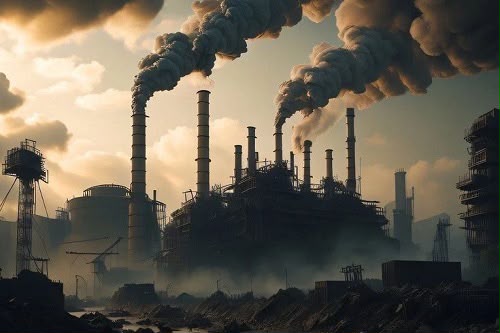
FOR many households, the cost of air pollution does not arrive as a bill labelled ‘pollution.’ Instead, it appears quietly through money spent on medicines, clinic visits, hospital treatment and transportation to health facilities.
It can also appear as lost wages when illness prevents someone from working, or as lost income when a parent has to stay home to care for a sick child or an elderly family member.
Air pollution is often associated with crowded cities, traffic congestion and industrial smoke. Yet polluted air is not only an urban problem. Rural households can also face substantial exposure through cooking with firewood or charcoal, agricultural burning, household waste burning, dust and other activities. The sources may differ between rural and urban communities, but the economic consequences can be remarkably similar: Illness, healthcare expenditure and lost income.
In urban areas, air pollution is often part of the daily environment. A morning journey through congested roads can expose commuters, pedestrians, motorcycle riders, public transport workers and roadside vendors to vehicle emissions. People who work beside busy roads may spend several hours each day in polluted environments. For informal workers, avoiding this exposure may not be a realistic option because their livelihood depends on being close to customers and busy transport routes.
Vehicle emissions are only one part of the problem. Construction activities can generate dust, while poorly maintained roads can add particulate matter to the air. Industrial activities may release pollutants into surrounding communities, and the burning of household waste can add smoke and harmful particles to neighbourhood air. In densely populated areas, households may live close to roads, waste-disposal sites, workshops or industrial activities, increasing the possibility of prolonged exposure.
Urban households can also experience air pollution inside their homes. Cooking with charcoal, firewood or other polluting fuels can produce smoke, particularly in homes with limited ventilation. This means that a person may be exposed to polluted air during the journey to work, at the workplace and again while cooking or spending time at home.
The situation can be different, but no less important, in rural communities. In many villages, firewood and charcoal remain important sources of household energy. When these fuels are burned inside homes or in poorly ventilated cooking spaces, smoke can accumulate and expose household members to high concentrations of pollutants.
Agricultural activities can add another source of exposure. Farmers may burn crop residues or vegetation as part of land preparation or other agricultural practices. Smoke from these activities can affect the people carrying out the burning as well as households and communities nearby. Open burning of household waste can create additional pollution, particularly when materials such as plastics are burned.
Dust is another concern in rural areas. Unpaved roads, dry conditions, agricultural activities and movement of vehicles can increase airborne particles. Farmers and other outdoor workers may spend long periods exposed to dust while working in fields, transporting agricultural products or travelling between communities.
Whether the exposure occurs beside a congested urban road or around a rural cooking fire, the health consequences can translate into household expenses.
Fine particulate matter, commonly known as PM2.5, is particularly concerning because these very small particles can penetrate deep into the respiratory system. Other pollutants can irritate the eyes and airways and contribute to respiratory and cardiovascular problems. When people become sick, the financial consequences may begin with a visit to a health facility. Households may have to pay for consultation, medicines, laboratory tests or other treatment.
Transportation can add considerably to the cost, particularly for rural families who may travel long distances to reach a health centre or hospital.
For households living on limited incomes, these expenses can be difficult to absorb. Consider a small trader who develops a respiratory illness and cannot work for several days. The consultation and medicine represent only part of the financial loss. The larger cost may come from income that was not earned during those days.
A farmer who becomes sick during an important agricultural period may similarly lose productive time. A parent who takes a child to hospital may lose wages or business income while providing care. These indirect costs are easy to overlook because they do not appear on a hospital receipt.
The burden can be particularly difficult for informal workers in urban areas. A person who earns money each day from selling goods, driving a motorcycle, providing casual labour or operating a small business may have little financial protection when illness occurs.
Missing work for even a few days can immediately affect the household’s ability to pay for food, rent, school expenses and other necessities. Rural households can face similar pressures because many depend directly on agriculture, livestock, fishing or other activities where income is closely tied to daily labour and seasonal productivity.
Children add another dimension to the problem. When children become sick, families may spend money on treatment while parents lose working time caring for them. Children may also miss school. Repeated illness can therefore have consequences that extend beyond the immediate healthcare bill.
ALSO READ: Tanzania sees success in training transport professionals to address air pollution
Reducing this hidden bill requires action at household, community and government levels. Families can reduce exposure by improving ventilation when cooking, using cleaner cooking fuels and technologies where available, and avoiding the burning of plastics and other household waste. However, households cannot carry the entire responsibility. Cleaner alternatives must be affordable and accessible, particularly for low-income families.
In rural communities, reducing the burning of crop residues and vegetation, improving agricultural waste management and expanding access to cleaner cooking technologies can reduce smoke exposure. Community education can also encourage safer waste-disposal practices and reduce unnecessary burning. These measures are especially important because many rural households depend on activities that can generate smoke as part of everyday life.
Urban communities require a combination of measures that address major pollution sources. Improving public transportation can reduce dependence on individual vehicles and congestion, while vehicle inspection and enforcement of emission standards can help control exhaust pollution. Construction sites can adopt measures to control dust, industries can be subject to appropriate emission controls and local authorities can improve waste collection to reduce open burning. Urban planning can also consider the location of homes, schools and workplaces in relation to major pollution sources.
Air-quality monitoring is equally important. Reliable information can help identify pollution hotspots, inform communities about exposure and allow policymakers to determine whether interventions are reducing pollution. Without adequate monitoring, pollution can remain an invisible problem until its consequences appear in hospitals and household budgets.
The most effective response will therefore require more than asking individuals to change their behaviour. Governments, local authorities, businesses, communities and households all have roles to play. Investments in cleaner energy, better transport, effective waste management, cleaner industrial practices and improved rural and urban planning can reduce exposure before people become sick.
The costs of these interventions must be considered alongside the costs of doing nothing. Money spent preventing pollution may appear to be an environmental investment, but it can also protect household income and reduce pressure on healthcare systems.
The geography of air pollution may differ, but its economic consequences can converge. In a city, pollution may follow a worker from the morning commute to the workplace and back home. In a rural village, exposure may begin with smoke from the morning cooking fire and continue through agricultural burning or dust from an unpaved road. Different sources can lead to the same household consequences: illness, medical expenses and lost income.
The bill is rarely presented in one place, and it rarely carries the words “air pollution.” It may appear at a pharmacy counter, at a hospital reception, on a transport fare to a clinic or through a day’s wages that were never earned.
Clean air is therefore more than an environmental goal. It is also an investment in household health, income and economic security. Whether in a densely populated city neighbourhood or a rural village, reducing air pollution can mean fewer illnesses, fewer healthcare expenses and fewer working days lost.
The hidden bill in the air is already being paid. The challenge is to recognise its full cost and reduce the burden before it becomes an even heavier price for households to bear.