Crimes of passion: Are we normalising femicide?
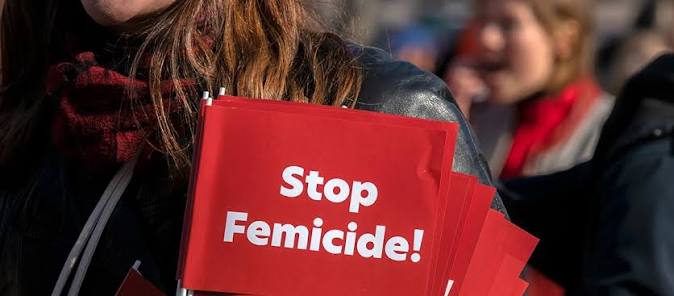
TANZANIA: OVER the past week, Tanzania has been confronted with disturbing reports of women losing their lives in violent circumstances. One woman was reportedly shot dead by her husband, another allegedly stabbed by her partner, while reports from Zanzibar concerning the death of a young woman have raised further questions. Different circumstances, different families, but women continue to die in situations that demand serious reflection about violence, relationships and our society.
As a young Tanzanian woman, these reports disturb me beyond the headlines themselves. What troubles me is how familiar these stories have become. We react with shock, express our condolences, condemn the perpetrators and move on until another name appears in the news. At some point, we must ask ourselves, Are we becoming so accustomed to these killings that we are beginning to normalise femicide?
What do we mean by crimes of passion?
The expression crimes of passion is commonly used to describe offences committed in emotionally charged circumstances, particularly those involving jealousy, rejection, romantic relationships or perceived betrayal. It is a descriptive expression, not a legal excuse for violence.
Yet I find myself questioning what happens when we repeatedly use this phrase to explain the killing of women. Does it help us understand the circumstances or does it make violence sound like an unfortunate consequence of loving someone too much?
Perhaps the more important question is not why someone became angry enough to commit violence, but why our social conversations so often place the emotional experience of the alleged perpetrator at the centre while the woman’s lost life becomes secondary.
The society I grew up in
Growing up as a young woman in a society that places considerable value on marriage, I have seen how marriage is spoken about as a sacred institution. It represents commitment, family and stability. There is nothing wrong with valuing marriage. The problem begins when preserving it becomes more important than the wellbeing of the person within it.
Women may be told that men behave this way, that marriage requires endurance or that certain difficulties must remain private. A woman who speaks about abuse may be encouraged to forgive, reconcile and return home. Sometimes, the question becomes whether she has done enough to save her relationship rather than whether she is safe within it.
This is where our social expectations become troubling. If a woman is repeatedly taught that leaving is shameful, reporting is embarrassing and endurance is a virtue regardless of the harm involved, what choices does she feel she has?
Financial insecurity makes this reality even more complicated. A woman who depends on her partner for accommodation, education, childcare or basic necessities may find leaving an abusive relationship far more difficult than outsiders imagine. Her silence cannot automatically be interpreted as acceptance, just as staying cannot be taken as proof that the violence is insignificant.
What disturbs me is the possibility that we sometimes protect the appearance of a successful marriage while overlooking the suffering taking place inside it.
When the search for help becomes another burden
The problem does not end within the household. Institutions and individuals who should provide support can also shape a survivor’s experience of reporting abuse.
When someone reports violence, the priority should be to understand what happened, assess the risk and identify appropriate protection and legal remedies. Yet where survivors encounter pressure to reconcile before their safety is properly considered, the process can leave them feeling that preserving the relationship matters more than addressing the harm.
In Tanzania, the applicable legal response depends on the facts and the nature of the conduct. Criminal offences may be investigated under the relevant law, while other support mechanisms can assist survivors facing domestic violence. The challenge is ensuring that legal protections are accessible and that reports are handled seriously, fairly and sensitively.
We must also recognise that reporting is not merely an individual decision. It is influenced by the response a person expects from family, community members and institutions. When survivors anticipate blame, disbelief or pressure to return to unsafe circumstances, that expectation can become another barrier to seeking help.
ALSO READ: We must fight femicide in marriage disputes
Why the responsibility is always placed on women?
This is perhaps the part of the conversation that troubles me most as a young woman.
Whenever violence against women is discussed, the solutions often begin with what women must do. Become financially independent. Be more careful when choosing partners. Recognise warning signs. Know when to leave. Report early. Protect yourself.
These conversations have value, but they are incomplete when the responsibility for preventing violence rests almost entirely on potential victims.
We must also ask how we are raising our sons.
Are boys being taught that rejection is part of life and must be respected? Are they learning that women are independent human beings rather than people they can control? Are we teaching them to manage anger without intimidation, to resolve disagreements without violence and to understand that marriage does not confer ownership over another person’s life?
A society cannot solve femicide simply by teaching women how to avoid being killed. It must also confront the attitudes and behaviours that lead some people to believe they have the right to threaten, control or harm their partners.
We must raise girls who understand their worth, but we must equally raise boys who understand the worth of girls. The two responsibilities cannot be separated.
What must change in our society?
Change begins in the homes where children first learn what relationships look like. It begins with parents who teach sons that respect is not weakness and daughters that their dignity is not negotiable. It continues in schools, universities, religious institutions and communities that must challenge harmful beliefs rather than excuse them as tradition.
We must create an environment where financial independence, education and knowledge of legal rights are encouraged, where reporting abuse is taken seriously and where survivors can seek assistance without being shamed. We must also demand accountability through fair investigations and the proper application of the law.
Above all, we must stop treating every new case as an isolated tragedy without examining the attitudes that make violence possible.
As a young woman, I do not want my generation to grow up believing that these headlines are simply part of life. I do not want younger girls to learn that marriage requires silence or younger boys to grow into men who confuse love with control.
How many women must die before we recognise that something in our social attitudes needs to change? How many families must mourn before we teach our children differently?
The answer cannot be another round of condolences followed by silence.
Let us raise women who are not trapped by fear and men who do not make women afraid. Because the goal is not only to create women who are not killed by their husbands, but also to raise men who do not kill their wives.